Now Available! My newest book!
Showing posts with label Current Disney Events. Show all posts

Wednesday, January 29, 2020

Disney World's Universal Decade

As far as theme park fans are concerned, the decade of the 2010s began in June, when The Wizarding World of Harry Potter opened at Islands of Adventure. As far as national media coverage was concerned,  this was the largest theme park story in about ten years - the only thing that came close was the opening, and resounding flop, of Disney's California Adventure. And for possibly the first time ever, Universal was getting the sort of press, the sort of reports of opening day insanity, and the critical platitudes that, in any other situation, would have gone to Disney.

Everyone saw the shots from opening day, with the line snaking out of Islands of Adventure and nearly to the park next door. As an idea - as an image - here was something that was to set much of the stage for the next decade of theme park design.

But even more importantly than the hype and the opening day line was the fact that here Universal had finally delivered on the promise of something Disneyesque, which is to say: something that was lavish and also something that people wanted badly. The keystone ride, Forbidden Journey, remains a charming conjuring trick built on old-school illusion and misdirection that has not dimmed in impressiveness despite ten years of tech challengers. But the true reason the place worked is it delivered those experiences people really wanted.

This is something Disney had really lost sight of in the 90s and 00s: delivering the kind of experience people want in a way they are prepared to pay for. Animal Kingdom, especially in its original form, was too lecture-y to emotionally connect, Epcot had been stripped of much of its warmth, and DCA included smarmy sex jokes and gorillas in Cadillacs. Universal let you drink a Butterbeer, buy a wand, and enter Hogwarts. Adult fans of Harry Potter who grew up on the book series bought themselves a wizard robe, stood in front of Hogwarts, and cried. It was powerful wish fulfillment, and it was coming to them from Universal. And all of this was happening at exactly the wrong time for Disney, who had spent much of the last decade pursuing their most coveted demographic of... six year old girls.

In June 2010, Walt Disney World was a confused mess of projects. The largest project was New Fantasyland, tearing out what remained of the 20,000 Leagues lagoon site in favor of a paltry single ride and six heavily themed meet and greets skewing towards children. Your child can color princess pages in Aurora's house from Sleeping Beauty! It had been five years since the last major addition - Expedition Everest - and Toy Story Mania, though enduringly popular, was not the sort of headliner that sells vacations. It would be another two years before the Little Mermaid omnimover at Magic Kingdom would open for business, and there was little else on the horizon. Pleasure Island had been abruptly shuttered in 2007, and while various replacements had been announced, very little actual work was taking place. Across the country, California Adventure's overhaul had been announced and was still ongoing, and although the World of Color fountain show had been enthusiastically received, much of the best parts of that park were still in the future.

Gentlemen, I give you the future!

Indeed, the overwhelming sense as a Florida based Disney fan was that the true show was happening elsewhere. Hong Kong Disneyland's Mystic Manor attraction was shaping up to be a tribute to old-school Disney attraction values, and Walt Disney Studios Paris was receiving a trackless Ratatouille ride. California Adventure, so long scorned by the internet and the kind of theme park visitor who never likes to travel west across the Mississippi, was receiving ambitious and prestigious upgrades. It felt as though Walt Disney World's doldrums would never end.

Its also worth remembering that 2010 was the year WDWs attendance finally began to fall, and this happened nearly in harmony with Universal's ascendancy. Universal Orlando, which had spent much of the decade since the opening of Islands of Adventure in comfortable slumber as a favorite of locals and niche enthusiasts, suddenly began to do the kind of business its parks were designed to do. Tourists who never previously would have considered heading crosstown began to descend to see their Disneyesque Harry Potter area -- and they actually liked what they saw. Shops had to put up makeshift queues to control Potter-crazed fans of all ages. Abandoned corners of Islands of Adventure such as the Captain America Diner suddenly sprung to life. What Disney had feared in 1989 and 1999 had at last come to pass - Universal was peeling off vacation days from visitors. All Disney had to counter The Boy Who Lived was a pack of princesses. Resentful fans built castles in the sky, fantasizing about Disney's imaginary Potter Swatter.

Something had to be done, fast. The Fantasyland area was reworked, with half of the Princess meet-and-greets pulled and replaced with a family coaster. That was fine in the short term, but Disney still had nothing with the in-built fan base and cross generational appeal of Harry Potter.

With Marvel tied up with Universal and Lucasfilm's acquisition still in the future, Disney announced they had acquired the theme park rights to James Cameron's Avatar. It was the confused shrug heard round the world. But in retrospect, it was something more. It was the start of a new phase in Walt Disney World history.

The IP Invasion

Michael Eisner was the boy who ran away from the polo club to become a television executive. A product of a wealthy New York City family and the Hollywood culture of the 1970s, Eisner loved big, flashy, prestigious ideas -- Disneyland outside Paris, WOW! Under Eisner, Disney could build modernist architecture palaces, teach you American history, and market Tim Allen as Santa Claus. What Eisner was bad at was where road meets rubber; burned on EuroDisney and Disney's America, in the second decade of his term he became gun shy on spending. This leads to many bizarre missed opportunities from 1994 to 2005; Eisner could never bring himself to build a proper Lion King ride anywhere in any of the four Disney resorts in the world, despite that feature being the crowning fiscal achievement of his tenure. So Eisner liked big ideas with no money behind them; a celebration of man's progress to welcome the 21st century at Epcot, WOW! But what that actually was, was fabric on poles and a pin stand.

In comparison, Bob Iger is, on the big ideas front, a dullard. Bob likes to give people more of what they've already said they wanted - he did not miss the opportunity to get a Frozen ride open wherever he could as quickly as possible, whereas one feels that Eisner would have been more comfortable having Elsa blast snow at you on the Backlot Tour at MGM or something. Having spent  his entire term as CEO trying to mop up the mess left by the underspending at DCA, Hong Kong Disneyland, and Walt Disney Studios Paris, where Iger excels is making sure these projects are properly funded to return lavish results. The difference in quality between fit and finish on Hollywood Boulevard at the entrance to Disney-MGM Studios and Buena Vista Street at California Adventure is massive. This combination of safe ideas applied to the parks with good budgets has characterized this decade of theme park development, and the model is explicitly drawn from Wizarding World of Harry Potter. Fans call the IP Invasion.

The warning signs were there early on. In 2009, Avatar shot to the top of the box office charts - a big, dumb, lavish James Cameron space epic. And while the show has retained a cadre of fans and is probably on track to become a nostalgic favorite of a certain age group of 2010s youngsters, the reputation of the film has declined precipitously in the decade since its release. Square in the flush of this decline, but well ahead of its very well hyped sequels, Disney announced and built a full on lavishly scaled themed area for the film in Animal Kingdom.

Pandora: the World of Avatar is nearly as impressive for its conceptual acrobatics as it is for its scale. Set many decades after the events of the film (series?), the alien planet Pandora has become a site of eco-tourism and the land represents a sort of national forest on Pandora, which works so well to slip Avatar into the larger environmental concerns of Animal Kingdom that you almost don't notice the strain. Grounded by an alright if interesting boat ride and a sort of deluxe version of Soarin', besides its unbelievable scale by far the most interesting thing in the area is a series of meandering paths through the center of the area that allow you to wander in, through and around the weird alien plants and animals. It's like a tiny Tom Sawyer Island out in the open of the land, and as a convincing sort of primordial alien swamp it provides the necessary depth behind the "wow" of the floating mountains that I'm not convinced either attraction delivers.

Pandora is also the only theme park area in history where you can cause a huge plant to "pollinate" all over a crowd of pedestrians by rubbing it, so that counts for something. Plant sex! In my Animal Kingdom!

If in 2014 Avatar could be ridiculed as a ludicrous misstep, Disney then went another step and announced Maelstrom at Epcot would close in less than six months to be converted into Frozen After After. Maelstrom had become, for a certain generation of Epcot fan, nearly the last tangible connection with the heyday of the park, and the news was not taken lightly. The replacement ride, while arguably more lavish and containing some very impressive audio animatronics (which is something you definitely can't say about Maelstrom), comes off more as an overbearing song highlight reel than a true attraction. Maelstrom was too cheap, too confused, and too weird for its own good, which gave it an endearing, memorable charm which made it many friends.

If you directly compare Frozen Ever After to something like Peter Pan's Flight, it's not a bad ride. But to this writer, there's a hollow feeling that not every opportunity was actually embraced. The long ascent up the lift hill, mysteriously dark in Maelstrom, has become a flat projection extravaganza which manages to be far less impressive than Maelstrom's flat painted viking ghost and laser-eye. An area which once contained some of Maelstrom's most interesting and weird scenery has become an endless corridor of projections of Elsa singing Let it Go, which feels suspiciously like riding through the editing timeline of a music video. But the true heartbreaker for this author is that the main gag of Maelstrom, where the boats threaten to plunge through a hole in the side of the building backwards, has been sealed up. That's like removing the ride from inside the Matterhorn but keeping the mountain. But really, the problem is that no matter how you try to define the question, Arendelle in Frozen is not Norway. The attraction and the meaning of the area that supports it are at ludicrous cross-purposes. After a year of rumors that seemed far too bizarre to be true, in 2017 Disney announced they were going to convert the Tower of Terror at California Adventure into a Guardians of the Galaxy attraction, and fears that this slapdash method of IP placement would continue seemed to be confirmed.

The real elephant in the room here, of course, is Star Wars: Galaxy's Edge. This new area contains brilliant theming, one solid ride and one absolutely remarkable ride, clever experiences, and an IP that many have a strong emotional attachment to. In Florida, where it replaced a weird fake New York that Eisner built to make a Bette Midler movie, it's a home run, and will be even more of one when its adjoining immersive Star Wars hotel will be open. Nine years later, this is finally something as good or better than Universal's Potter areas.

But it absolutely is the wrong fit at Disneyland. Yes, its removal caused the dramatic reconstruction of a neglected corner of the park, and it bolsters and complements Disneyland's strong roster of attractions brilliantly. It improves crowd flow, and the theming to visually cut it off from the rest of Disneyland is cleverly done. But it does not belong at Disneyland, no matter how you try to slice it. One could opine that that ship sailed back in 1987 when Star Tours opened at Disneyland, but it's hard to escape the feeling that this is new territory for Disney.

I will say it if Disney has forgotten it: this is a bad look for a company whose core product is nostalgia. I will say it again: Disney's core product is nostalgia, and once you take that away, the thing that gives Disney its edge over, say, Time-Warner will dissipate. In fact, this may already be happening.

This isn't going to end anytime soon. Epcot, that fan favorite down in Florida, is currently undergoing a huge renovation that will introduce Pixar, Marvel, and Disney animated characters across the whole of the park. Given that Epcot has been a disjointed mess since the 90s, perhaps this will be a shot in the arm, but it's hard to escape the message: that Epcot you knew is over. Just a few weeks ago, Disney announced that the new restaurant next to The American Adventure is going to be hosted by Sam the Eagle from the Muppets, which makes almost no sense at all.

The IP Invasion surges on.

The Adult Retreat

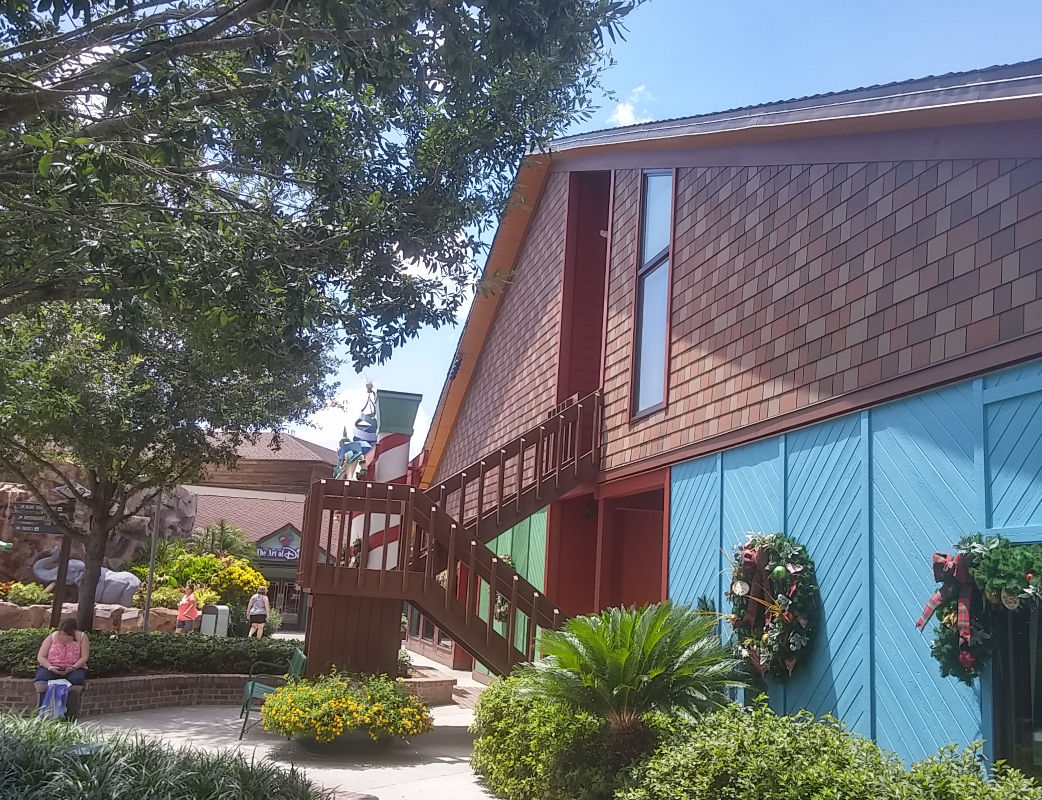
Not everything that happened in the 2010s was a full on dunk in brand synergy. Finally completing their promise to rebuild the troubled Downtown Disney area into something operationally manageable and modern, Disney went full on weird with Disney Springs. Designed at a honeypot to trap locals and Instragram influencers, there's not much Disney at Disney Springs, and it's kind of amazing.

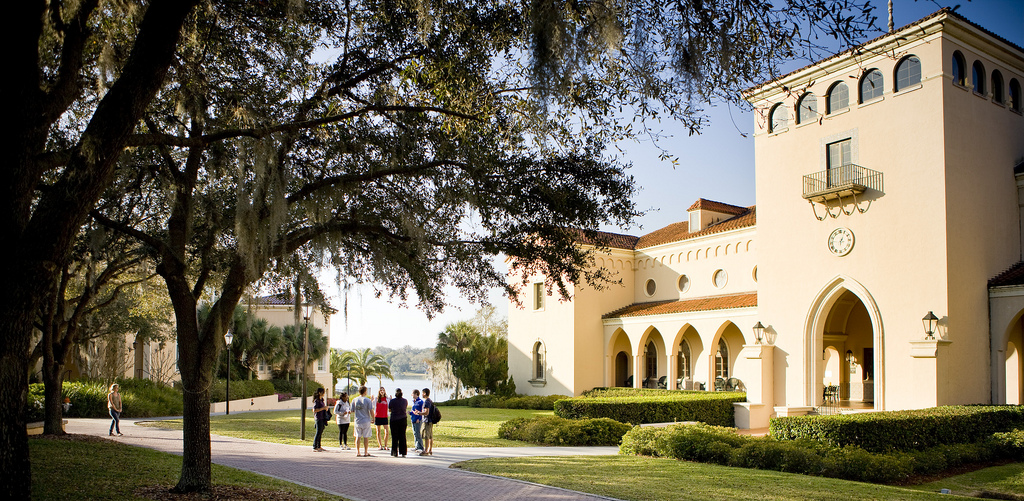
Themed after Florida, a place Disney otherwise goes to amazing lengths to ensure you never see, Disney Springs is a bees nest of semi-haute restaurants, high end shops, weird bossa nova music, and theming intentionally reminiscent of Rollins College in Winter Park. With its restaurants with hanging Edison bulbs, reclaimed wood, exposed brick and menus awash in buzzwords like "crafted" and "local", Disney Springs drops a bell jar over the early 2010s in a way that perhaps no Disney product since EPCOT Center has perfectly encapsulated its era. There may be no Disney characters, sure, but there is a beautiful artificial spring, hand painted murals, a totally bonkers invented "history", garlands with tiny chandeliers at Christmas, a speakeasy buried under a pizza restaurant, and a place where you can wander on a dock and check out a millionaire's collection of rare boats. It's totally bizarre, and I suggest everyone enjoy it for what it is now before Disney paints Mickey Mouse and Elsa over every available surface in the next decade.

There certainly has been increasing alarms being rung in some corners of the Disney fan sphere as renovated rooms in resorts at diverse as the All Stars and Wilderness Lodge return from refurbishment with minimal details and clean, modernist furniture. While this may seem at first glance to be a removal of theming, hotel rooms by their very nature are intended to change and update every few years, as Disney has done every decade since the 70s. And while a case could be made that the new rooms are both less themed and more like the bland "airspace" world ushered in by AirB&B, one fact that should be considered is that room occupancy has continued to decline at Walt Disney World - which explains so many rooms being removed from inventory to be sold as DVC units, and possibly pressure Disney to more fully reflect what a modern traveler would expect to find in the "outside world" in 2020.

And if the removal of theme had stopped there, behind closed doors, it may not have been worthy of comment. But in the 2010s, the Polynesian Resort, that amazing time capsule of 70s Disney kitsch, suffered a fate worse than update.

Going beyond the necessary room updates and removal of room inventory for DVC, Polynesian Resort was perhaps the first Disney hotel to be fundamentally downgraded as a result of its remodel. Meandering pathways through tropical gardens were widened into freeways to accommodate a new revision of the RCID building code which required firetrucks to have clear access into the interior of the resort. Even worse, Fred Joerger's beautiful interior atrium and waterfall was removed and paved, replaced with a tiny statue of Maui surmounting an insultingly tiny trickle of water. It drove a stake thru the heart of the life of the place. Whereas the Polynesian Lobby just ten years ago was bursting with activity, today its a space nobody wants to linger. There were bright spots, such as the addition of the wonderful Trader Sam's Grog Grotto, but this really was a case where Disney paved paradise. And again, it's that nostalgia thing: once you remove that, you can't go back. I'd be curious to know if the Polynesian has retained it status as the most sought after rooms on property.


A more successful case study may be found south, at the Gran Destino Tower, questionably tacked onto Coronado Springs. Coronado Springs, a bizarre 90s fever dream of Latin America, now hosts a tower that looks very much like any Hilton in the world, even more questionably inspired by Salvador Dali and the Spanish, ie European Espana, artistic heritage.

If this sounds totally incoherent it is, but taken strictly as Disney's first full on attempt to create a Disney version of a modern, high end resort, it actually succeeds. The lobby bar serves the kind of drinks you'd expect to find at a destination bar in New York. The interior finish is lavish without being overbearing in its execution. The rooftop restaurant, Toledo, serves an amazing spread of food with views of Animal Kingdom, Epcot, and Hollywood Studios. If the Grand Floridian felt lavish but stuffy, Gran Destino feels lavish and chic. It doesn't exactly feel like you're at Disney, and I think that is the point. This is for the sort of traveler who stays at the Kimpton wherever they go, and with it and the slightly more family friendly brand new Riviera Resort, the question of what Disney is going to do with their dowdy old Contemporary Resort seems ever more pressing.

In a way it feels like this past decade was the era when Disney finally embraced their adult fan base, and whether that's due to Harry Potter wands or not, that may be the biggest story here. It certainly isn't children driving up the grosses of Marvel movies, or buying $200 lightsabers. And while the mainstream media may still be able to generate clicks with articles about "childless millennials" at Disney, a quick review of the internet shows that the majority of content generated about Disney is from that age group - this blog is written by one.

And while it may be difficult to reconcile a Disney that will tear down Epcot AND sell you an adorable Figment pillow, Disney is not what it was a short time ago. Disney is a multi-media, multicultural juggernaut, and any money they think they can get from you, they will take. Disney made 80% of the top box office attractions in 2019, a number that would have been staggering in 2008. They rode their tide of childless millennials to glory, sweeping aside all in their wake.

Hollywood Studios seen from the top of Gran Destino / Disney Food Blog

Interactive Everything

The first time I saw an iPhone was late June, 2007. I was working at the Hall of Presidents, and a guest who had waited in line to buy one on the first day was showing it off in the lobby. At the time, the idea that that little chunk of metal would change the world was laughable. Remember that devices such as the Nokia N-Guage had been coming and going since the Millennium making similar claims, but the iPhone was the one that stuck.

In retrospect, Disney's response to the whole thing was just as strange. To be clear, people had always brought small distraction devices to Disney to help kill the time spent in line, and in 2007 seeing a kid with a Nintendo DS in line for Space Mountain was exceedingly common. The world of social media and Angry Birds were still yet a few years away, and Disney's knee jerk response was that this new world of technology was going to need to be met head-on with... competition.

In 2009, the Kim Possible World Showcase Adventure debuted, based around the retrospectively quaint notion of lending guests a flip-phone running proprietary software to cause various effects to activate around World Showcase. That same year, the new queue of Space Mountain debuted with a wall of video screens playing Wii-esque mini games involving docking ships and sorting luggage. These were merely an appetizer for the deluge of interactivity to come.Disney was prepared to wage a full-on war for your attention, and the places guests consistently were asking for more things to do was while waiting in line.

The Many Adventures of Winnie the Pooh and Dumbo received playground-esque play areas appropriate to the kiddie set they were courting, although Dumbo ended up using a pager system concept which turned out to be more trouble than it was worth. Test Track was rebuilt with the concept of interactive queue integration baked into the concept of the ride, although the refresh has remained controversial with nostalgic fans. The most controversial addition was the lavish Haunted Mansion queue, decried by traditionalists but largely enjoyed by the public. Peter Pan's Flight received a new but largely passive queue experience, and a "build-a-doll" feature planned for Small World ended up being only half implemented. Probably the best of these various queue refreshes, Big Thunder Mountain Railroad, seems to stop the line more than Operations would like.

All of this was intended to be built on the back of Disney's massive, extraordinarily costly MyMagic+ initiative. An attempt to tie together a number of internal software upgrades, MM+ was ambitious and was intended to roll out to every Disney resort around the globe, unifying all of them under one system and application. To say it didn't work out that way is an understatement.

To be clear, Disney needed to massively upgrade their tech infrastructure to begin with. Each line of business within the resort used a different tech solution often hacked together using existing technology, none of which interfaced with each other properly, requiring lines of business as diverse as a hotel front desk to manually input data to be sent into, say, the reservation bank at the Crystal Palace. Let's not forget that Disney is the same company that's been pulling boxcars around with magnets as a "transport system of the future" since the early 70s. The idea was to streamline key items as diverse as park admission, purchasing, hotel room entry, reservations, photographs, and more into one easy user-end software interface.

Chris Barry
Which today sounds like a no-brainer, but remember that in 2011 and 2012 the idea that absolutely everyone would own a smart phone, tablet, or Apple Watch - probably more than one - was still in the future. As a result, starting in 2009 Disney began to test and implement a vast array of tech built around RFID, a technology they had been using in the parks since the early 2000s. Only the true dinosaurs like me will recall the 100 Years of Magic "Magical Moment" pins, ungainly chunks of plastic which would light up whenever you were experiencing a "magical moment", such as the end of the fireworks. These were essentially reacting to a gigantic blast of infrared RFID information installed in various attractions, huge beams of which can be seen in night vision home videos from 2001 until 2007. This infrastructure would then be re-introduced in the form of Pal Mickey, a talking, vibrating plush with an RFID receptor installed in his nose. Pal Mickey, a forward-thinking attempt to help guide guests around the parks, had a number of interesting ideas that were never fully implemented, such as Mickey directing you to attractions with short waits. The difference was the Magical Moments pins cost $10, and Pal Mickey was an $8 rental on a $50 deposit. In the early 2000s.

So Walt Disney World bought in full hog on RFID. Park admission, room keys, and purchases were streamlined into a clunky but functional user interface all tied to a rubbery bracelet sent to you in flashy packaging. Obviously modeled on the "Livestrong" bracelet fad, MagicBands continue to be sold at Disney, but their actual utility is less than a fraction of what was imagined. Early MagicBands included batteries to enable to use of long-range RFID, and Disney was, until the actual complexities of running such a torpid system became apparent, busily installing RFID receivers all across the roofs of Magic Kingdom. That's right, Disney, the ultimate nanny state, wanted to use these bracelets to keep tabs on nearly everything about what their guests were up to, from purchasing patterns to bathroom use. A glorious future was envisioned where Mickey Mouse himself could upsell you on an ice cream cone outside of a bathroom because Disney knew you had gone exactly 2.5 hours since your last snack.

Disney's dream of the 2010s
Again, the ambition and absolute folly of building a tech infrastructure like this in 2011 based on close-range RFID emitters is retrospectively staggering. In the end, MyMagic+ would never leave Walt Disney World. A torpid, costly affair supposedly tipping the budget scales above two billion, a combination of the protracted Avatar project and MyMagic+ shot parks executive Tom Staggs down in flames. The other Disney resorts looked upon Orlando's efforts with indignation. Many of the elements that really did improve the guest experience, like the removal of turnstiles in favor of touch points, were absolutely impractical at places like Disneyland. Slowly, Disneyland and then other parks rolled out their phone apps, each built in a separate silo from each other.

The two projects that were truly going to demonstrate the power of the system - Pandora at Animal Kingdom and Shanghai Disneyland - came and went without significant MyMagic+ presence. Although Walt Disney World has maintained the MyMagic+ name and wristband element, nearly nothing of that decade-ago tech remains operational. There never was a full integration of all of Orlando's Disney systems, for the same reason that there never has been one - any job where you deal with the public is bound to be a messy one, and Disney has simply never managed to take the guesswork out of it. In the end, trying to build a tech infrastructure based on something like Bluetooth in 2016 instead of 2011 probably would have been a bigger success... but there's another problem, and it's a problem that Disney used to be the masters of.

It's that no matter how carefully you design a user-end interface to solve all of the problems of your line of business, people are still people and getting them to use it the way you want is a fool's errand. People are still gonna people. Disney used to be masters at understanding people and invisibly guiding them towards designed, profitable experiences. Someday, stand on the monorail platform at Magic Kingdom and just watch the people. Watch the monorails gliding in and out, the doors popping open, the people constantly flowing in and out, each one and individual from cultures around the world but each being helpfully guided by design through an area. Watch how gracefully they navigate each other and a space and moreover watch how it happens again and again and again. Compare that to the mess of humans milling around waiting for a Fastpass to become valid.

Rise of the Resistance, Disney's best attraction since Indiana Jones Adventure, opened this last month. There was no interactive queue. Scratch that: there's no queue. The ride works on a pure reservation system, with groups being called to wait in a short line to board. We're back where we started, with what Imagineering knew back in the 50s and 60s: the park itself is the interactive queue, and anything that complicates the space between that and getting on a ride should be as minimal as possible.

But really nothing tells the story of MyMagic+ better than a tiny spot in the interactive queue for the Haunted Mansion. The third crypt has a peek-in scene where a book of verses is writing itself. There's a disembodied voice to prompt you to complete the rhyme. It's a circa-2011 version of voice recognition, an early form of Alexa or Siri. It's all wrapped up in a clever package, but if you stand there and watch the way people interact with this thing, not one guest in 25 understands what they're being asked to do. There's even a recorded narration constantly asking you for input: "Muses! Speak up!".

Nobody does. After a year, WDI went back and added telephone receivers to provide a visual aid to help this gag sell. Guests broke off the receivers and still they do not speak up. What they will do is walk past the crypt, see the book writing itself, and exclaim "Harry Potter!".

Harry Potter.

Clearing the Cobwebs

Much of the best stuff that happened at Walt Disney World this decade was all about old-school park design values. The decade was kicked off with The Enchanted Tiki Room: Under New Management being destroyed in a kind of literal act-of-God freak fire, paving the way for the return of a tighter version of the original show. A few months later, The Orange Bird returned to Adventureland, setting off a merchandise trend that has yet to subside. It was a strange time to be a classic Disney fan.

With the noteworthy exception of Space Mountain, nearly all of the Magic Kingdom classic attractions are in great shape. A 2015 Pirates of the Caribbean refresh finally made that attraction into the showpiece it deserves to be, with many of the figures looking better than they have since the 80s. Stalwart attractions like Jungle Cruise and Riverboat have kept up with their maintenance, while Haunted Mansion continues to be wildly popular and receive suspect additions - most recently, an on-ride photo.

Disney finally put Stitch's Great Escape out of its misery, gutting the show's animation and is now using the lobby as a meet and greet. Magic Kingdom seems to be in no hurry to replace the attraction, perhaps understandable because that space has never managed to house a significant attendance draw. Instead, a copy of Shanghai's TRON ride is sprouting up next to Space Mountain and WDI is on a rampage around Tomorrowland, trying to bring back an updated version of its original Space Age look.

Removing the Future That Never Was / Derek Sterling
Less positively, in 2013 Country Bear Jamboree was retooled into a version that cut nearly a third of its run time, doing very little to retain much of its original wit while gaining very little in terms of pace. The figures themselves were lavishly redressed, and hopefully the full 15 minute show can be restored in the future. Meanwhile, Pirates of the Caribbean continued to receive suspect updates to the Auction scene, a rare situation where my feminism and desire for park preservation were at loggerheads. The resulting scene isn't any worse than the other 2006 tampering, and far better than the atrocious 90s fixes to remove implied rape in the Chase scene, but its now kind of shocking to consider that the ONLY scene remaining in the Florida ride where you can hear X Atencio's original iconic script is in the Jail scene. Given all of this, it would be nice if WDI saw fit to  remove Barbossa from the Bombardment scene and reinstate Paul Frees' original Blackbeard captain. Barbossa hasn't even made sense as the captain of the "evil" pirate crew looking for Jack Sparrow since the first film, anyway.

While efforts to move crowds around this most crowded of Florida parks continue, the most significant this decade were the leveling of the Skyway station and the the rebuilding of the Hub. The Skyway project turned into one of the nicest bonuses to come with the New Fantasyland project, a leafy corner devoted to Tangled with some nice details. The Hub project was badly needed and while not all of Operations' lofty plans to issue Fastpasses to preferred viewing corrals have quite worked out, on the busiest days the extra space has made a huge difference. It's not the Magic Kingdom hub I grew up with, but it's flashy and not bad at all.

Overall the removal of Toontown, the re utilization of the former 20,000 Leagues Under the Sea and Skyway attractions, and the rebuilding the of the Hub, Main Street bypass, Adventureland Veranda and finally at long last the entrance plaza have finally cleared away most of the badly utilized spaces around the park, though those shops in Adventureland and Caribbean Plaza remain poorly capitalized upon. With TRON rising out of the ground quickly. Magic Kingdom is finally receiving her first genuine capacity addition since 1993 (!). The park is just about in the position you want a legacy park to be in.

BlogMickey / @MickeyExtreme, August 2016
Meanwhile, across the resort, Walt Disney World's most ill-conceived addition has a new lease on life. The entire rear of Hollywood Studios, a "backlot" which saw less than one year of active production and then stood untouched for nearly 30 years, is finally gone, and with it Catastrophe Canyon, the Backlot Tour, a temporary movie set playground that set an unfortunate precedent, and more are finally gone. And while the Toy Story area that was built nearby is less than ideal, the Star Wars area that superseded much of that old backlot is an absolute winner, especially compared to its previous life as a fake city street with no real purpose.

Less easy to applaud is the decision to scrap that park's final opening day attraction, the problematic but lavish Great Movie Ride, in favor of a screen-based Mickey Mouse attraction. But it's a brave new park out there now, and certainly of the slate of four parks, the Studios had the most to gain and least to lose by wiping its slate clean. Let's hope in the next few years this freshening up continues and we say goodbye to poorly utilized areas such as Animation Courtyard, the Beauty and the Beast tent show, and the Indy Stunt Show. Disney went from barely a major player to the 500 pound gorilla on top of the Hollywood box office in just ten short years, and their movie theme park really ought to reflect this.


In these quarters we're less sure of the fortunes of Epcot. Currently in the midst of a protracted multi-phase reboot a'la California Adventure, it's still so early in the going that it's hard to say if Disney is going to end up with a conceptually unified park, something that Epcot hasn't really been since the turn of the Millennium. Certainly, it's been hard to say goodbye to stalwarts such as Illuminations, Impressions de France, and Universe of Energy, but on the same token the Disney that built EPCOT Center is no longer with us and that park is never coming back. And while the probability of the newest incarnation pleasing EPCOT Center purists is probably below zero, there is a chance to build a park that feels more like a futuristic showplace and less like a community college from the 80s.

I personally gave up on ever seeing my preferred version of Epcot again ten years ago, so this quarter is cautiously optimistic. If nothing else, the new films at The Land and Canada, bowing this month, are actually far closer to the education and inspiration message of the Epcot of old than their 1996 and 2007 replacements were.

For this observer, the best trend of the past decade has been the sudden awakening by somebody somewhere in the organization that the Orlando property's infrastructure is embarrassingly outdated and that Disney has the capital necessary to fix it. Downtown Disney was once the property's biggest logistical nightmare, with traffic that frequently gridlocked the roads around it. With the reconstruction into Disney Springs came new overpasses, parking garages, elevators, escalators, and even pedestrian access bridges across the intersections. This all works wonderfully today and parking spaces can be located from the road in under ten minutes from both directions, which compared to the Downtown Disney of 2005 is sort of a miracle.

The success of that project kicked off a rash of upgrades across the resort, and new traffic patterns, off ramps, security processes and more have been a constant for the past four years. But none has been more visible than the Skyliner, a Doppelmayr lift system connecting Epcot, Hollywood Studios, and several hotels. Despite opening month hiccups the system works amazingly well and has already caused Disney to reduce their reliance on buses within the network. The system transported a million people in less than a month. As a passenger with me in one of the buckets exclaimed a few weeks ago, "the Skyliner is legit".

Hopefully, the Skyliner system will be expanded with a new hub at Coronado Springs and spurs connecting Coronado to the Beach Club, then on to Blizzard Beach, Animal Kingdom, and Animal Kingdom Lodge. From there, a north spur could easily cut through wetlands north of Coronado Springs and bring guests to the Transportation and Ticket Center. This would effectively put most of the resort on mass transit. Even more pressingly, hopefully Disney will soon invest in a new automated monorail fleet and replace the aging, literally falling apart monorails they are still running.

In short, its hard to avoid feeling that Walt Disney World is finally getting to the point it should have been at ten years ago. Genuine expansion and hard looks at existing problems are finally rolling forward,  hopefully setting up the resort for its next ten years of improvements.

Tom Bricker
You Can't Go Home Again

But, you know, its not all clear skies ahead. While the past few years have been a whirlwind of new additions, Disney spent all of the 00s and half of the teens obliviously treading water while raising prices constantly. Day tickets crossed the $100 threshold years ago. Left and right, upcharges and add-ons have spread like crabgrass. Parking a car at thr hotel overnight? That'll cost you. Planning on using your tickets later? That'll cost you. Want to refill your Coke? That'll cost you, too.

With hotel occupancy down overall, its hard not to feel that Disney has finally crossed that event horizon from popular destination to once in a lifetime spree. The trouble is, the tighter they squeeze, the more money's gonna run thru their fingers. Disney travelers have long relied on outside grocery stores and stroller rental companies to take the sting off the tail of Disney prices, and with recent moves to curtail these competitors one wonders at which point vacationers are going to stop buying those high profit resort drinks or simply decide to go elsewhere next year.

Myself, I'm wondering what Disney is going to do when the market declines again. Tourism has always been a boom and bust industry, and attendance has dropped precipitously at the start of the 1980s, the 1990s, and the 2000s. We're very much waiting for the other shoe to drop, and when that happens Disney has always had a robust local market to appeal to in the past. Given the discounts I've seen being marketed locally and the sudden lifting of summer blackouts last year when Toy Story Land was not enough the entice visitors to Orlando, I'm starting to wonder if that market is still going to be there for them when they need it. I can't speak for everyone, but when it came time to renew my pass several years ago, I decided a Nintendo Switch was more appealing. And I have Disney posters on my wall. Disney's core product is nostalgia, and you can't have nostalgia when you've torn out a lot of what makes people nostalgic.

The bulldozers finally came for River Country / Cameron F
It's also been frankly bizarre to see Universal, the company who kicked all of this off by snatching the golden chalice and waking the sleeping dragon, stumble as badly as they have in Orlando. Following their second, marvelously realized Harry Potter area, they've mostly been content to open nice hotels and underwhelming replacements. Universal Orlando's "third park", Volcano Bay, is a nicely themed water park that still falls short of the theming Disney lavished on their two water parks a quarter century ago. And despite acquiring the property of my personal childhood dreams - Nintendo - progress on getting the thing open in Orlando has been stalled by a series of false starts. It's now wrapped up in a frankly bizarre venture to open a park nowhere near their other two in a move which seems doomed to boondogglery. The cross town rivals briefly looked competitive, but each year that passes the gap seems to widen and widen.

They say you can't go home again, and that's true for the Walt Disney World of the 20s.

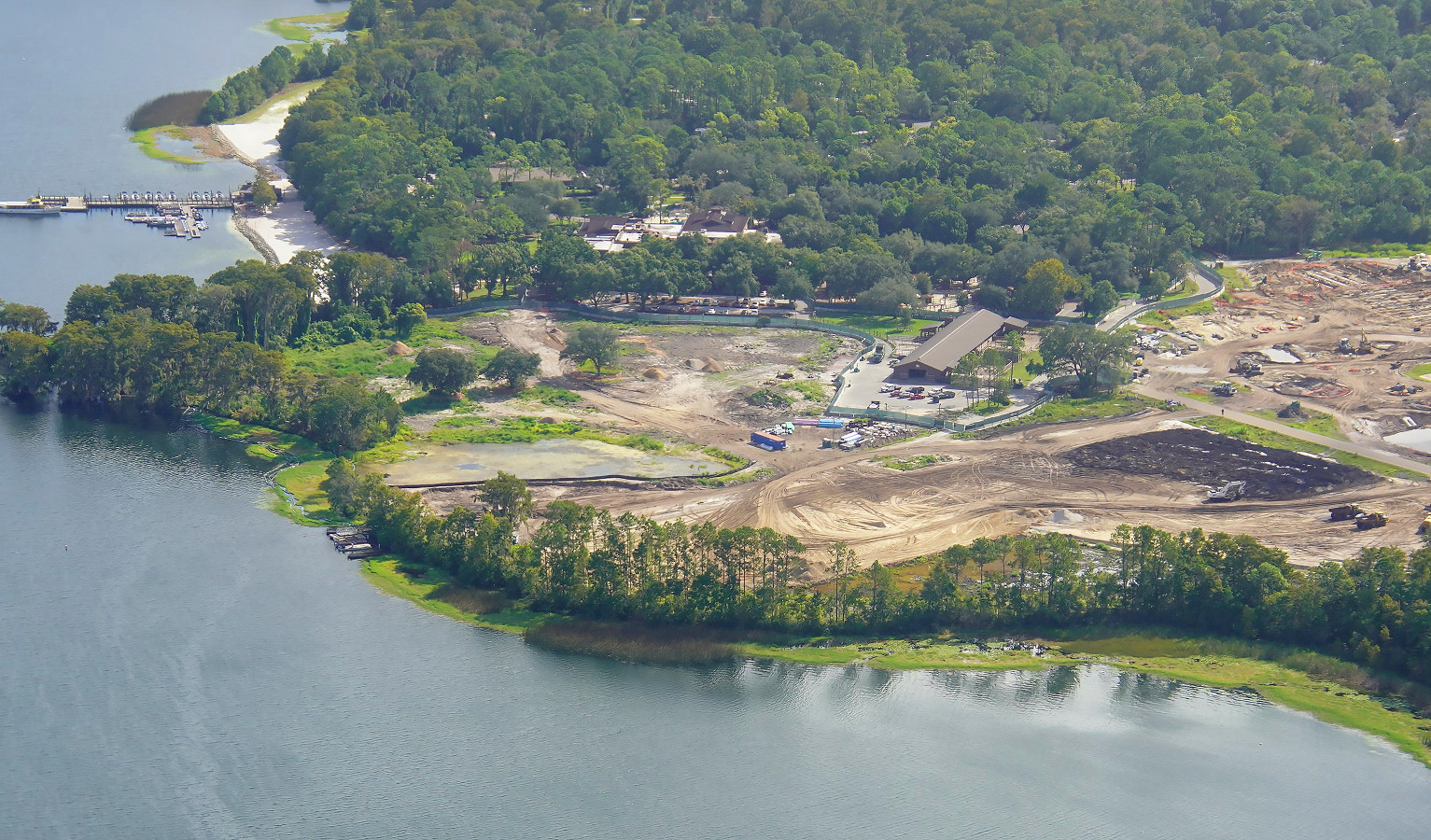
After losing much of the history and charm at the Polynesian earlier in the decade, in 2019 the final, untouched pocket of old school WDW fell. The bulldozers arrived at Fort Wilderness to clear away River Country for a new hotel. Like the Gran Destino it will probably be very nice and probably pretty incoherent - its ostensibly about nature, and Pocahontas or something but it looks like a mid-century Radisson.
@bioreconstruct
And with that, the Walt Disney World I fell in love with as a child was finally gone. That same Walt Disney World that was still almost kinda hanging on when I worked there, the one I began writing this blog about, has finally sailed its last phantom sidewheeler steamboat across Bay Lake and vanished.

It almost, nearly, made it to 50.

If you're reading these words there's a good chance that it was your version too. But the thing is,  there is out there right now somebody who never rode the Backlot Tour or Alien Encounter or Horizons who will love it, and perhaps they'll be the next ones to pick up this thing we were part of and carry it forward.

It's not our Walt Disney World anymore... but it might just be somebody's.

Friday, December 23, 2016

Nintendo's Universal Worlds

I grew up with video games. If you asked me at age seven what my favorite place was, after Walt Disney World I would have told you it was the Mushroom Kingdom. Video games are dreamscapes, fantasy worlds that invite us in to escape. Along with cinema and amusement parks, video games are the third pillar of 20th century escapism - unapologetically popular entertainments which were created to amuse and distract the working classes.

If you dig into game design books, you'll see those links made again and again. The best games are said to aspire to be cinematic, and often are themselves pastiches of popular cinema - Die Hard on a spaceship, James Bond in an ancient pyramid. Disneyland is often brought up by game designers as a key inspirational space, a fully manufactured setting which is also clean, clear, and coherent across generations and cultures. Theme parks are just one other way to achieve immersion and escape.

And so, as a longtime Nintendo kid and a fan of the oeneric dreamscapes of theme parks, one would think that I would be preparing the paper streamers and rolling out the red carpet in advance of the announcement of the wonderfully titled Super Nintendo World - a mouthwatering expansion coming soon to Universal parks. And let's be clear here: I am. Having not been a fan of Cars, or Star Wars, or Harry Potter, I finally feel like here's something elaborate that's aimed at me. As beautifully done as those areas have been or promise to be, my heart did not soar at my first sight of Hogwarts. But put a gold coin on a stick and have it spin around behind somebody's head, and I'm going to need to sit down.

So yes, I'm an easy mark. Super Mario Brothers 3, Super Mario World, Metroid, Mega Man, and Legend of Zelda were my 'galaxy far, far away' growing up, and I'm going to have a strong reaction no matter what ends up getting done. But that doesn't mean I can't have concerns about what's going to happen, and thoughts on the dividing lines between how video games, theme parks, and films create meaning.

So here's our chance to take a quick overview of Nintendo and theme parks. I've stated before on this site that I think Disney has so far failed to do justice to both games and immersive theming at the same time, and perhaps we can dig under that a little. Not a lot. It's a huge topic, and the year is almost up.

Super Mario Disneyland

So what exactly did Universal get themselves into here?

Super Mario is series which as of late has largely confined itself to the Mushroom Kingdom, but in its early years often took bizarre and irrational detours to lands abroad - the middle eastern Sub-Con, the Asian Sarasaland, the expansive Dinosaur Land. The visual style of each game was often totally different than the ones before it - the ghostly, abandoned open planes of Super Mario Brothers that gave way to a landscape strewn with multicolored blocks and checkerboard tile floors in Super Mario Brothers 3. Yoshi's Island, a prequel set in Dinosaur Land, is manifestly lush and tropical in a way no other game is.

Yet the games have a sense of continuity not so much through their settings and gameplay, as their sense of otherworldliness. The Mushroom Kingdom is filled with bizarre and inexplicable threats. In Super Mario Brothers, there is a palpable loneliness and danger to Mario's mission - only compounded if you read the manual and discover that those plants and blocks are supposed to be the transformed citizens of the Mushroom Kingdom! Morbid. No other Mario game feels as lonely and haunted until you get to Super Mario 64, where the echoing, stone clad interior of Princess Peach's castle leads to some truly heart-stopping moments where Mario is suddenly no longer alone.


The Mario series, like all video games of their era, exist in a world of easily comprehensible symbols. Just as nobody needs an explanation of why you're whipping monsters and ghosts in Castlevania, everyone knows to avoid roaming evil-eyed chestnuts, falling rocks, and leaping fire. In the Mushroom Kingdom, anything that can potentially help you has cute eyes, and everything else has a fierce (or at least dumb) expression. You don't need a language to understand these signifiers.

Super Mario, and the Nintendo Entertainment System generally, was a Japanese import which was wildly successful in an era otherwise terrified of Japan's economic ascendancy. Think of the Tokyo-inflected urban decay of Blade Runner, or potboiler crime pictures like Black Rain or Rising Sun. Super Mario crossed a threshold that Godzilla, Speed Racer, Ultraman and Astro-Boy could not. Even today, Godzilla is still made fun of by a certain generation for being a Japanese import. But Super Mario? That guy was an Italian from Brooklyn. He was pure kawaii nonsense delivered in an Americana candy coating.

Mario's world, with its bipedal turtles, swooping clouds, mobile cacti and cheerful hillsides, is a world of symbols not dissimilar to the fevered imagery incubator of Disneyland. Disneyland is also a place of inexplicable dangers, except Walt Disney used ghosts, dinosaurs, pirates and cannibals instead of mushrooms and man eating plants. They come to roughly the same end: we see these things and know that there's danger up ahead.


Magic Kingdom and Disneyland controlled visitor's experiences by intentionally limiting the number of options available at any time; you can either stop in this shop or this attraction, or keep walking. There's usually only one or two options available at any one time. The linearity of the experience is the defining quality of a theme park, compared to the open grid favored by traditional amusement parks like Kennywood or Cedar Point.

This too is basically similar to the structure of many Mario games - levels must be traversed from left to right, and in a specific order, to reach a specific goal. The most logical way to lay out a Super Mario area for a theme park would be on the pattern of Magic Kingdom's Adventureland - a themed corridor leading to a specific destination.


This imagery-heavy abstraction is the key to understanding why both Disneyland and Nintendo worked so well across generations and ages - both the classic theme parks and early video games created a pressure cooker atmosphere of heated symbolic interpretation, and clawed their way into immortality for their efforts.

Disneyland sticks out in America's literal-minded chronology obsessed pop culture, but I don't think it's coincidental that the Japanese recognized this quality in Disneyland and wanted one of their own badly. After years of rejections, Walt Disney Productions finally relented in the mid-70s - and then, only as a way to get a quick cash infusion due to spiraling costs on EPCOT Center. Tokyo Disneyland opened in April 1983 - just three months to the day before the release of the Nintendo Famicom in Japan. There's a family resemblance between the aesthetics of the Famicom and the Tomorrowland section of Tokyo Disneyland, as if one influenced the other.


In the Mario games of my youth, Mario was a cypher, almost mysterious. He wasn't cuddly - his game sprites made him look stoic, serious. It required a certain degree of interpretation if you wanted to know why this Italian guy was murdering large numbers of turtles. What his personality was like was up to your imagination.

On television, as portrayed by wrestler Lou Albano, the New York aspects of Mario were emphasized - his goofy accent, his constant need for pizza. One of the only other American depictions of Mario produced before the current Mario character debuted in Super Mario 64 may be found in the Phillips CDi game Hotel Mario, where Mario is voiced by actor Marc Graue in a style very similar to Albano's Mario.

In this sense it's easy to see how Americans adopted Mario as one of their own, and it's no wonder that many of us were taken aback by the voice and childlike attitude of Mario in Super Mario 64. Until that seminal game, although you played as Mario, there was no insight into what Mario was thinking or how he would sound, if he could speak. This actually isn't all that different than the abstraction of a WED classic like The Jungle Cruise. What does Trader Sam sound like? It's up to you to decide.

And it isn't WED Enterprises that's building Super Nintendo World, nor is it 1983. The Mario of today is as different from the Mario of 1985 as WED Enterprises is different from Walt Disney Imagineering. And therein lies some of my concerns.

The Difficulty of Complexity

Games grew up quick in the 80s. By the time Nintendo had premiered the Famicom Disk System in 1986, a new breed of interactive narrative was being carved out by innovative hybrid games like Castlevania 3 and Metroid. With the move from 8 to 16 bit consoles in 1988 and 1990, hardware and social forces were in place to give rise to the sort of epic adventure stories that Square Soft and Enix were pioneering. Video games began to resemble the sort of lengthy narratives best contained in novels.

But Mario did not change. Super Mario World may justifiably be called one of the most gorgeous video games ever produced, but mechanically it was very much like the 8 bit games which had preceded it. The Legend of Zelda: A Link To The Past more or less hit reset on the Zelda series, offering up a hugely expanded take on the concepts behind the original game. But if we really want to dig into the strengths and weaknesses of the expanding scope video games, we really don't have to look much further than Sonic the Hedgehog.

A sort of stepping stone between the pared down, symbolic creations seem on the Famicom and the hugely elaborate spectacles offered on the Playstation and Nintendo 64, Sonic oh so briefly stole the crown from Mario. Sonic may have been built for speed, but he wasn't really built to last.

In 1991, Sonic was something new from the world go - his sarcastic expression and waggling finger taunting you from the load screen. But the first game was actually an awkward series of jumps presented in a glossy, promising package. Through 4 subsequent installments, the series improved bit by bit, before coalescing into the exhilarating Sonic 3  / Sonic & Knuckles.

These are games of surface pleasures - the smooth controls, the buzzing rock soundtracks, the cool looks of Sonic, Tails, Knuckles, and Dr. Robotnik. But the release of Sonic & Knuckles in 1995 was also the end: SEGA was never again able to leverage the blue hedgehog to a widely successful game. Part of this is due to the failure of four SEGA hardware launches in a row, but part of it is because Sonic never convincingly adapted to a new kind of game - a game that didn't just zip from left to right.

And it was when Sonic was down for the count that Super Mario 64 landed and went off like a bomb in the industry - reshaping conceptions of what these kinds of video game characters could do. Today, Sonic is a beloved character, but experienced best and most often in games where he races, or jousts, or fights Nintendo characters. More young kids have probably played as Sonic in Mario and Sonic at the Olympic Games than they have in Sonic the Hedgehog 2.

There's no longer any kind of brand expectation from Sonic. And the reason is because maybe Sonic never really was about being in excellent games - maybe it always was that Sonic is always just Sonic; a better design, a better idea, than an actual character. Maybe the most compelling Sonic product in years has been the cartoon Sonic Boom, a ludicrous weekly excursion into weird humor and lame puns. People like the idea of Sonic more than they do the phenomenon of Sonic.

Sonic briefly represented the future, but in the end he was no more than a fresh coat of paint on the same old problem: people liked these characters because they were simple and relatable. Sonic and Knuckles exist barely more as figures in a silent serial: the cool guy who taps his foot, the evil guy who laughs. Mario is barely more than an abstract vessel to carry viewers through his games.


But isn't this very close to how theme park operate, too? If we're being rushed through a set at 3 feet a second, we don't have time for anything but clear, unambiguous images. Where Sonic failed is when he had to be more than that - to carry a compelling narrative about anything more than smashing robots and being cool.

We could also look at Capcom's Mega Man. Originally about little more than an Astroboy knockoff defeating a mad scientist, Mega Man presented a surprisingly bright, upbeat future of whimsical but aggressive robots. Being an early game, it was not properly translated and released with little fanfare - leaving the door open for American kids to discover and speculate on what exactly the deal with Mega Man was. Was he a soldier? A police officer? A human on an alien world? Early video games on the NES, PC and Atari were imaginatively stimulating experiences because of what they left out, offering players an opportunity to fill in the gaps in their own way.

Capcom eventually rebooted Mega Man into an elaborate and dystopian technology parable, heavily inflected by Blade Runner and The Terminator. And while several of those games are terrific, the flagship Mega Man series was sputtering out. By the early 2000s it had been rebooted yet again - into a form that little resembled its bright, cheerful, side scrolling roots. Today Mega Man is relegated to cameos and nostalgia pieces, even less relevant than Sonic is.

But compared to SEGA and Capcom's efforts to grow their signature game series, Nintendo went and doubled down on Mario's essential abstraction.

By the time Nintendo was selling copies of Super Mario 64, Mario was up against competitors like Solid Snake and Cloud from Final Fantasy VII - games that could shock or emotionally involve players in ways they had never imagined while pushing buttons on their NES. Mario was an abnormality - a cheerful but basically inaccessible fellow, eternally bubbly, in a world of bright colors and happy endings. And he stayed that way. Like Mickey Mouse, attempts to update Mario inevitably failed - and unlike Disney, Nintendo actually recognized this. Even while they branched Mario out into elaborate new genres like racing and RPG, Mario always was just Mario - he only required that players accept him as himself, a sort of mascot.


The Paper Mario series is an interesting case study in this. Hugely immersive and unapologetically long, Paper Mario expanded the intricacy and mythology of the Mushroom Kingdom in ways impossible to do in 16 bits - and they did it without even requiring Mario to speak. The cheerful, red-hatted avatar was the eye of the storm while his presence allowed Nintendo to draw on larger and larger canvases around him.

And yet, strictly speaking in terms of market share, the Mario series had been on a downslide since 1996. Mario 64 had sold less than Yoshi's Island before it, and Super Mario Sunshine sold less than Mario 64. Reissues of Mario's 2D adventures continued to do well on new formats like the Game Boy Advance, and Nintendo eventually gave up and launched a new series of 2D Mario games: New Super Mario Brothers, which has become the staple of Nintendo's portfolio. New Nintendo systems now tout 2D, retro-style Mario adventures.

Yes, that's right. The buying public voted with their dollars in favor of 1980s style abstractions, and Nintendo gave them what they wanted. Disney would've buried their heads in the sand.

Simple Mario Super Show

Which brings us back to Universal, Disney's greatest competitor. As I've claimed elsewhere on this site, Universal's most salient characteristic is their insistence on constructing their attractions based on actual linear narratives. Disney has copied the attitude, but almost none of the specifics - troweling  elaborate narrative justifications on top of random events. Universal actually sets up plot points in their queues that they expect you to keep track of and understand they're paying off later, down the line.

The thing is that I'm not at all sure that theme parks are actually any good at telling those kind of stories, and audiences don't seem to care. It's nice if they're there for the kind of people who go to blogs like this, but it isn't necessary - the kind of simple storytelling represented by a falling rock in Super Mario Brothers 3 or a floating candle in The Haunted Mansion works just as well.

Directly compare two recent Universal extravaganzas: their Harry Potter rides Forbidden Journey and Escape From Gringotts. Despite a typically elaborate narrative setup, nothing that happens in Forbidden Journey makes any sense at all - what you're doing, why it's happening, or why Harry is tolerating it. He even shouts at you in one scene thanks to your inexplicable adventure through Spiderville. Compared to this, Gringotts actually makes a lot of sense - it's well paced, it has setups and payoffs, it actually rewards an attentive rider.

But none of that matters all that much because Forbidden Journey does things that work in the narrative environment that rides create, whereas Gringotts is telling you the kind of story better told in a movie. The strengths of Forbidden Journey are themed design strengths - crazy action, immediate dangers, weird illusions. People get off Forbidden Journey excited and inspired. The ride where you bop around in a mine car and characters on IMAX screens shout exposition at you cannot compare, and guests leave somewhat underwhelmed.

Nintendo games are about mysteries, things left unexplained, unpredictable explorations of bizarre worlds. They aren't about, and they don't tell, linear, comprehensible narratives in anything but the simplest way. They're about experiences and emotions, not about writing and plot points.

I don't know if the charm of the best Nintendo games will translate to a physical medium. While Nintendo's nostalgic appeals and retro-style product help convince me that the folks at Nintendo at least know where their strengths are, I've got less hope that the American themed design industry, so obsessed with minutae and specific storytelling techniques, will be able to make the jump.

In Super Mario Brothers 3, there's a room in a World 5 fortress that's empty. There's no secrets to discover in it. It's only there for atmosphere - to make you think about where you are and what you're doing, and to feel the dark and lonely atmosphere. To me it signifies all that's compelling about old school video games - the creation of compelling spaces without explanations or finger pointing. These things aren't all jumping and shooting, or at least they don't need to be. That's the magic of Nintendo. That's what Universal needs to aim at.

The eye of the storm.
--

Do you enjoy long, carefully written essays on the ideas behind theme parks, like this one? Hop on over to the Passport to Dreams Theme Park Theory Hub Page for even more!

Thursday, June 30, 2016

Disney Springs and Invented Florida

"The truth of the matter is the only new towns of any significance built in America since World War II are Disneyland in Anaheim, California, and Walt Disney World in Orlando, Florida. Both are 'new', both are 'towns', and both are staggeringly successful." - Peter Blake, Animated Architecture, 1982
Authenticity: the Slippery Slope

Last time, we discussed the history of Disney's failed urban planning project, Lake Buena Vista. This week, we'll be looking at the newest effort to keep the area relevant, but first, a brief detour into semantics. I'd like to discuss what, exactly, makes a place or thing "authentic" versus an imitation.

This subject is central to the very concept of theme parks, but has hardly ever been discussed. It's been invoked by every cultural critic who's written on the subject - implying that being built by an elect group of people with a plan and goal as opposed to being built by unrelated people with no real plan makes a place any less real. But does it?

"Authenticity" is a slippery slope once you actually start sliding down it, and nowhere else is this more evident than in the realm of architecture - architecture being, after all, the main thing that theme parks are made up out of. Let's look at one example: the Philip Chapin house, in my hometown of New Hartford, CT:


Today, we fawn over this sort of thing as an authentic example of Victorian architecture. In its day, it would have been seen as the most ghastly form of nouveau-riche tastelessness. A ludicrous modern imitation of an Italian villa, what was seen in its own day as a sham and fake has become authentic with the passage of time.

Another example, closer to home: Schloss Neuschwanstein in Bavaria, or King Ludwig's Castle. It's commonly cited as the basis for Sleeping Beauty Castle in Disneyland:


Yes, it's a real castle, but it's also a ludicrous fake, constructed by a wasteful king in the Victorian era to evoke romances of the holy grail and the operas of Richard Wagner. It was built with what then qualified as the most modern of amenities, including heated running water, toilets, an electric bell system, a modern oven, and including such suspect embellishments as reproduction tapestries and an indoor cave.


When we think of it this way, the space between Ludwig II's private theme park and Walt Disney's fiberglass castle becomes very narrow. They're both widely viewed and beloved by visitors who care not a lick for "authenticity" because both are designed to evoke powerful symbolic associations in the minds of their visitors.

So what makes something authentic? Once enough time passes, will Disney's fiberglass castles be suddenly, magically conferred respectability? Or is it a slipperier thing - is it belief? Does something become "Authentic" because its viewers believe it to be so?

Of course the sort of people who are eager to confer upon theme parks and their like - shopping centers, planned communities, restaurants - the label of "Fake" are those who have the most to lose by failing to control such labels: those who need their opinions to carry the weight of authority. Sometimes the label can be extended to "appropriation", i.e. theft of something held to be integral elsewhere. But even trying to establish what's "real" and what's "fake" is often an exercise in futility, as we shall shortly see.

I think that's good. Theme parks may be manufactured according to strict aesthetic guidelines, but to me that's a crucial distinction, because that is what makes them compelling. What one person sees as "fake" can just as easily be labeled "artistic". And in the case of something like Disney Springs, where the distinctions have broken down to an extent that the distinctions become meaningless anyway, there is a fascinating case study.

Inventing Space

Even if the notion of authenticity is a slippery slope, there is already a built in resistance to confer the blessings of cultural approval on Disney. One way this manifests is a resistance - supported by Disney - to deem the parks objects of historical interest. so far there has been no general acceptance of the idea that a theme park is certainly related and in some ways basically analogous to the traditionally approved manufactured settings - fine dining establishments, museums, theaters, or national parks.

I've thought long and hard on this subject and to me the only workable definition of a "themed" enviroment is one which has been subject to the act of curation - in which certain aspects have been enhanced, or removed, to obtain a specific aesthetic, often symbolic effect. Museums build narratives out of the mess of history; theme parks build narratives out of the harmonization of imaginary spaces. National parks, so often sold as representing an "untouched" area in a specific state of historical preservation, are also subject to the act of curation - by removing or demolishing any aspects of the protected area which would break the illusion of being "unspoiled" (for more on this see Terence Young, Theme Park Landscapes: Antecedents and Variations).

And yet, I would argue that ideologically and historically speaking, Disneyland, EPCOT, and Magic Kingdom are as central to the American identity as Yellowstone or the National Mall. If they weren't, then there would be no implied threat in Disney co-opting American history in things like The American Adventure and Disney's America. Through sheer popularity, citizens have conferred importance and historical relevance on Disney theme parks, bypassing the gatekeepers of culture.

The minute that we open our minds to the possibility that non-sanctified history is still basically historical, the more the complexities of Disney's manufacture of history become compelling. Disney Springs is a key place to see this at work. Here, real and imagined history weave into a tight web. Let's dip back into our historical narrative of Lake Buena Vista from last week and pick up some threads.

Faux History

By the time Downtown Disney had added its West Side addition, it was a patched-together thing, laid out as three distinct units that made sense on their own but made no sense together. Traffic flow between the three areas was already best described as impractical, and the opening of Pleasure Island to foot traffic only made the situation worse.

Something would need to be done, but what? And how could all three distinct areas be tied together cohesively? In the past, the solution to improving themed areas which were lacking in appeal came down to two options: re-skinning, or demolition. Tomorrowland 1994 re-skinned the offending area, isolating the problem in its aesthetics. New Fantasyland and Disney California Adventure demolished, preferring to start over in a more traditionally appealing aesthetic mode.

At Disney Springs, the approach was, uniquely, to lean in to the mess of conflicting styles and agendas. Areas which already were aesthetically appealing, such as the Marketplace, only received minor facelifts and foot traffic improvements. Pleasure Island's industrial aesthetic could stay. The largest offenders at West Side could be covered up with industrial details or slated for later demolition. Tying the whole thing together is a new "Downtown" area and central water feature.

In other words, by refusing to paper over or demolish the inconsistencies of Downtown Disney, Disney Springs embraces them as the whole darn point. By my count there's at least seven aesthetics at work in the area, and they have been used to signify, rather than try to remove, the pains and competing ideologies of the growth of its imagined community:

Pre-Modern Cracker Houses and Ranches

Industrial Revolution tin sheds

Industrial Revolution "old brick"

Early 20th century Spanish Revival

Mid-Century Craftsman/Chalet

Post-Mid Century Modern

Post-Modern "Whimsical"

And here's where the story begins to become almost perverseley convoluted. Lake Buena Vista represents an abandoned attempt at a "Planned Community". The downtown of this planned Community - the Village - was actually constructed. As a result, even before the notion was legitimized by this new expansion, Downtown Disney already represented the problems of real cities - namely, having a well planned downtown with a bunch of suburbs stuck onto it more or less randomly, causing no end of traffic problems and infrastructure strain.

This new expansion seeks to resolve the problem by building a new, sleeker, more attractive downtown away from the original urban center. Wait, hold on -- where have we heard this before? Oh, that's right, we've heard it in real life - it's the story of every mall that has ever been built.


It even basically looks and sounds like these new "Town Center" outdoor malls which have sprouted like mushrooms in major urban centers. Below is one not far from Disney Springs - "The Grove" at Winter Garden Village. The Grove even contains faux-historical landmarks, a hotel sign above empty space, and signs honoring "local" Winter Garden residents. It is a manufactured downtown, but treated and used as a legitimate one by local shoppers. and what did we say about authenticity up top?


"Inside" the story of Disney Springs, are are supposed to understand that the new Town Center represents the "original" downtown area and the original Village is now a later suburb, yet the mind spins. We've now got a mall built next to a downtown that is pretending to be an yet older downtown - inside a huge mall.

Where Downtown Disney more or less tried to keep pace with whatever the current conception of "cool" is, Disney Springs instead aligns itself with the mode of representation traditionally most successful to Disney - the past. Instead of a murky Florida lake, the area is now centered around a "natural spring" - really a pretty, and pretty elaborate, swimming pool. Surrounding the Spring is brand new - but supposed to be old - Florida vernacular architecture. 35 years ago, this area was a swamp outside the Village. 3 years ago, it was a pile of dirt, yet here now stands "The Oldest Building In Disney Springs."

Yet it's just this sort of absurd, working backwards, built up layers of signification that gives Disneyland and Magic Kingdom their great sense of history. And while perhaps there's nothing deeper to the historical approach of Disney Springs than the generational shift towards all things "retro chic", the new style at least will have the benefit of aging gracefully instead of constantly trying to chase whatever is "cool" in this decade.

Yet for the committed Disney historian, the rabbit hole goes deeper. Throughout the new area, there are numerous small call-outs and references to Disney history, in this case usually tied up with both the real history and imagined history of this part of WDW property, such as this brand new building intended to be an early 20th century converted vegetable market, built by "Buena Vista Steel":


One could easily write off these details as the product of an unimaginative design team dipping into Disney's rich heritage to insert yet more meaningless tributes to past glories. But, in Downtown Disney, probably the number one area in WDW where master planning failed, the authentic history of poor legacy designs becomes disguised as the artificial history of the spreading of a town.

"Buena Vista Steel"
In other words, Disney Springs is the only part of Disney property which has grown to become something of a real life example of the kind of urban space it was designed to evoke. Real life cities do have huge traffic problems, real life cities are putting up parking decks to service their downtowns, real life cities are trying to attract popular and prestigious companies to fill their new malls. At what point does Disney Springs cross a line into fiction? At what point do real life cities more and more resemble Disneyland? If people believe that the fiberglass castle is real, does it become real?

In this sense, Disney Springs opens up a feedback loop akin to the ironic mutation of history seen on Buena Vista Street at California Adventure. There, shops and facilities named after old school Disney characters are said to have inspired a young Walt Disney to create... those same old school Disney characters. It's become an absurd IP game of musical chairs where history and fantasy have melded seamlessly into a mobius strip of influence.

I can see an average visitor being genuinely bewildered by this. Disney has replaced real history with slightly different artificial history and left audiences to sort it out. They've messed with similar elisions before - in the original development cycle of the Haunted Mansion, the ride was said to be a real haunted house transplanted to Disneyland. And since 1955, this plaque at Disneyland has been quietly bewildering readers, assigning great historical import to a random bit of metal:


But as far as I know Disney has never quite created an idea that requires this many layers of fiction piled up on each other, and if the result is aesthetically underwhelming, it's conceptually dizzying. It's like taking everything one step further and claiming the Walt Disney actually grew up on Main Street USA and built the rest of Disneyland around it. Both versions of the area are fiction, but there's a crucial distinction left unsaid.

Then again it's only worth fussing over conceptual distinctions like that if people are actually legitimately fooled, and I have little concern about that happening. Still, the resulting product, with its intermeshed history, fantasy, fact and fiction is truly evocative and conceptually bizarre.

The Fake Real Fake City

Going in another direction, let's return to the Town Center. Around the Town Center are a number of buildings designed to resemble converted houses. There's a few Cracker houses, an old ranch house (D-Luxe Burger), a Googie house (Blaze Pizza), and what is said to be some kind of ice house (Sprinkles) (the owners, presumably, having long ago fled to the suburbs). But most of the Town Center is built to recall Spanish Revival architecture - tilework, whitewashed stucco, wrought iron, and red tile roofs.


Any seasoned Orlandoite will recognize immediately what this is an imitation of: Rollins College in Winter Park.


Okay, so let's talk about Winter Park.

Winter Park, a suburb north of Orlando, has become for many the cultural center of Orlando, with brick lined streets, high end dining, winding canals, and the famous and expensive Park Avenue. Despite all of this, it is in some ways a fake city.

Winter Park was begun as a suburban development in 1885 to take advantage of one of Florida's many land rushes and a new rail line. With strict limits on housing style, varieties, roads, and walking paths, it was one of America's earliest planned communities. It was Celebration 110 years ahead of schedule.

So yes, Rollins College may be old - 1885 - but its beautiful architecture is not authentic old Spanish. Strictly speaking, it's artificial. Of course, in architecture circles, they have a word for this - Spanish Revival, which sits neatly alongside Gothic Revival, Italiante, Renaisance Revival, Queen Anne, Second Empire, Romanesque, and other styles of American architecture built to resemble something they are not. But it's just as correct to say that Rollins College was built themed to Spanish Florida, with its conquistadors, fountains of youth, and romantic tilework.

The fact is that maybe the most distinctive single thing about American architecture is that we have always and forever loved building themed to other things. That's why we were the country that created Coney Island and Disneyland. These places weren't some kind of perversion of a pure cultural legacy, but simply the logical outgrowth of what we've always done.

Don't believe me? Let's go back - back to when the United States was brand new, and take a look at Federalist architecture:


Those cool little pavilions around the front doors, the white columns, the emphasis on symmetry, the mullioned gables, and half-rounded fan lights? We didn't invent that - we stole it from the ancient Greeks and Romans, and stuck it onto our little saltbox houses in the nationalist frenzy of the post-Revolutionary War. The borrowing from ancient Greece was no accident - they were a famous Democracy, just like America.

Thomas Jefferson caught onto the fad and took a trip to Greece to check out what was left of their architecture, and when he came back he applied the Grecian "golden ratio" to American houses and created Jeffersonian Architecture:


See those white columns? The weirdly out of place pediment? The five-part structure of the house? The relentless symmetry? Yeah, Jefferson stole that from the Greeks. You can see it at Monticello, of course, but the symbology of ancient world Democracy is the reason why Americans have always enjoyed slapping neoclassical embellishments onto our nationalist architecture:


It's theming by just another name. And once you accept that something in the American national character just compels us to build stuff that looks like other stuff:


...the distinction between Main Street USA and real Victorian architecture begins to look like nothing but a blip. Less time passed between the era depicted on Main Street and the opening of Disneyland than passed between the construction of Rollins and the new Town Center. The Town Center, for those who only know Florida from Walt Disney World, may not scream "old Florida", but it's as legitimate a copy of the original fake as the fake itself was legitimate.

Town Center is a mall that pretends to be the original downtown of an artificial community, built beside the real downtown of an abandoned planned community, built to resemble a successful planned community just a few miles away.

Reused Reuse

Or, we could talk about Pleasure Island. "Inside" the story of Pleasure Island, it was a manufacturing center for the Pleasure family in the first part of the 20th century, which was wiped out by a hurricane (the same one which destroyed Typhoon Lagoon, in a likely coincidence). The island was re-claimed by Disney and renovated into a nightclub district, all of this to flatter Michael Eisner and his love of 80's style "Urban Reuse".

As far as I know, Pleasure Island was the very first time Disney built structures in which their signifying facades were intentionally at odds with their contents. Even the monumental abstraction of something like Future World's The Land was intended to signify what could be found inside; haunted houses contained haunted houses, pirate forts contained pirate rides.

Pleasure Island asked you to separate form and content in a way that nothing else at Walt Disney World does. Mannequins was a purpose-built facility housing a nightclub, disguised as a reclaimed tin shed-style industrial manufacturing building. Today, "Inside" the story of Disney Springs, it's a reclaimed bottling plant which just so happens to contain Morimoto Asia, a high end pan-Asian restaurant.

In this way, the building now housing Morimoto Asia even more strongly resembles its obvious inspiration: The Cannery Restaurant in Newport Beach, CA, which revolutionized restaurant design in the 80s by reclaiming a disused cannery and leaving its industrial equipment in place around the dining rooms as pieces of sculpture.


Yet this invented history paints over the real history of the building - as a nightclub called Mannequins, one of the few Pleasure Island nightclubs to run from opening to closing day. Nearby, Jock Lindsay's claims to be a converted airplane hangar from the 1940s, and it's tough to tell them apart, despite Jock Lindsay being new construction. It's pretty tough to recognize most of Pleasure Island, honestly, unless one is very up on her Pleasure Island history. Nearly everything there was knocked down and rebuilt, leaving only minor traces behind.

For about ten years, seemingly everything Disney built was rooted in some kind of meta history of abandonment and reuse - to Pleasure Island we may add Blizzard Beach, Typhoon Lagoon, parts of Animal Kingdom, and much of California Adventure. Inside the parks, at least, much of this didn't jibe well with Disney's audience and so has been stripped out, especially at California Adventure.

Disney Springs is one of the few places left where this sort of thematic games playing is still in evidence, and it has fakes upon fakes upon fakes all reflecting back at one another, like a hall of mirrors. For just one example: a brand new building on "The Landing" aka Pleasure Island, housing a new upscale restaurant STK Orlando, has a distinctive, seemingly arbitrary shape:


Yet for those who know Orlando well, if it seems strangely familiar, it's because it's built as a reference to this 1889 train station in Downtown Orlando:


Imagineers didn't have to look at old photos to get that idea, because that structure still stands today, on Church Street in Orlando. That's right, it's Church Street Station, and through the 70s and 80s it was a nuisance to Disney management as the entrance to a famous pay-one-price, gated nightclub attraction. To compete with Church Street Station, Disney built....... Pleasure Island, the current location of this reproduction. History doesn't simply repeat; it devours itself whole. Good luck not getting lost in all that.

This is why Disney Springs seems to collapse in on itself conceptually, forever pulling to some center point where fantasy and fact collide, like the house at the end of Poltergeist. There are so many layers of real, but obscured, and invented, but promoted history floating through that place that it's impossible to keep track of.


What I do know is that there are things in Disney Springs, Lake Buena Vista, and Downtown Disney that are beautifully present simply for their own sake - in the end, the only reason that matters. There's the way the afternoon Florida light filters in through the artfully arranged clutter in Jock Lindsay's Hangar Bar, who for some reason knew Indiana Jones, but whose bar feels authentically old in that moment in a way you usually have to go to Key West to enjoy. There's the Empress Lilly, impressive for her own sake, who is shortly getting her smokestacks and paddle wheel back, a real bit of history being returned to us. There's even an honesty in D-Luxe Burger, that brand spanking new old ranch house, in that it quietly and casually reminds Disney guests that once upon a time a long time before a certain theme park was built there wasn't much to Central Florida besides cattle pasture.

It may be fake, and not look very much like the real thing, but there's a honesty in the spring inside Disney Springs too. It's the first time in the 50 year history of Walt Disney World that Disney has seemed to say to its visitors: "Hey, you know, there's stuff in Florida, too, and it's good enough for us to build a fake version here for you.". It's the first time that Disney's home state has been warranting of the sort of representation extended to, say, Canada.

And there's the catch, and why the theme seems to maddeningly fold in on itself, bigger on the inside than the outside. It isn't themed to some other place, but to right here. Disney's mess of a planned community in Florida has embraced its identity as... a mess of a planned community, in Florida.

It's Floridian, and maybe part of being Floridian means being an an elaborate fake, like Charlie Kane's Xanadu deep in the tropical jungle of the imagination. Imagined, fantasized, pre-planned, corporate, artificial, deeply weird - that's Florida, and it's true inside Disney's bubble... and true outside it, too.

--

Do you enjoy long, carefully written essays on the ideas behind theme parks, like this one? Hop on over to the Passport to Dreams Theme Park Theory Hub Page for even more!