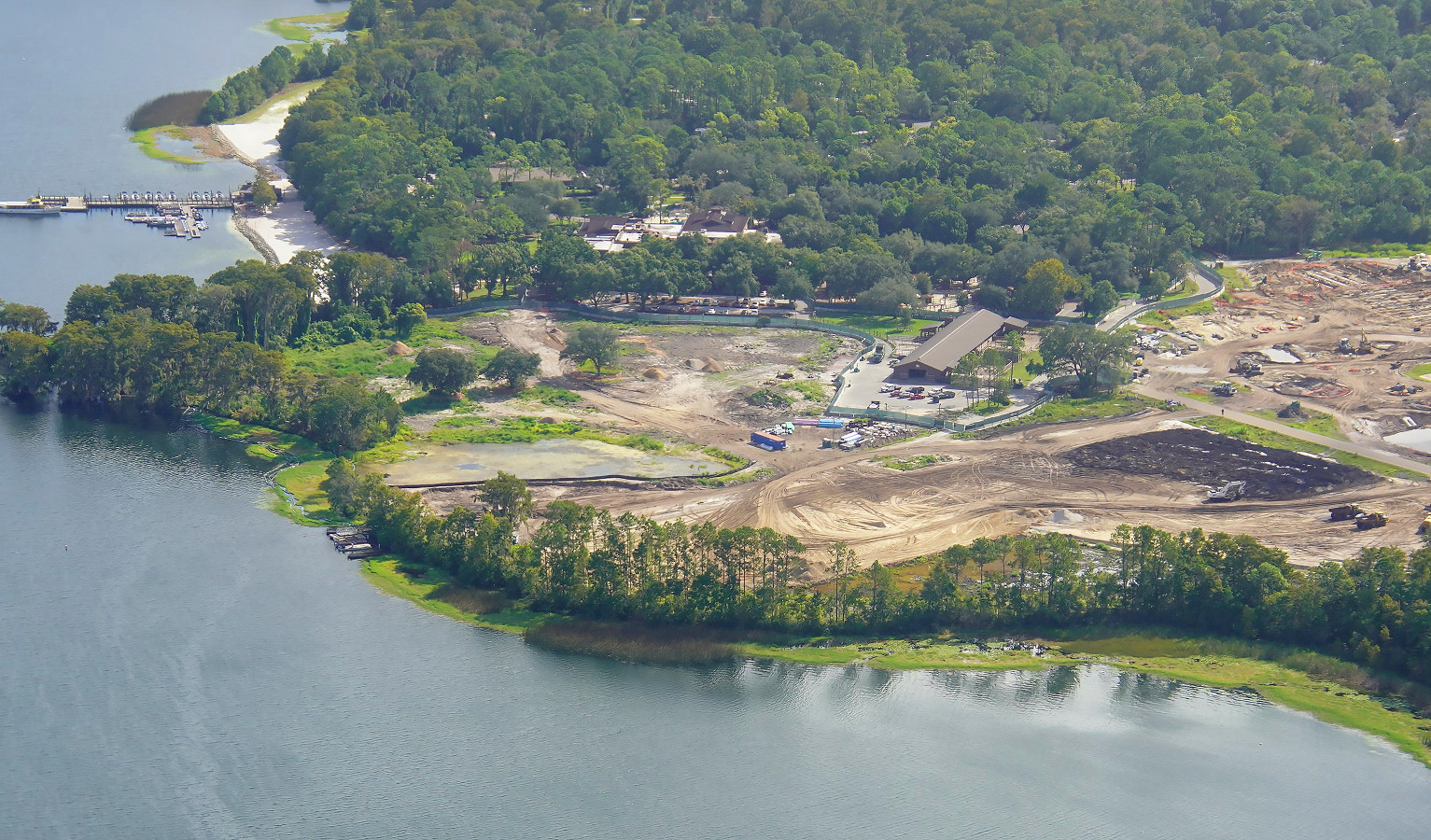
"What [Disneyland] is all about is inhabitation, the human act of being somewhere where we are protected, even engaged, by a space ennobled by our presence Inhabitation is a powerful reality that architecture is supposed to be all about but more often isn't. It is a reality vividly present at Disneyland, whose own reality is so often dismissed." - Charles Moore
It doesn't take all that much looking to find them, the people who have never quite gotten over the conversion of Downtown Disney to Disney Springs. Head to the correct corners of the internet and they will be there, ready to tell you that Downtown Disney was special and unique and Disney Springs is... just a mall.
"A huge outdoor mall with too many people"
" Its like a shopping Mall with little Disney experience. You could be in a Mall anywhere."
"Downtown Disney at least felt like you were still in the "Disney Bubble" Disney Springs is just another high dollar outdoor mall like you can find in any major city."
Let's stop for a moment and unpack that idea. It's been an insult in our culture for a long time, ever since the multi-regional mega malls became successful enough to become a threat. Time was, any shopping could get done at these gigantic indoor behemoths, anchored by Sears or JC Penny, temples of commerce, social centers of their communities. Time was... never to return, for the bubble of the mall was a fairly short one and failed to survive the 1990s. Today, the United States is littered with fading and failed malls and, after two decades of attempting to reverse the trend, developers are throwing in the towel. These places are being transformed into apartment complexes, community colleges, and office buildings.
And yet the Lake Buena Vista Shopping Village, aka the Walt Disney World Village, aka the Disney Village Marketplace, aka Downtown Disney, aka Disney Springs, lives on. If it's just a mall, it has long outlived the usefulness of that insult.
Yet in another way malls do live on. There is an entire online community of people devoted to documenting these crumbling relics of the 20th century, and entire music genres devoted to evoking, through some layer of knowing despair, the cheery canned soundtracks which once filled the neon-lit malls of the cultural imagination.
The mall, especially the mall of the 1980s, has graduated in its own lifetime to become a touchstone, a composite image of a time that never existed in reality. The Generation X teens who hung out there and the elder Millennial kids hopped up on cola remember the excitements and pleasures of these places in their prime, and have gone on to turn the mall into the 1980s equivalent of the 1950s diner, the chrome and neon burger palaces commemorated in films like Grease and American Graffiti.
In short, the mall is culturally important in the same way that Disneyland is, and for many of the same reasons. As temples of curated but no less real pleasures, as products of the socially programmed 1950s, and as examples of real estate development which failed in all but a few key locations, the mall is very much a twin of the Disneyland-style theme park.
--
Quick, name the most successful and influential mall in history!
What did you come up with? The Mall of America? West Edmonton? King of Prussia?
How about Main Street, U.S.A. at Disneyland?
Opening smack in the middle of other influential retail developments - Wisconsin's Valley Fair opened in March 1955 and Victor Gruen's Southdale Center in October 1956 - Main Street drank deep of the cultural times, saw a trend, and learned its secret name. A curated mix of stores and exhibits tied together with a unifying aesthetic and steeped in the kind of bleary-eyed nostalgia my generation now feels for malls themselves, Main Street has flourished while the rest have declined. It's never lost its major tenants, it has never succumbed to seediness, it continues to draw crowds, it has opened multiple new locations around the world, and it has managed to adapt to changing times without losing its essential qualities for nearly seven decades now.
Moreover, Main Street more than any other single component of Disneyland wiped out fifty years of amusement park tradition at a stroke. Old-style amusement parks had multiple entrances, but Disneyland made you pay to get in, a new and controversial idea at the time. Main Street is such a pleasure to traverse that nobody much seems to mind that the only entrance and exit is through a mall. Indeed the entire concept that theme parks could have multiple entrances is now such a novelty that Disney has successfully monetized the concept by attaching it to other Disney owned revenue centers such as hotels.
It's little wonder that no serious critical look at Disneyland has failed to observe Main Street with a mixture of disgust and awe, the ultimate and best mall, the anchor that made the success of the rest possible. Umberto Eco wrote:
"Disneyland's Main Street seems like the first scene of a fiction whereas it is an extremely shrewd commercial reality. Main Street - like the whole city [Disneyand], for that matter - is presented as at once absolutely realistic and absolutely fantastic, and this is the advantage (in terms of artistic conception) of Disneyland over the other toy cities. The houses of Disneyland are full-sized on the ground floor, and on a two-third scale on the floor above, so they give the impression of being inhabitable (and they are) but also of belonging to a fantastic past that we can grasp with our imagination. The Main Street facades are presented to us as toy houses and invite us to enter them, but their interior is always a disguised supermarket, where you buy obsessively, believing that you are still playing."
As if recognizing the impact, in 1965, the city of Santa Monica a few miles north would permanently cordon off the north-south stretch of downtown shopping on Third Street, turning what was an organically grown strip of shops into a kind of Main Street, a kind of mall. But Disneyland, retail, and city planning go even deeper than that.
It is no coincidence that Victor Gruen was both the inventor of the enclosed shopping mall as well at the author of The Heart of Our Cities, the book Walt Disney read and adopted as his blueprint for his EPCOT city. Gruen advocated for rebuilding existing communities on the shopping center plan, which is pretty much exactly what EPCOT was going to be, with the entire downtown being an enclosed, climate controlled Gruen wonderland with a great big hotel at the center of it. After Walt's death the EPCOT city was killed pretty much immediately, but the hotel did survive. When author Anthony Harden-Guest interviewed Walt Disney World Master Planner Marvin Davis about the EPCOT project, Davis pointed to that central hotel EPCOT and said:
"The proposal first was just to build this as one of the original hotels, then later on we'd be building the balance of [the city].."
In other words that central hotel slowly morphed into the Contemporary Hotel, which is why there still is a monorail running thru it today, exactly as it would have had as part of the EPCOT City. And so it is appropriate that the Contemporary's Grand Canyon Concourse is one of the few places left in the United States to see exactly what Gruen's ideal shopping mall would have been like. It is functional, except with hotel rooms instead of apartments and offices above it (many Gruen shopping malls are intended to have office spaces). It is linked in with mass transit, offers climate controlled shopping and dining, lets in natural daylight, and dominated by public art. Any company except for Disney would have demolished the building by now.
--
The Gruen-style mall was intended to be an enclosed downtown city dropped into suburbia, but not everyone wanted that, and for a few decades there was a competing style: the shopping village. Originating in Southern California where inclement weather was less of a concern, the village model split apart the traditional Downtown into a series of charming, sometimes lightly thematically unified shops.
This was a popular option in areas where maintaining some sense of historical character was desirable; as a child in New England I knew a lot of these but didn't yet know they are part of an actual retail trend. I covered one of the earliest and most influential of these themed, landscaped malls in my post on the very surprising history of San Pedro's Ports O' Call, but through the 60s and 70s they sprouted up all over, often in areas not yet capable of supporting a fully indoor mall.
If the dream of a functional EPCOT city died with Walt Disney, it didn't entirely go away. Although Disney's claim in 1982 that their EPCOT Center park was the realization of that idea was spurious in the extreme, some of the ground work done for that project did end up in the Vacation Kingdom in 1971, including a mass transit system, hidden underground areas for utility work, a modern hotel with a monorail running through it, and an automated trash disposal system. But if Disney had no intention (really no interest) in actually building that city, they did think they could build something else, something pretty close to another kind of planned city where they had recently been spending a lot of time.
That was Bayhill, Florida, a fairly early example of the now-common golf retirement communities built throughout the Sun Belt. By the late 60s Bayhill had been purchased outright by Arnold Palmer, and the Disney executive team was spending a lot of time in the ranch houses, clubhouse and golf links alongside Lake Tibet. Their property had a lot of lakes, too...
I go into the history of Lake Buena Vista, Disney's 70s timeshare community that never quite got off the ground, here. But suffice to say, they tried again and again for nearly a decade to copy what they saw up the street in Bayhill and never quite managed to get anyone interested until Eisner took over the company in 1984 and all of those ambitions went away. But they did build a "downtown" for their planned community, and they based it pretty nakedly on Ports O' Call Village. Though much more obviously compromised in original effect than either Main Street or the Grand Canyon Concourse, much of the Lake Buena Vista Shopping Village remains intact today.
Yet culture changed as it always must. Gruen's enclosed malls returned in the late 70s, giving birth to the 80s mall today enshrined in myth and legend. Families fled urban centers for the suburbs. Where adults saw peace and security, their children - Generation X - saw stifling conformity. These kids fled the suburbs to the more open artificiality of the youth culture of regional shopping malls. This powerful story has totally pushed the shopping villages, built by and for our parent's parents' leisure, off the map entirely. But go looking in the right places and they're there still, and Disney's example was part of a trend like many others.
--
Disney Parks retail developments mostly slept out the 80s, the boom years for malls. The nearest example is the Old Port Royale at Caribbean Beach, the resort's key amenity cluster separated, like the Contemporary Resort, from it's check-in area. Since redone in a classier style, the original Centertown area was pure 80s whimsical mall architecture, with faux Caribbean facades lining an entirely unconvincing "street".
Disney's mall for the 80s was Pleasure Island, a kind of postmodern extension of the Lake Buena Vista Shopping Village done up in the then-popular trend of industrial chic. Starting especially in the late 80s and early 90s, retail began to merge the Gruen-style big box with the quaint shopping village into what we now recognize as "lifestyle centers", anchored by large chain restaurants.
Pleasure Island takes the existing lifestyle center trend and feeds it through the meat grinder of the 80s trend of "adaptive reuse". Adaptive reuse is currently very hot in the United States, but the current trend is for minimal use of exiting stone and wood whereas in the 1980s these crumbling post-industrial buildings were being turned into gonzo neon wonderlands. The influential example here is Pier 39 in San Fransisco, but the trend was everywhere through the era; remember The Old Spaghetti Factory, with its faux streetcars themed to wherever the restaurant happened to get built? Much like that chain restaurant, the industrial chic history of Pleasure Island was entirely imagined, with disused shipping facilities becoming roller arenas and baby back ribs being sold in restaurants themed to warehouses which have exploded.
But lifestyle centers were just getting started. The gonzo theming of these high-profile big city chic dining experiences eventually trickled down to the middle class, with the rise of the chain themed restaurant in the early 90s that was kicked off by Hard Rock Cafe. Planet Hollywood made the trend mainstream, but it had sprouted like crab grass in any place that was ripe with tourists ready to plunk down their fat Clinton-era dollars on novelty. Steven Spielberg opened a sub shop that looked like the inside of a submarine, The All-Stars Cafe and ESPN attempted to copy Planet Hollywood but with sports, Rainforest Cafes created a boom economy in walk-under aquarium and gorilla animatronics, and even David Copperfield attempted to get in on the action. Some small restaurants even re-christened themselves "Road Kill Cafe" and re-named all of their menu items with gross puns on local wildlife extinguished on the nearby highway. In the white-hot days of POGs and Gateway PCs, you had to have a gimmick or go home.
Perhaps the enduring temple of postmodern design, themed lifestyle centers, and mega-chain novelty restaurants remains Universal CityWalk in Los Angeles. Opening in 1993, even to the viewer jaded by a thousand listless outdoor malls, CityWalk remains startling and enlivening. Anchored by a movie theater and concert venue, it's one of the most exciting public spaces in Los Angeles, a constantly surprising winding journey that ends with the entrance to one of the best theme parks in the country amidst splashing fountains and bustling outdoor life. Disney, of course, needed a clone of this too. And so was born Disney WestSide, with the existing Pleasure Island AMC and Planet Hollywood now joined by a raft of novelty shops and restaurants, with the concert venue becoming a Cirque De Soleil. At this point the Village Marketplace (formerly Shopping Village), Pleasure Island, and the new West Side became re-christened Downtown Disney, introducing twenty years of logistical and traffic nightmares which have only just now been solved. Victor Gruen would not have approved.
Nobody has ever quite replicated the effect of that original CityWalk - including Universal - but the West Side is one of the weakest imitations around, a dull strip of stucco with a constantly rotating cast of uninspiring stores. In Los Angeles, home of some of the finest shopping malls around, the subsequent Downtown Disney built outside Disneyland may not be all that interesting, but it's leaps and bounds above West Side, which is now 22 years old and has somehow never quite found a reason to lure tourists very deep into its concrete canyon.
--
The other trend which totally changed the American landscape in the 90s was the arrival of the big box. Big box stores were nothing new, of course - as discount, suburban outgrowths of big city department stores, they had been a force in the economy since the 1970s and the ascendency of K-Mart. But the 90s were right smack at the highest ebb of the effects of the white flight to the suburbs that had decimated American downtowns and also, crucially, an era when the huge regional shopping malls were starting to decline.
General changing tastes and concerns over those lawless teenagers who were spending so much time at the mall were causing malls to rethink their strategy and renovate themselves into sterile white environments without any of those planters, fountains, and public art sculptures designed to encourage shoppers to linger - open floor space in malls would become home to endless rows of kiosks selling cheap tat and aggressive merchants that encouraged shoppers to keep walking. This deadly combination would eventually doom the mall and push shoppers out of the mall and into the big boxes that dominate shopping life today.
In 1995, a cluster of shops on the south side of the Disney Village Marketplace once home to the sprawling chalet-style Christmas Shop would be pulled down. Taking its place would be a new store, World of Disney, described in panting hyperbole at the time as the "largest Disney merchandise outlet in the world". As long as a football field! Nearly 6,000 square feet! A jumbotron showing Disney movies! Buy buy buy!
Of course, the entire concept of the "world's largest Disney store" is an absurdity because Walt Disney World itself was already just that, but the ruse worked and World of Disney has remained in demand despite selling pretty much the same stuff found everywhere else at Disney. Additional locations opened in Anaheim and Shanghai, and the Disney Store on Times Square was even briefly rebranded as a World of Disney for about four years.
Everything about World of Disney, from its intentionally confusing layout, division into departments, and endless rows of cashiers and chain-branded concept reveals it to be essentially Disney's Target, an all in one stop for American accustomed to buying everything under one roof. It's an odd and revealing facet of Michael Eisner's leadership that he decided that Disney must have a chain of big boxes too, and it worked - with the parking lots stretching out into infinity.
--
Directly down the street from the Disney Studio in Burbank is a massive lifestyle center called The Americana at Brand. It sits across from the Glendale Galleria, one of the earliest and most impressively sprawling covered malls in the region. There is nothing in particular to do at The Americana, but it is none-the-less constantly packed, because it's a pleasant public space in a city that's nothing but streets. There's a red line street car that goes around the small complex in a loop, a few chain restaurants and a movie theater. There's also a Bellagio-style fountain show, and at Christmastime, it "snows" inside the courtyard, just like at Disneyland. When I lived in LA, I used to go there about once a week to sit on the lawn watching the fountains go and eat a crepe. The upper levels are all offices and apartments. It is, in fact, almost exactly what Victor Gruen wanted his shopping malls to be, minus the mass transit hub radiating outward.
By 2012, Disney's plans to revitalize Downtown Disney, forced more by circumstance than desire, were hitting road blocks. It's almost as if some Disney executive were caught in traffic next to the Americana and watched the bustle of crowds and thought to themselves, "maybe we should just get somebody who knows what they're doing to design this for us."
Which is exactly what they did, bringing in retail architecture firms by the truckload to redevelop Downtown Disney into Disney Springs. The result is pretty but a little plain, with food trucks and architecture reminiscent of St Augustine and reclaimed wood interiors and exposed Edison bulb pendant lights. It drops a bell jar over the early 2010s, capturing the mood of an era more perfectly than anything Disney has built since Future World at EPCOT Center.
It is very high end, but it is just a mall, which of course Downtown Disney always was to begin with. Disney Springs is as accurately of its era as the Lake Buena Vista Shopping Village's chalet style shops and dark wood and brick toned interiors were of the early 70s. I've made this mistake myself; Lake Buena Vista was the way I cut my teeth into doing primary-source historical research and I thought the Shopping Village was a visionary idea in 1975. It was great, but it was based on the same retail trends everything else that followed was, and I just didn't know any better. Whatever is already at Disney the first time you go there becomes your default understanding of what that place is, and anything that changes is an unwelcome intrusion. The change from Downtown Disney to Disney Spring was ambitious, extensive, and comprehensive, far more elaborate than the rebuilding of California Adventure.
But as I hope I've demonstrated, there wasn't a single mainstream retail trend that Downtown Disney wasn't chasing to begin with, the difference is that while any other retail or hotel operator would have torn down the old stuff and rebuilt it in the new style, Disney just kept adding onto it piecemeal. And instead of thinking of it as just a mall, I'd encourage everyone to think of Disney Springs as one of the few places in the world where you can walk through almost 50 years of retail design history. 80s industrial chic sits cheek to jowl with modern lifestyle center stucco just down the street from a ludicrous 90s big box and a 60's style chalet village. The styles have been constantly refreshed, not preserved intact, but you can still spot it if you know what you're looking for.
Nobody looks out for retail history, not the retailers, not the public. If you look carefully and in less well trafficked corners of the world you can find intact retail from the 80s, but you’ve really got to get lucky. We wouldn’t be nostalgic for the idealized 80s mall if we could go out and find them. These things are ephemeral, vanishing, and disrespected - by the time enough time has passed for anyone to be nostalgic for something as ephemeral as a design trend, most of it is gone.
It will sooner rather than later come to pass that Disney Springs will be reworked into the newest trend as mandated by the newest managers and all that reclaimed wood and exposed filament light bulbs will become but another memory, partially preserved in amber alongside all of the other trend fossils at Walt Disney World.
And in that sense ironically Disney World is a museum, where a modular concrete slab structure is still called “The Contemporary”, where a rotating furniture gallery from 1964 spins ever onwards, and where all those years between then and now collapse into an instant.
It's just a mall - same as it ever was - but what a mall, with what a history.
If you enjoyed this piece on the intersection of history and themed design you should check out my book, Boundless Realm, all about the intersectionality of Disney's Haunted Mansion and popular culture!
As far as theme park fans are concerned, the decade of the 2010s began in June, when The Wizarding World of Harry Potter opened at Islands of Adventure. As far as national media coverage was concerned, this was the largest theme park story in about ten years - the only thing that came close was the opening, and resounding flop, of Disney's California Adventure. And for possibly the first time ever, Universal was getting the sort of press, the sort of reports of opening day insanity, and the critical platitudes that, in any other situation, would have gone to Disney.
Everyone saw the shots from opening day, with the line snaking out of Islands of Adventure and nearly to the park next door. As an idea - as an image - here was something that was to set much of the stage for the next decade of theme park design.
But even more importantly than the hype and the opening day line was the fact that here Universal had finally delivered on the promise of something Disneyesque, which is to say: something that was lavish and also something that people wanted badly. The keystone ride, Forbidden Journey, remains a charming conjuring trick built on old-school illusion and misdirection that has not dimmed in impressiveness despite ten years of tech challengers. But the true reason the place worked is it delivered those experiences people really wanted.
This is something Disney had really lost sight of in the 90s and 00s: delivering the kind of experience people want in a way they are prepared to pay for. Animal Kingdom, especially in its original form, was too lecture-y to emotionally connect, Epcot had been stripped of much of its warmth, and DCA included smarmy sex jokes and gorillas in Cadillacs. Universal let you drink a Butterbeer, buy a wand, and enter Hogwarts. Adult fans of Harry Potter who grew up on the book series bought themselves a wizard robe, stood in front of Hogwarts, and cried. It was powerful wish fulfillment, and it was coming to them from Universal. And all of this was happening at exactly the wrong time for Disney, who had spent much of the last decade pursuing their most coveted demographic of... six year old girls.
In June 2010, Walt Disney World was a confused mess of projects. The largest project was New Fantasyland, tearing out what remained of the 20,000 Leagues lagoon site in favor of a paltry single ride and six heavily themed meet and greets skewing towards children. Your child can color princess pages in Aurora's house from Sleeping Beauty! It had been five years since the last major addition - Expedition Everest - and Toy Story Mania, though enduringly popular, was not the sort of headliner that sells vacations. It would be another two years before the Little Mermaid omnimover at Magic Kingdom would open for business, and there was little else on the horizon. Pleasure Island had been abruptly shuttered in 2007, and while various replacements had been announced, very little actual work was taking place. Across the country, California Adventure's overhaul had been announced and was still ongoing, and although the World of Color fountain show had been enthusiastically received, much of the best parts of that park were still in the future.
Gentlemen, I give you the future!
Indeed, the overwhelming sense as a Florida based Disney fan was that the true show was happening elsewhere. Hong Kong Disneyland's Mystic Manor attraction was shaping up to be a tribute to old-school Disney attraction values, and Walt Disney Studios Paris was receiving a trackless Ratatouille ride. California Adventure, so long scorned by the internet and the kind of theme park visitor who never likes to travel west across the Mississippi, was receiving ambitious and prestigious upgrades. It felt as though Walt Disney World's doldrums would never end.
Its also worth remembering that 2010 was the year WDWs attendance finally began to fall, and this happened nearly in harmony with Universal's ascendancy. Universal Orlando, which had spent much of the decade since the opening of Islands of Adventure in comfortable slumber as a favorite of locals and niche enthusiasts, suddenly began to do the kind of business its parks were designed to do. Tourists who never previously would have considered heading crosstown began to descend to see their Disneyesque Harry Potter area -- and they actually liked what they saw. Shops had to put up makeshift queues to control Potter-crazed fans of all ages. Abandoned corners of Islands of Adventure such as the Captain America Diner suddenly sprung to life. What Disney had feared in 1989 and 1999 had at last come to pass - Universal was peeling off vacation days from visitors. All Disney had to counter The Boy Who Lived was a pack of princesses. Resentful fans built castles in the sky, fantasizing about Disney's imaginary Potter Swatter.
Something had to be done, fast. The Fantasyland area was reworked, with half of the Princess meet-and-greets pulled and replaced with a family coaster. That was fine in the short term, but Disney still had nothing with the in-built fan base and cross generational appeal of Harry Potter.
With Marvel tied up with Universal and Lucasfilm's acquisition still in the future, Disney announced they had acquired the theme park rights to James Cameron's Avatar. It was the confused shrug heard round the world. But in retrospect, it was something more. It was the start of a new phase in Walt Disney World history.
The IP Invasion
Michael Eisner was the boy who ran away from the polo club to become a television executive. A product of a wealthy New York City family and the Hollywood culture of the 1970s, Eisner loved big, flashy, prestigious ideas -- Disneyland outside Paris, WOW! Under Eisner, Disney could build modernist architecture palaces, teach you American history, and market Tim Allen as Santa Claus. What Eisner was bad at was where road meets rubber; burned on EuroDisney and Disney's America, in the second decade of his term he became gun shy on spending. This leads to many bizarre missed opportunities from 1994 to 2005; Eisner could never bring himself to build a proper Lion King ride anywhere in any of the four Disney resorts in the world, despite that feature being the crowning fiscal achievement of his tenure. So Eisner liked big ideas with no money behind them; a celebration of man's progress to welcome the 21st century at Epcot, WOW! But what that actually was, was fabric on poles and a pin stand.
In comparison, Bob Iger is, on the big ideas front, a dullard. Bob likes to give people more of what they've already said they wanted - he did not miss the opportunity to get a Frozen ride open wherever he could as quickly as possible, whereas one feels that Eisner would have been more comfortable having Elsa blast snow at you on the Backlot Tour at MGM or something. Having spent his entire term as CEO trying to mop up the mess left by the underspending at DCA, Hong Kong Disneyland, and Walt Disney Studios Paris, where Iger excels is making sure these projects are properly funded to return lavish results. The difference in quality between fit and finish on Hollywood Boulevard at the entrance to Disney-MGM Studios and Buena Vista Street at California Adventure is massive. This combination of safe ideas applied to the parks with good budgets has characterized this decade of theme park development, and the model is explicitly drawn from Wizarding World of Harry Potter. Fans call the IP Invasion.
The warning signs were there early on. In 2009, Avatar shot to the top of the box office charts - a big, dumb, lavish James Cameron space epic. And while the show has retained a cadre of fans and is probably on track to become a nostalgic favorite of a certain age group of 2010s youngsters, the reputation of the film has declined precipitously in the decade since its release. Square in the flush of this decline, but well ahead of its very well hyped sequels, Disney announced and built a full on lavishly scaled themed area for the film in Animal Kingdom.
Pandora: the World of Avatar is nearly as impressive for its conceptual acrobatics as it is for its scale. Set many decades after the events of the film (series?), the alien planet Pandora has become a site of eco-tourism and the land represents a sort of national forest on Pandora, which works so well to slip Avatar into the larger environmental concerns of Animal Kingdom that you almost don't notice the strain. Grounded by an alright if interesting boat ride and a sort of deluxe version of Soarin', besides its unbelievable scale by far the most interesting thing in the area is a series of meandering paths through the center of the area that allow you to wander in, through and around the weird alien plants and animals. It's like a tiny Tom Sawyer Island out in the open of the land, and as a convincing sort of primordial alien swamp it provides the necessary depth behind the "wow" of the floating mountains that I'm not convinced either attraction delivers.
Pandora is also the only theme park area in history where you can cause a huge plant to "pollinate" all over a crowd of pedestrians by rubbing it, so that counts for something. Plant sex! In my Animal Kingdom!
If in 2014 Avatar could be ridiculed as a ludicrous misstep, Disney then went another step and announced Maelstrom at Epcot would close in less than six months to be converted into Frozen After After. Maelstrom had become, for a certain generation of Epcot fan, nearly the last tangible connection with the heyday of the park, and the news was not taken lightly. The replacement ride, while arguably more lavish and containing some very impressive audio animatronics (which is something you definitely can't say about Maelstrom), comes off more as an overbearing song highlight reel than a true attraction. Maelstrom was too cheap, too confused, and too weird for its own good, which gave it an endearing, memorable charm which made it many friends.
If you directly compare Frozen Ever After to something like Peter Pan's Flight, it's not a bad ride. But to this writer, there's a hollow feeling that not every opportunity was actually embraced. The long ascent up the lift hill, mysteriously dark in Maelstrom, has become a flat projection extravaganza which manages to be far less impressive than Maelstrom's flat painted viking ghost and laser-eye. An area which once contained some of Maelstrom's most interesting and weird scenery has become an endless corridor of projections of Elsa singing Let it Go, which feels suspiciously like riding through the editing timeline of a music video. But the true heartbreaker for this author is that the main gag of Maelstrom, where the boats threaten to plunge through a hole in the side of the building backwards, has been sealed up. That's like removing the ride from inside the Matterhorn but keeping the mountain. But really, the problem is that no matter how you try to define the question, Arendelle in Frozen is not Norway. The attraction and the meaning of the area that supports it are at ludicrous cross-purposes. After a year of rumors that seemed far too bizarre to be true, in 2017 Disney announced they were going to convert the Tower of Terror at California Adventure into a Guardians of the Galaxy attraction, and fears that this slapdash method of IP placement would continue seemed to be confirmed.
The real elephant in the room here, of course, is Star Wars: Galaxy's Edge. This new area contains brilliant theming, one solid ride and one absolutely remarkable ride, clever experiences, and an IP that many have a strong emotional attachment to. In Florida, where it replaced a weird fake New York that Eisner built to make a Bette Midler movie, it's a home run, and will be even more of one when its adjoining immersive Star Wars hotel will be open. Nine years later, this is finally something as good or better than Universal's Potter areas.
But it absolutely is the wrong fit at Disneyland. Yes, its removal caused the dramatic reconstruction of a neglected corner of the park, and it bolsters and complements Disneyland's strong roster of attractions brilliantly. It improves crowd flow, and the theming to visually cut it off from the rest of Disneyland is cleverly done. But it does not belong at Disneyland, no matter how you try to slice it. One could opine that that ship sailed back in 1987 when Star Tours opened at Disneyland, but it's hard to escape the feeling that this is new territory for Disney.
I will say it if Disney has forgotten it: this is a bad look for a company whose core product is nostalgia. I will say it again: Disney's core product is nostalgia, and once you take that away, the thing that gives Disney its edge over, say, Time-Warner will dissipate. In fact, this may already be happening.
This isn't going to end anytime soon. Epcot, that fan favorite down in Florida, is currently undergoing a huge renovation that will introduce Pixar, Marvel, and Disney animated characters across the whole of the park. Given that Epcot has been a disjointed mess since the 90s, perhaps this will be a shot in the arm, but it's hard to escape the message: that Epcot you knew is over. Just a few weeks ago, Disney announced that the new restaurant next to The American Adventure is going to be hosted by Sam the Eagle from the Muppets, which makes almost no sense at all.
The IP Invasion surges on.
The Adult Retreat
Not everything that happened in the 2010s was a full on dunk in brand synergy. Finally completing their promise to rebuild the troubled Downtown Disney area into something operationally manageable and modern, Disney went full on weird with Disney Springs. Designed at a honeypot to trap locals and Instragram influencers, there's not much Disney at Disney Springs, and it's kind of amazing.
Themed after Florida, a place Disney otherwise goes to amazing lengths to ensure you never see, Disney Springs is a bees nest of semi-haute restaurants, high end shops, weird bossa nova music, and theming intentionally reminiscent of Rollins College in Winter Park. With its restaurants with hanging Edison bulbs, reclaimed wood, exposed brick and menus awash in buzzwords like "crafted" and "local", Disney Springs drops a bell jar over the early 2010s in a way that perhaps no Disney product since EPCOT Center has perfectly encapsulated its era. There may be no Disney characters, sure, but there is a beautiful artificial spring, hand painted murals, a totally bonkers invented "history", garlands with tiny chandeliers at Christmas, a speakeasy buried under a pizza restaurant, and a place where you can wander on a dock and check out a millionaire's collection of rare boats. It's totally bizarre, and I suggest everyone enjoy it for what it is now before Disney paints Mickey Mouse and Elsa over every available surface in the next decade.
There certainly has been increasing alarms being rung in some corners of the Disney fan sphere as renovated rooms in resorts at diverse as the All Stars and Wilderness Lodge return from refurbishment with minimal details and clean, modernist furniture. While this may seem at first glance to be a removal of theming, hotel rooms by their very nature are intended to change and update every few years, as Disney has done every decade since the 70s. And while a case could be made that the new rooms are both less themed and more like the bland "airspace" world ushered in by AirB&B, one fact that should be considered is that room occupancy has continued to decline at Walt Disney World - which explains so many rooms being removed from inventory to be sold as DVC units, and possibly pressure Disney to more fully reflect what a modern traveler would expect to find in the "outside world" in 2020.
And if the removal of theme had stopped there, behind closed doors, it may not have been worthy of comment. But in the 2010s, the Polynesian Resort, that amazing time capsule of 70s Disney kitsch, suffered a fate worse than update.
Going beyond the necessary room updates and removal of room inventory for DVC, Polynesian Resort was perhaps the first Disney hotel to be fundamentally downgraded as a result of its remodel. Meandering pathways through tropical gardens were widened into freeways to accommodate a new revision of the RCID building code which required firetrucks to have clear access into the interior of the resort. Even worse, Fred Joerger's beautiful interior atrium and waterfall was removed and paved, replaced with a tiny statue of Maui surmounting an insultingly tiny trickle of water. It drove a stake thru the heart of the life of the place. Whereas the Polynesian Lobby just ten years ago was bursting with activity, today its a space nobody wants to linger. There were bright spots, such as the addition of the wonderful Trader Sam's Grog Grotto, but this really was a case where Disney paved paradise. And again, it's that nostalgia thing: once you remove that, you can't go back. I'd be curious to know if the Polynesian has retained it status as the most sought after rooms on property.
A more successful case study may be found south, at the Gran Destino Tower, questionably tacked onto Coronado Springs. Coronado Springs, a bizarre 90s fever dream of Latin America, now hosts a tower that looks very much like any Hilton in the world, even more questionably inspired by Salvador Dali and the Spanish, ie European Espana, artistic heritage.
If this sounds totally incoherent it is, but taken strictly as Disney's first full on attempt to create a Disney version of a modern, high end resort, it actually succeeds. The lobby bar serves the kind of drinks you'd expect to find at a destination bar in New York. The interior finish is lavish without being overbearing in its execution. The rooftop restaurant, Toledo, serves an amazing spread of food with views of Animal Kingdom, Epcot, and Hollywood Studios. If the Grand Floridian felt lavish but stuffy, Gran Destino feels lavish and chic. It doesn't exactly feel like you're at Disney, and I think that is the point. This is for the sort of traveler who stays at the Kimpton wherever they go, and with it and the slightly more family friendly brand new Riviera Resort, the question of what Disney is going to do with their dowdy old Contemporary Resort seems ever more pressing.
In a way it feels like this past decade was the era when Disney finally embraced their adult fan base, and whether that's due to Harry Potter wands or not, that may be the biggest story here. It certainly isn't children driving up the grosses of Marvel movies, or buying $200 lightsabers. And while the mainstream media may still be able to generate clicks with articles about "childless millennials" at Disney, a quick review of the internet shows that the majority of content generated about Disney is from that age group - this blog is written by one.
And while it may be difficult to reconcile a Disney that will tear down Epcot AND sell you an adorable Figment pillow, Disney is not what it was a short time ago. Disney is a multi-media, multicultural juggernaut, and any money they think they can get from you, they will take. Disney made 80% of the top box office attractions in 2019, a number that would have been staggering in 2008. They rode their tide of childless millennials to glory, sweeping aside all in their wake.
Hollywood Studios seen from the top of Gran Destino / Disney Food Blog
Interactive Everything
The first time I saw an iPhone was late June, 2007. I was working at the Hall of Presidents, and a guest who had waited in line to buy one on the first day was showing it off in the lobby. At the time, the idea that that little chunk of metal would change the world was laughable. Remember that devices such as the Nokia N-Guage had been coming and going since the Millennium making similar claims, but the iPhone was the one that stuck.
In retrospect, Disney's response to the whole thing was just as strange. To be clear, people had always brought small distraction devices to Disney to help kill the time spent in line, and in 2007 seeing a kid with a Nintendo DS in line for Space Mountain was exceedingly common. The world of social media and Angry Birds were still yet a few years away, and Disney's knee jerk response was that this new world of technology was going to need to be met head-on with... competition.
In 2009, the Kim Possible World Showcase Adventure debuted, based around the retrospectively quaint notion of lending guests a flip-phone running proprietary software to cause various effects to activate around World Showcase. That same year, the new queue of Space Mountain debuted with a wall of video screens playing Wii-esque mini games involving docking ships and sorting luggage. These were merely an appetizer for the deluge of interactivity to come.Disney was prepared to wage a full-on war for your attention, and the places guests consistently were asking for more things to do was while waiting in line.
The Many Adventures of Winnie the Pooh and Dumbo received playground-esque play areas appropriate to the kiddie set they were courting, although Dumbo ended up using a pager system concept which turned out to be more trouble than it was worth. Test Track was rebuilt with the concept of interactive queue integration baked into the concept of the ride, although the refresh has remained controversial with nostalgic fans. The most controversial addition was the lavish Haunted Mansion queue, decried by traditionalists but largely enjoyed by the public. Peter Pan's Flight received a new but largely passive queue experience, and a "build-a-doll" feature planned for Small World ended up being only half implemented. Probably the best of these various queue refreshes, Big Thunder Mountain Railroad, seems to stop the line more than Operations would like.
All of this was intended to be built on the back of Disney's massive, extraordinarily costly MyMagic+ initiative. An attempt to tie together a number of internal software upgrades, MM+ was ambitious and was intended to roll out to every Disney resort around the globe, unifying all of them under one system and application. To say it didn't work out that way is an understatement.
To be clear, Disney needed to massively upgrade their tech infrastructure to begin with. Each line of business within the resort used a different tech solution often hacked together using existing technology, none of which interfaced with each other properly, requiring lines of business as diverse as a hotel front desk to manually input data to be sent into, say, the reservation bank at the Crystal Palace. Let's not forget that Disney is the same company that's been pulling boxcars around with magnets as a "transport system of the future" since the early 70s. The idea was to streamline key items as diverse as park admission, purchasing, hotel room entry, reservations, photographs, and more into one easy user-end software interface.
Which today sounds like a no-brainer, but remember that in 2011 and 2012 the idea that absolutely everyone would own a smart phone, tablet, or Apple Watch - probably more than one - was still in the future. As a result, starting in 2009 Disney began to test and implement a vast array of tech built around RFID, a technology they had been using in the parks since the early 2000s. Only the true dinosaurs like me will recall the 100 Years of Magic "Magical Moment" pins, ungainly chunks of plastic which would light up whenever you were experiencing a "magical moment", such as the end of the fireworks. These were essentially reacting to a gigantic blast of infrared RFID information installed in various attractions, huge beams of which can be seen in night vision home videos from 2001 until 2007. This infrastructure would then be re-introduced in the form of Pal Mickey, a talking, vibrating plush with an RFID receptor installed in his nose. Pal Mickey, a forward-thinking attempt to help guide guests around the parks, had a number of interesting ideas that were never fully implemented, such as Mickey directing you to attractions with short waits. The difference was the Magical Moments pins cost $10, and Pal Mickey was an $8 rental on a $50 deposit. In the early 2000s.
So Walt Disney World bought in full hog on RFID. Park admission, room keys, and purchases were streamlined into a clunky but functional user interface all tied to a rubbery bracelet sent to you in flashy packaging. Obviously modeled on the "Livestrong" bracelet fad, MagicBands continue to be sold at Disney, but their actual utility is less than a fraction of what was imagined. Early MagicBands included batteries to enable to use of long-range RFID, and Disney was, until the actual complexities of running such a torpid system became apparent, busily installing RFID receivers all across the roofs of Magic Kingdom. That's right, Disney, the ultimate nanny state, wanted to use these bracelets to keep tabs on nearly everything about what their guests were up to, from purchasing patterns to bathroom use. A glorious future was envisioned where Mickey Mouse himself could upsell you on an ice cream cone outside of a bathroom because Disney knew you had gone exactly 2.5 hours since your last snack.
Disney's dream of the 2010s
Again, the ambition and absolute folly of building a tech infrastructure like this in 2011 based on close-range RFID emitters is retrospectively staggering. In the end, MyMagic+ would never leave Walt Disney World. A torpid, costly affair supposedly tipping the budget scales above two billion, a combination of the protracted Avatar project and MyMagic+ shot parks executive Tom Staggs down in flames. The other Disney resorts looked upon Orlando's efforts with indignation. Many of the elements that really did improve the guest experience, like the removal of turnstiles in favor of touch points, were absolutely impractical at places like Disneyland. Slowly, Disneyland and then other parks rolled out their phone apps, each built in a separate silo from each other.
The two projects that were truly going to demonstrate the power of the system - Pandora at Animal Kingdom and Shanghai Disneyland - came and went without significant MyMagic+ presence. Although Walt Disney World has maintained the MyMagic+ name and wristband element, nearly nothing of that decade-ago tech remains operational. There never was a full integration of all of Orlando's Disney systems, for the same reason that there never has been one - any job where you deal with the public is bound to be a messy one, and Disney has simply never managed to take the guesswork out of it. In the end, trying to build a tech infrastructure based on something like Bluetooth in 2016 instead of 2011 probably would have been a bigger success... but there's another problem, and it's a problem that Disney used to be the masters of.
It's that no matter how carefully you design a user-end interface to solve all of the problems of your line of business, people are still people and getting them to use it the way you want is a fool's errand. People are still gonna people. Disney used to be masters at understanding people and invisibly guiding them towards designed, profitable experiences. Someday, stand on the monorail platform at Magic Kingdom and just watch the people. Watch the monorails gliding in and out, the doors popping open, the people constantly flowing in and out, each one and individual from cultures around the world but each being helpfully guided by design through an area. Watch how gracefully they navigate each other and a space and moreover watch how it happens again and again and again. Compare that to the mess of humans milling around waiting for a Fastpass to become valid.
Rise of the Resistance, Disney's best attraction since Indiana Jones Adventure, opened this last month. There was no interactive queue. Scratch that: there's no queue. The ride works on a pure reservation system, with groups being called to wait in a short line to board. We're back where we started, with what Imagineering knew back in the 50s and 60s: the park itself is the interactive queue, and anything that complicates the space between that and getting on a ride should be as minimal as possible.
But really nothing tells the story of MyMagic+ better than a tiny spot in the interactive queue for the Haunted Mansion. The third crypt has a peek-in scene where a book of verses is writing itself. There's a disembodied voice to prompt you to complete the rhyme. It's a circa-2011 version of voice recognition, an early form of Alexa or Siri. It's all wrapped up in a clever package, but if you stand there and watch the way people interact with this thing, not one guest in 25 understands what they're being asked to do. There's even a recorded narration constantly asking you for input: "Muses! Speak up!".
Nobody does. After a year, WDI went back and added telephone receivers to provide a visual aid to help this gag sell. Guests broke off the receivers and still they do not speak up. What they will do is walk past the crypt, see the book writing itself, and exclaim "Harry Potter!".
Harry Potter.
Clearing the Cobwebs
Much of the best stuff that happened at Walt Disney World this decade was all about old-school park design values. The decade was kicked off with The Enchanted Tiki Room: Under New Management being destroyed in a kind of literal act-of-God freak fire, paving the way for the return of a tighter version of the original show. A few months later, The Orange Bird returned to Adventureland, setting off a merchandise trend that has yet to subside. It was a strange time to be a classic Disney fan.
With the noteworthy exception of Space Mountain, nearly all of the Magic Kingdom classic attractions are in great shape. A 2015 Pirates of the Caribbean refresh finally made that attraction into the showpiece it deserves to be, with many of the figures looking better than they have since the 80s. Stalwart attractions like Jungle Cruise and Riverboat have kept up with their maintenance, while Haunted Mansion continues to be wildly popular and receive suspect additions - most recently, an on-ride photo.
Disney finally put Stitch's Great Escape out of its misery, gutting the show's animation and is now using the lobby as a meet and greet. Magic Kingdom seems to be in no hurry to replace the attraction, perhaps understandable because that space has never managed to house a significant attendance draw. Instead, a copy of Shanghai's TRON ride is sprouting up next to Space Mountain and WDI is on a rampage around Tomorrowland, trying to bring back an updated version of its original Space Age look.
Less positively, in 2013 Country Bear Jamboree was retooled into a version that cut nearly a third of its run time, doing very little to retain much of its original wit while gaining very little in terms of pace. The figures themselves were lavishly redressed, and hopefully the full 15 minute show can be restored in the future. Meanwhile, Pirates of the Caribbean continued to receive suspect updates to the Auction scene, a rare situation where my feminism and desire for park preservation were at loggerheads. The resulting scene isn't any worse than the other 2006 tampering, and far better than the atrocious 90s fixes to remove implied rape in the Chase scene, but its now kind of shocking to consider that the ONLY scene remaining in the Florida ride where you can hear X Atencio's original iconic script is in the Jail scene. Given all of this, it would be nice if WDI saw fit to remove Barbossa from the Bombardment scene and reinstate Paul Frees' original Blackbeard captain. Barbossa hasn't even made sense as the captain of the "evil" pirate crew looking for Jack Sparrow since the first film, anyway.
While efforts to move crowds around this most crowded of Florida parks continue, the most significant this decade were the leveling of the Skyway station and the the rebuilding of the Hub. The Skyway project turned into one of the nicest bonuses to come with the New Fantasyland project, a leafy corner devoted to Tangled with some nice details. The Hub project was badly needed and while not all of Operations' lofty plans to issue Fastpasses to preferred viewing corrals have quite worked out, on the busiest days the extra space has made a huge difference. It's not the Magic Kingdom hub I grew up with, but it's flashy and not bad at all.
Overall the removal of Toontown, the re utilization of the former 20,000 Leagues Under the Sea and Skyway attractions, and the rebuilding the of the Hub, Main Street bypass, Adventureland Veranda and finally at long last the entrance plaza have finally cleared away most of the badly utilized spaces around the park, though those shops in Adventureland and Caribbean Plaza remain poorly capitalized upon. With TRON rising out of the ground quickly. Magic Kingdom is finally receiving her first genuine capacity addition since 1993 (!). The park is just about in the position you want a legacy park to be in.
Meanwhile, across the resort, Walt Disney World's most ill-conceived addition has a new lease on life. The entire rear of Hollywood Studios, a "backlot" which saw less than one year of active production and then stood untouched for nearly 30 years, is finally gone, and with it Catastrophe Canyon, the Backlot Tour, a temporary movie set playground that set an unfortunate precedent, and more are finally gone. And while the Toy Story area that was built nearby is less than ideal, the Star Wars area that superseded much of that old backlot is an absolute winner, especially compared to its previous life as a fake city street with no real purpose.
Less easy to applaud is the decision to scrap that park's final opening day attraction, the problematic but lavish Great Movie Ride, in favor of a screen-based Mickey Mouse attraction. But it's a brave new park out there now, and certainly of the slate of four parks, the Studios had the most to gain and least to lose by wiping its slate clean. Let's hope in the next few years this freshening up continues and we say goodbye to poorly utilized areas such as Animation Courtyard, the Beauty and the Beast tent show, and the Indy Stunt Show. Disney went from barely a major player to the 500 pound gorilla on top of the Hollywood box office in just ten short years, and their movie theme park really ought to reflect this.
In these quarters we're less sure of the fortunes of Epcot. Currently in the midst of a protracted multi-phase reboot a'la California Adventure, it's still so early in the going that it's hard to say if Disney is going to end up with a conceptually unified park, something that Epcot hasn't really been since the turn of the Millennium. Certainly, it's been hard to say goodbye to stalwarts such as Illuminations, Impressions de France, and Universe of Energy, but on the same token the Disney that built EPCOT Center is no longer with us and that park is never coming back. And while the probability of the newest incarnation pleasing EPCOT Center purists is probably below zero, there is a chance to build a park that feels more like a futuristic showplace and less like a community college from the 80s.
I personally gave up on ever seeing my preferred version of Epcot again ten years ago, so this quarter is cautiously optimistic. If nothing else, the new films at The Land and Canada, bowing this month, are actually far closer to the education and inspiration message of the Epcot of old than their 1996 and 2007 replacements were.
For this observer, the best trend of the past decade has been the sudden awakening by somebody somewhere in the organization that the Orlando property's infrastructure is embarrassingly outdated and that Disney has the capital necessary to fix it. Downtown Disney was once the property's biggest logistical nightmare, with traffic that frequently gridlocked the roads around it. With the reconstruction into Disney Springs came new overpasses, parking garages, elevators, escalators, and even pedestrian access bridges across the intersections. This all works wonderfully today and parking spaces can be located from the road in under ten minutes from both directions, which compared to the Downtown Disney of 2005 is sort of a miracle.
The success of that project kicked off a rash of upgrades across the resort, and new traffic patterns, off ramps, security processes and more have been a constant for the past four years. But none has been more visible than the Skyliner, a Doppelmayr lift system connecting Epcot, Hollywood Studios, and several hotels. Despite opening month hiccups the system works amazingly well and has already caused Disney to reduce their reliance on buses within the network. The system transported a million people in less than a month. As a passenger with me in one of the buckets exclaimed a few weeks ago, "the Skyliner is legit".
Hopefully, the Skyliner system will be expanded with a new hub at Coronado Springs and spurs connecting Coronado to the Beach Club, then on to Blizzard Beach, Animal Kingdom, and Animal Kingdom Lodge. From there, a north spur could easily cut through wetlands north of Coronado Springs and bring guests to the Transportation and Ticket Center. This would effectively put most of the resort on mass transit. Even more pressingly, hopefully Disney will soon invest in a new automated monorail fleet and replace the aging, literally falling apart monorails they are still running.
In short, its hard to avoid feeling that Walt Disney World is finally getting to the point it should have been at ten years ago. Genuine expansion and hard looks at existing problems are finally rolling forward, hopefully setting up the resort for its next ten years of improvements.
But, you know, its not all clear skies ahead. While the past few years have been a whirlwind of new additions, Disney spent all of the 00s and half of the teens obliviously treading water while raising prices constantly. Day tickets crossed the $100 threshold years ago. Left and right, upcharges and add-ons have spread like crabgrass. Parking a car at thr hotel overnight? That'll cost you. Planning on using your tickets later? That'll cost you. Want to refill your Coke? That'll cost you, too.
With hotel occupancy down overall, its hard not to feel that Disney has finally crossed that event horizon from popular destination to once in a lifetime spree. The trouble is, the tighter they squeeze, the more money's gonna run thru their fingers. Disney travelers have long relied on outside grocery stores and stroller rental companies to take the sting off the tail of Disney prices, and with recent moves to curtail these competitors one wonders at which point vacationers are going to stop buying those high profit resort drinks or simply decide to go elsewhere next year.
Myself, I'm wondering what Disney is going to do when the market declines again. Tourism has always been a boom and bust industry, and attendance has dropped precipitously at the start of the 1980s, the 1990s, and the 2000s. We're very much waiting for the other shoe to drop, and when that happens Disney has always had a robust local market to appeal to in the past. Given the discounts I've seen being marketed locally and the sudden lifting of summer blackouts last year when Toy Story Land was not enough the entice visitors to Orlando, I'm starting to wonder if that market is still going to be there for them when they need it. I can't speak for everyone, but when it came time to renew my pass several years ago, I decided a Nintendo Switch was more appealing. And I have Disney posters on my wall. Disney's core product is nostalgia, and you can't have nostalgia when you've torn out a lot of what makes people nostalgic.
The bulldozers finally came for River Country / Cameron F
It's also been frankly bizarre to see Universal, the company who kicked all of this off by snatching the golden chalice and waking the sleeping dragon, stumble as badly as they have in Orlando. Following their second, marvelously realized Harry Potter area, they've mostly been content to open nice hotels and underwhelming replacements. Universal Orlando's "third park", Volcano Bay, is a nicely themed water park that still falls short of the theming Disney lavished on their two water parks a quarter century ago. And despite acquiring the property of my personal childhood dreams - Nintendo - progress on getting the thing open in Orlando has been stalled by a series of false starts. It's now wrapped up in a frankly bizarre venture to open a park nowhere near their other two in a move which seems doomed to boondogglery. The cross town rivals briefly looked competitive, but each year that passes the gap seems to widen and widen.
They say you can't go home again, and that's true for the Walt Disney World of the 20s.
After losing much of the history and charm at the Polynesian earlier in the decade, in 2019 the final, untouched pocket of old school WDW fell. The bulldozers arrived at Fort Wilderness to clear away River Country for a new hotel. Like the Gran Destino it will probably be very nice and probably pretty incoherent - its ostensibly about nature, and Pocahontas or something but it looks like a mid-century Radisson.
And with that, the Walt Disney World I fell in love with as a child was finally gone. That same Walt Disney World that was still almost kinda hanging on when I worked there, the one I began writing this blog about, has finally sailed its last phantom sidewheeler steamboat across Bay Lake and vanished.
It almost, nearly, made it to 50.
If you're reading these words there's a good chance that it was your version too. But the thing is, there is out there right now somebody who never rode the Backlot Tour or Alien Encounter or Horizons who will love it, and perhaps they'll be the next ones to pick up this thing we were part of and carry it forward.
It's not our Walt Disney World anymore... but it might just be somebody's.
"Muzak and mood music [...] emit music the way the twentieth century is equipped to receive it. They have so successfully blended genres and redefined music appreciation that they have become the music world's Esperanto." - Joseph Lanza
Some time ago I was at a thrift store, hovering over an especially unpromising stack of vintage records, when I had an uncomfortable realization.
Over the years, first from working at Disney, then writing this blog and researching historical music loops, has warped my musical taste. I'm much more likely to spin a piece of background music to relax - Epcot's Innoventions music loop, for instance, or perhaps George Bruns' Moonlight Time in Old Hawaii. After a tough day at work, I want to settle into a groove with a drink and some mellow music.
As I stood there contemplating one of these dog eared LPs, I had one of those horrible moments of lucidity that makes one doubt her sanity: I was shopping for easy listening music. I was excited to find elevator music. I went home and began to cue up video after video on YouTube of the most treacly, canned music possible - and I loved it. Theme parks had made me love Muzak.
Gradually I began to wonder if that was such a bad thing after all. Background music cassettes from K-Mart went viral just a few years ago; a cursory search online reveals a raft of websites dedicated to preserving the background music of the past. And yet, theme parks are one of the few places left where you can experience true background music; walk into an average Starbucks or Waffle House and they're playing a sleeker, streamlined kind of BGM that's entirely popular recordings. It's sort of startling to realize that humans as recently as 80 years ago lived in a world where music wasn't constantly blaring out of every ceiling; what's so bad about a preference for music that's atmospheric and relaxing instead of popular hits of the past 20 years?
So I thought I'd take a quick look through the history of moodsong in the 20th century. At first blush this seems to be a tangent for this blog, but the links between postwar elevator music, social engineering, and Walt Disney run deeper than you think - once you go about digging them up, of course. It's a story that stretches over the better part of a century, world wars, and wrenching social changes, all events that can be bridged by strings echoing out of a tinny speaker in the ceiling.
Music To Read By
It was the early 1920s, and George O. Squier had an idea. George had spent a lifetime as an inventor and tinkerer for the US Army - he had invented the method for carrying multiple conversations over a single wire, allowing for the rise of a functional national telephone system, and had flown in one of the Wright Brothers' earliest aircrafts. Now, he wanted to apply his way with wires to send music to homes, offices, factories, and ballrooms across the country. George took the final two letters from "Kodak" and applied it to "music" to end up with "Muzak".
Squier was competing for an increasingly congested marketplace. The original American - which is to say, industrialized and populist - source of background music was almost certainly the radio. A boom market in the 1920s, by the 30s the radio was ubiqutious in American homes - it's been said that if you walked down the street on a hot summer evening during the broadcast of Amos 'n Andy or The Fibber McGee and Molly Show, you could hear the entire program from the open windows without missing a word. In the places where average Americans congregated - cafes, diners, and soda fountains, the radio rapidly gave life a distinct rhythm. And while today we think immediately of the radio stars of old, the fact is that the popular evening radio programs were but a tiny slice of an 18 hour broadcast day - a broadcast day made up of lots and lots of music.
Experiments in the teens and twenties discovered that those early crystal radio sets were best at transmitting a very narrow range of sound. The subtle buzz and hum of early radio transmissions could be counteracted by stringed instruments - especially those played overlapping, in a high frequency range. While George Squire was asking apartment owners to pay several dollars a month for subscription to his wired music services, a crystal radio set could play nearly nonstop all morning and night after the purchase of just one attractive unit that complemented the washing machine and icebox.
Unauthorized use of commercial 78 records, or electronic bootlegs of the same, were so rampant amongst small, rural radio stations that record companies began to stamp "Not For Broadcast" on their record labels. But even the mainstream radio stations of the 20s and 30s had off hours to fill with content, and in-house orchestras were kept gently sawing away between 11 pm and 1 am in stations like Chicago and New York in programs called Music To Read By, Time For Dreams, or Nightcap. The sounds of soft classical music became the defining sound of progress and modernity for a generation.
These early crystal radios were AM only; the superior FM format lumbered along inauspiciously, copying the content of the AM stations until World War II, when political pressure from radio manufacturers and increasing demand for television airwaves caused the US Government to move all of the FM stations further up the dial. This rendered obsolete in a stroke nearly every FM radio in the country. FM stations already just about on the rocks needed to adapt quickly or fold; they began offering their services to two symbols of modernity in urban America: the department store and the self-service grocer. Merchants found that the music helped move product and added and aura of prestige. In later years this format would come to be known as BM Music.
BM - Beautiful Music - stuck around for an astonishingly long time and has never really gone away - do a quick search and you'll find a small station probably not far from you who still broadcasts it. BM stations often ended up as a smaller operation inside of a larger radio studio, handled by less experienced operators. Free of commercials or announcements, BM stations churned away silently in the backdrop of modern life in major cities around the country. All across the country, businesses sprouted up like mushrooms with names like The Storecast Corporation of America, Store Radio, and Point-O-Salecast. Muzak's first major success came in arranging, recording, and selling music to BM stations who were becoming an increasingly legitimate and organized business.
Social Engineered Sound Scapes
George O Squier had died in 1934, a decade before Muzak's full ascendancy. In comparison to the wireless music provided by BM stations, all through the 40s Muzak had differentiated themselves by only offering wired music - the fidelity and reliability being said to be much better. Muzak also refused to be content with playing bootlegged light classical music - they recorded their own versions in house, carefully arranged to be as pleasant and unobtrusive as possible.
As early as 1935, Muzak was using red, vinyl discs running at 33 1/3 RPM, making them more or less the inventors of the LP. They also began to target their music to specific periods of the day - marches for breakfast, tangoes at lunch, light jazz at cocktail hour, then classics at dinner and dancing till midnight. Through the 30s, Muzak had been bolstered by a raft of social studies published by such outlets as the Stevens Institute of Technology who found that "pleasant, functional music" improved worker productivity and happiness. The constant hum of nonintrusive music had become a welcome addition to a world plagued by depressions and worldwide wars.
(Yellow, Green, Red and Blue were Muzak's four programs - Red was intended for small restaurants, Blue and Yellow serviced retail, and Green for home use.)
By the end of World War II, Muzak Corporation had hit upon the concept of "Stimulus Progression". As American culture converged towards an illusion of stability in the late 40s and early 50s, Muzak claimed that workers were happier and more efficient while background music was playing, and that said music was more effective when played in 15 minute chunks, then silenced for another 15.
Muzak installations that offered the Stimulus Progression package came in two varieties: music for factories and music for offices. A 400 hZ signal broadcast over the wires separating the 4 fifteen-minute chunks would tell the office Muzak installations to remain muted during the more upbeat factory installations, or vice-versa. But a company doesn't go from a name brand to a description on novelty alone; you can't go from Xerox to 'xerox' by accident. With Stimulus Progression. Muzak hit exactly the tenor of their time.
By the 50s, except for that annoying Rock and Roll, American taste was flattening out. The generation that had fought a great depression and two World Wars wanted things to be simple, to be pleasant for once, and a growing peacetime economy and a technology boom promised a happy, prosperous America from sea to shining sea. What could be more pleasant, more productive, more futuristic and modern than pleasing, scientifically selected mood music?
What got forgotten in the Baby Boom generation's rush to tear down all of their parent's idols is that many people genuinely liked the sound of this stuff. The seeds planted back in the 1930s with the radio constantly cranking out it light classical tunes eventually flowered in the 50s into an entire genre: Easy Listening. Go to any old record store and there they will be: hundreds upon hundreds of easy listening records, bought back in the 50s and 60s by Mom and Pop while junior held his nose. Muzak went mainstream, and emerged on the other side as muzak - and ended up on the home stereo.
Indeed, a key part of an hostesses' job was selecting exactly the correct record to play on the newly behemoth home record player consoles, which could play five or six LPs stacked up in order - a full evening's worth of mood music. In the era where the home cocktail party or backyard luau was the social glue that held together a generation, the tasteful background of cocktail tunes was an essential skill.
"The musically aware hostess no longer allows the butler, or her husband, to sling records on to the turntable in a haphazard way... she now supplies a ready made background of elegant and suitable music to smooth the evening into one long feast of pleasure and unshattered nerves." - Liner Notes, Velvet by the Frank Chaksfield Orchestra
The boom economy begat imitators. Seeburg, who started off manufacturing orchestrions, had moved into jukeboxes by the 50s and eventually released the Seeburg 1000 BMS1, the Cadillac of background music equipment. It was sized and styled to replace the old crystal radio haunting shelves in diners across the country.
Each Seeburg 1000 played specially-sized records at 16 1/2 RPM; the device would play the underside of a record, drop it down, then play the top. The device would hold over 25 records, each holding 40 minutes of music, for about 16 hours total, and could automatically repeat the process. Every four months, a new shipment of five records would arrive, and five records would have to be removed and sent back to Seeburg for destruction. Like Muzak, Seeburg offered a number of subscription "plans" intended for various settings, which they called Basic, Mood, and Instrumental. The strictly enforced obsolescence of the music discs and the styling of the unit itself makes the Seeburg 1000 highly collectible today, thankfully, interested parties can stream the music online for free at Seeburg1000.com.
By the same time, radio stations had moved away from records and towards the new endlessly repeating, automatically cueing Fidelipac cassette tapes, a kind of precursor to the 8-track. Fidelipac tapes were a single length of magnetic tape which spooled around inside its caddy endlessly; while best for voice announcements, it could also be played slowly enough and theoretically made large enough to allow for background music application.
The most impressive of these tape systems was the Cantata 700, manufactured by 3M of Scotch Tape fame. Consisting or two giant tape reels spinning around in a massive walnut box, 3M sold the device and tape outright to businesses instead of offering the subscription plan that BM Stations, Muzak, and Seeburg relied on and saw the device fail as a result.
That was in 1965, where the market was already overstuffed enough to see new options floundering. But cultural changes were underway - rock and roll came back, and now it was politically charged and experimental. The lightly relaxing music which once connnoted sophistication and modernity was the squarest of the square; just about the most damning thing you can say about any piece of music, then or now, is to called it elevator music - to call it Muzak.
The Decline of Background Music
Muzak and Seeburg continued trudging along, offering their subscription plans through the 70s and 80s while the various tape machines began to degrade, fall apart, and eventually be replaced by... the radio. Popular radio stations fled the AM band, crowding out BM stations. Grocery and department stores, accustomed to their FM receivers, kept playing the new FM program of popular hits. A few BM stations moved back to the AM band, but most just closed. After 8-track, after compact cassette, it was no longer classy or special to walk into a store and hear music playing - it was just something that happened everywhere.
In 1968, a company called Yesco began offering what they called "foreground music" - popular music of the day, intended to appeal to young Boomers. By the 80s, the writing was on the wall, and Muzak struck a deal with Yesco and began distributing their music programs through the existing Muzak channels. A few years later, both companies were purchased and merged. Yesco's corporate officers and headquarters ate up Muzak, which continued to do business only as a name - their entire strategy was oriented around Yesco's "foreground music".
In the 70s, Brian Eno sat in an airport for a few hours waiting for a flight and was annoyed by the canned background music. In 1978 he produced Ambient 1: Music For Airports, a mellow, experimental soundscape intended to relax listeners. Rolling Stone missed the point entirely, squawking that you could only appreciate the music by listening to it. In 1986, during the Muzak-Yesco merger, Ted Nugent, back then most associated with arena rock, made a public stunt of offering to buy Muzak for $10 million in order to destroy it. In the minds of many, Muzak, which effectively no longer existed, was still associated with inane social programming.
And yet, throughout all of this, wasn't there something unacknowledged just below the surface? In the 50s easy listening boom, records by Jackie Gleason, Henry Mancini, Les Baxter and Martin Denny pictured rigorously sexualized, perfectly up-do'd women staring temptingly out from the record sleeves. Compare this to the cover of any Mantovani album and perhaps we begin to wonder if the marketing of the Les Baxters of the world were perhaps overcompensating for something. Since the 50s, those who rail and rally against the constant musical backdrop of mood song have danced around what would otherwise seem to be their core complaint. Don't their protestations ultimately come down to the music being a little wimpy, a little emotional, a little... feminine?
Women were the ones who heard, supported, listened to, curated, purchased and played the genre we now know as easy listening. It was women who were home all through the 30s to get the taste for the light classical constantly blaring out from the crystal set. Women supported and enjoyed the addition of background music to take the drudgery out of factory jobs as they flooded the workforce during the war effort. And the modern cocktail hostess, armed with a fleet of up to date wonder devices like the washing machine and self-cleaning oven, provided the social lubricant of the 50s and 60s with her easy h'orderves and jello molds made with convenient, shelf-stable products. Mantovani, Liberace, Frank Chaksfield, Ray Conniff and Lawrence Welk played music that appealed to women, and there may still be a sublimated hint of sexism in today's detestation of the genre.
Today, aural relaxation techniques include everything from nature sounds to ambient music. Pop hits, perhaps from several decades ago, are more likely to be heard at workplaces than peppy little marches. The few businesses that do play light classical or jazz music do so in a deliberate attempt to differentiate themselves. While in the American lexicon "muzak" is today synonymous with any sort of canned music, you'll have to look pretty hard to find any genuine examples.
That is, except at Disneyland. Just as it won't take much online searching to bring up people who insist that background music contains "subliminal messages", Disneyland has always reflected the surface optimism and social engineering of the 1950s that some have always found so sinister. In 1957, Muzak was even purchased outright by Jack Wrather, television mogul and owner of the Disneyland Hotel. It's probably a safe bet that Disneyland used Muzak's "aural wallpaper" in several areas around the park in the early days.
Walt Disney was one of those twentieth century conservatives who supported large scale effort to improve the lives of the middle class. Born of blue collar cities at the turn of the 20th century, the product of the hangover from 19th century utopian fiction and the fallout of the great depression, Walt believed in massive public and private efforts like the building of the Eisenhower interstate system. I'm sure his EPCOT City would have played wall-to-wall Muzak inside its covered downtown, apartment complexes, monorails, and Peoplemovers.
It seems that, at least inside Disney, the association between a continuously flowing musical accompaniment and an automated, futuristic world never quite went away - EPCOT Center opened in 1982 with an entire, carefully orchestrated and custom recorded aural soundscape intended to set to mood. The styles ranged from bombastic at the entrance to ambient outside Journey into Imagination to unambiguously Easy Listening in World Showcase.
In the late 60s, Disney hired ex-radio DJ Jack Wagner to act as their permanent in house background music specialist. Jack's job was to clear the rights to and compile music into pleasing musical programs to play in the park - essentially, nothing but Disney's version of the "Stimulus Progression" concept. Prior to his assignment, Jack always maintained that "you'd go down Main Street and they'd be playing '60s musical hits like 'Mrs. Robinson'", which sure sounds an awful lot like something Muzak would have provided. But the story of Jack Wagner and his contributions to theme park background music are a story for another article.
While malls, grocery stores, department stores, and workplaces were switching over to the invasive hum of the radio, Disney held true to their convictions and background music eventually became an accepted facet of theme parks. In the 90s, Universal Studios Florida played pop hits from popular movies - none of that lame easy listening stuff! But their second theme park, the beautiful Islands of Adventure, had a much more traditional theme park musical background, setting the stage for their attempt to out-Disney Disney. The Port of Entry BGM remains one of the finest ever created.
Background Music and Moodsong in Context
Today, we are all music curators. The iPod taught everyone how tough it is to create the perfect playlist, and the disastrous effect following up Duke Ellington with Radiohead can have. What's more, theme parks are one of the only places left where you can watch background music still working. You can watch people pick up the pace in tune to the music on Main Street, or take on solemn, attentive postures inside the Hall of Presidents. It may be subliminal messaging or social programming, but it also works and makes people happy, which is what these places are all about.
There's never going to be consensus about background music, because there are as many people as there are options. But, you know, Muzak, or specifically Yesco - now called Mood Media - are still around, and they still sell sounds and even smells to retail chains. The "Muzak Principle" is still a sound one - consider how the teenagers who frequent, say, Abercrombie & Fitch would feel about those clothes if Garth Brooks were playing in the stores. Or how the patrons of Bass Pro Shops would feel if Run-DMC were playing at the entrance.
Meanwhile, certain sectors of the 50s and 60s Easy Listening genre have managed to shed their toxic reputation and bounce back to respectability. Thanks to his hipster image, Frank Sinatra has never really stopped being cool, but it's easier to find people enthusiastic about Dean Martin, Bing Crosby, or Nat King Cole than it was even twenty years ago. The re-emergence of cocktail culture in the United States has lifted a great number of moodsong purveyors of the 40s and 50s, and the subsequent re-emergence of Tiki as a popular drinking subculture means that exotica music is back in a big way. If you enjoy Percy Faith when he's orchestrating faux-Oriental nonsense under the auspices of a midcentury idol, you'll probably enjoy him in other contexts, too.
Ironically, the concept of background music may be making a resurgence. For many, just getting through a week is getting tougher and tougher, and any kind of stress-free outlet is appreciated. Next time you've had a hard day at work, try playing some Henry Mancini or Mantovani when you get home. It may not be chic, but it still works if you let it.
In 2015, Downtown Disney in Florida became Disney Springs, and the radio-style pop music which once haunted the streets of Downtown Disney was replaced with a mellow, nearly ambient selections of light jazz tracks. The new custom loop for the Marketplace is an hour and a half of unbroken ambient riffing which occasionally breaks into recognizable Disney tunes. It's as if the long arm of Stimulus Progression is reaching through time to gently guide us along, after all.
Do you enjoy long, carefully researched essays on the ideas and history behind theme parks, like this one? Hop on over to the Passport to Dreams Theme Park Theory Hub Page for even more!