Now Available! My newest book!
Showing posts with label Animal Kingdom. Show all posts

Wednesday, January 29, 2020

Disney World's Universal Decade

As far as theme park fans are concerned, the decade of the 2010s began in June, when The Wizarding World of Harry Potter opened at Islands of Adventure. As far as national media coverage was concerned,  this was the largest theme park story in about ten years - the only thing that came close was the opening, and resounding flop, of Disney's California Adventure. And for possibly the first time ever, Universal was getting the sort of press, the sort of reports of opening day insanity, and the critical platitudes that, in any other situation, would have gone to Disney.

Everyone saw the shots from opening day, with the line snaking out of Islands of Adventure and nearly to the park next door. As an idea - as an image - here was something that was to set much of the stage for the next decade of theme park design.

But even more importantly than the hype and the opening day line was the fact that here Universal had finally delivered on the promise of something Disneyesque, which is to say: something that was lavish and also something that people wanted badly. The keystone ride, Forbidden Journey, remains a charming conjuring trick built on old-school illusion and misdirection that has not dimmed in impressiveness despite ten years of tech challengers. But the true reason the place worked is it delivered those experiences people really wanted.

This is something Disney had really lost sight of in the 90s and 00s: delivering the kind of experience people want in a way they are prepared to pay for. Animal Kingdom, especially in its original form, was too lecture-y to emotionally connect, Epcot had been stripped of much of its warmth, and DCA included smarmy sex jokes and gorillas in Cadillacs. Universal let you drink a Butterbeer, buy a wand, and enter Hogwarts. Adult fans of Harry Potter who grew up on the book series bought themselves a wizard robe, stood in front of Hogwarts, and cried. It was powerful wish fulfillment, and it was coming to them from Universal. And all of this was happening at exactly the wrong time for Disney, who had spent much of the last decade pursuing their most coveted demographic of... six year old girls.

In June 2010, Walt Disney World was a confused mess of projects. The largest project was New Fantasyland, tearing out what remained of the 20,000 Leagues lagoon site in favor of a paltry single ride and six heavily themed meet and greets skewing towards children. Your child can color princess pages in Aurora's house from Sleeping Beauty! It had been five years since the last major addition - Expedition Everest - and Toy Story Mania, though enduringly popular, was not the sort of headliner that sells vacations. It would be another two years before the Little Mermaid omnimover at Magic Kingdom would open for business, and there was little else on the horizon. Pleasure Island had been abruptly shuttered in 2007, and while various replacements had been announced, very little actual work was taking place. Across the country, California Adventure's overhaul had been announced and was still ongoing, and although the World of Color fountain show had been enthusiastically received, much of the best parts of that park were still in the future.

Gentlemen, I give you the future!

Indeed, the overwhelming sense as a Florida based Disney fan was that the true show was happening elsewhere. Hong Kong Disneyland's Mystic Manor attraction was shaping up to be a tribute to old-school Disney attraction values, and Walt Disney Studios Paris was receiving a trackless Ratatouille ride. California Adventure, so long scorned by the internet and the kind of theme park visitor who never likes to travel west across the Mississippi, was receiving ambitious and prestigious upgrades. It felt as though Walt Disney World's doldrums would never end.

Its also worth remembering that 2010 was the year WDWs attendance finally began to fall, and this happened nearly in harmony with Universal's ascendancy. Universal Orlando, which had spent much of the decade since the opening of Islands of Adventure in comfortable slumber as a favorite of locals and niche enthusiasts, suddenly began to do the kind of business its parks were designed to do. Tourists who never previously would have considered heading crosstown began to descend to see their Disneyesque Harry Potter area -- and they actually liked what they saw. Shops had to put up makeshift queues to control Potter-crazed fans of all ages. Abandoned corners of Islands of Adventure such as the Captain America Diner suddenly sprung to life. What Disney had feared in 1989 and 1999 had at last come to pass - Universal was peeling off vacation days from visitors. All Disney had to counter The Boy Who Lived was a pack of princesses. Resentful fans built castles in the sky, fantasizing about Disney's imaginary Potter Swatter.

Something had to be done, fast. The Fantasyland area was reworked, with half of the Princess meet-and-greets pulled and replaced with a family coaster. That was fine in the short term, but Disney still had nothing with the in-built fan base and cross generational appeal of Harry Potter.

With Marvel tied up with Universal and Lucasfilm's acquisition still in the future, Disney announced they had acquired the theme park rights to James Cameron's Avatar. It was the confused shrug heard round the world. But in retrospect, it was something more. It was the start of a new phase in Walt Disney World history.

The IP Invasion

Michael Eisner was the boy who ran away from the polo club to become a television executive. A product of a wealthy New York City family and the Hollywood culture of the 1970s, Eisner loved big, flashy, prestigious ideas -- Disneyland outside Paris, WOW! Under Eisner, Disney could build modernist architecture palaces, teach you American history, and market Tim Allen as Santa Claus. What Eisner was bad at was where road meets rubber; burned on EuroDisney and Disney's America, in the second decade of his term he became gun shy on spending. This leads to many bizarre missed opportunities from 1994 to 2005; Eisner could never bring himself to build a proper Lion King ride anywhere in any of the four Disney resorts in the world, despite that feature being the crowning fiscal achievement of his tenure. So Eisner liked big ideas with no money behind them; a celebration of man's progress to welcome the 21st century at Epcot, WOW! But what that actually was, was fabric on poles and a pin stand.

In comparison, Bob Iger is, on the big ideas front, a dullard. Bob likes to give people more of what they've already said they wanted - he did not miss the opportunity to get a Frozen ride open wherever he could as quickly as possible, whereas one feels that Eisner would have been more comfortable having Elsa blast snow at you on the Backlot Tour at MGM or something. Having spent  his entire term as CEO trying to mop up the mess left by the underspending at DCA, Hong Kong Disneyland, and Walt Disney Studios Paris, where Iger excels is making sure these projects are properly funded to return lavish results. The difference in quality between fit and finish on Hollywood Boulevard at the entrance to Disney-MGM Studios and Buena Vista Street at California Adventure is massive. This combination of safe ideas applied to the parks with good budgets has characterized this decade of theme park development, and the model is explicitly drawn from Wizarding World of Harry Potter. Fans call the IP Invasion.

The warning signs were there early on. In 2009, Avatar shot to the top of the box office charts - a big, dumb, lavish James Cameron space epic. And while the show has retained a cadre of fans and is probably on track to become a nostalgic favorite of a certain age group of 2010s youngsters, the reputation of the film has declined precipitously in the decade since its release. Square in the flush of this decline, but well ahead of its very well hyped sequels, Disney announced and built a full on lavishly scaled themed area for the film in Animal Kingdom.

Pandora: the World of Avatar is nearly as impressive for its conceptual acrobatics as it is for its scale. Set many decades after the events of the film (series?), the alien planet Pandora has become a site of eco-tourism and the land represents a sort of national forest on Pandora, which works so well to slip Avatar into the larger environmental concerns of Animal Kingdom that you almost don't notice the strain. Grounded by an alright if interesting boat ride and a sort of deluxe version of Soarin', besides its unbelievable scale by far the most interesting thing in the area is a series of meandering paths through the center of the area that allow you to wander in, through and around the weird alien plants and animals. It's like a tiny Tom Sawyer Island out in the open of the land, and as a convincing sort of primordial alien swamp it provides the necessary depth behind the "wow" of the floating mountains that I'm not convinced either attraction delivers.

Pandora is also the only theme park area in history where you can cause a huge plant to "pollinate" all over a crowd of pedestrians by rubbing it, so that counts for something. Plant sex! In my Animal Kingdom!

If in 2014 Avatar could be ridiculed as a ludicrous misstep, Disney then went another step and announced Maelstrom at Epcot would close in less than six months to be converted into Frozen After After. Maelstrom had become, for a certain generation of Epcot fan, nearly the last tangible connection with the heyday of the park, and the news was not taken lightly. The replacement ride, while arguably more lavish and containing some very impressive audio animatronics (which is something you definitely can't say about Maelstrom), comes off more as an overbearing song highlight reel than a true attraction. Maelstrom was too cheap, too confused, and too weird for its own good, which gave it an endearing, memorable charm which made it many friends.

If you directly compare Frozen Ever After to something like Peter Pan's Flight, it's not a bad ride. But to this writer, there's a hollow feeling that not every opportunity was actually embraced. The long ascent up the lift hill, mysteriously dark in Maelstrom, has become a flat projection extravaganza which manages to be far less impressive than Maelstrom's flat painted viking ghost and laser-eye. An area which once contained some of Maelstrom's most interesting and weird scenery has become an endless corridor of projections of Elsa singing Let it Go, which feels suspiciously like riding through the editing timeline of a music video. But the true heartbreaker for this author is that the main gag of Maelstrom, where the boats threaten to plunge through a hole in the side of the building backwards, has been sealed up. That's like removing the ride from inside the Matterhorn but keeping the mountain. But really, the problem is that no matter how you try to define the question, Arendelle in Frozen is not Norway. The attraction and the meaning of the area that supports it are at ludicrous cross-purposes. After a year of rumors that seemed far too bizarre to be true, in 2017 Disney announced they were going to convert the Tower of Terror at California Adventure into a Guardians of the Galaxy attraction, and fears that this slapdash method of IP placement would continue seemed to be confirmed.

The real elephant in the room here, of course, is Star Wars: Galaxy's Edge. This new area contains brilliant theming, one solid ride and one absolutely remarkable ride, clever experiences, and an IP that many have a strong emotional attachment to. In Florida, where it replaced a weird fake New York that Eisner built to make a Bette Midler movie, it's a home run, and will be even more of one when its adjoining immersive Star Wars hotel will be open. Nine years later, this is finally something as good or better than Universal's Potter areas.

But it absolutely is the wrong fit at Disneyland. Yes, its removal caused the dramatic reconstruction of a neglected corner of the park, and it bolsters and complements Disneyland's strong roster of attractions brilliantly. It improves crowd flow, and the theming to visually cut it off from the rest of Disneyland is cleverly done. But it does not belong at Disneyland, no matter how you try to slice it. One could opine that that ship sailed back in 1987 when Star Tours opened at Disneyland, but it's hard to escape the feeling that this is new territory for Disney.

I will say it if Disney has forgotten it: this is a bad look for a company whose core product is nostalgia. I will say it again: Disney's core product is nostalgia, and once you take that away, the thing that gives Disney its edge over, say, Time-Warner will dissipate. In fact, this may already be happening.

This isn't going to end anytime soon. Epcot, that fan favorite down in Florida, is currently undergoing a huge renovation that will introduce Pixar, Marvel, and Disney animated characters across the whole of the park. Given that Epcot has been a disjointed mess since the 90s, perhaps this will be a shot in the arm, but it's hard to escape the message: that Epcot you knew is over. Just a few weeks ago, Disney announced that the new restaurant next to The American Adventure is going to be hosted by Sam the Eagle from the Muppets, which makes almost no sense at all.

The IP Invasion surges on.

The Adult Retreat

Not everything that happened in the 2010s was a full on dunk in brand synergy. Finally completing their promise to rebuild the troubled Downtown Disney area into something operationally manageable and modern, Disney went full on weird with Disney Springs. Designed at a honeypot to trap locals and Instragram influencers, there's not much Disney at Disney Springs, and it's kind of amazing.

Themed after Florida, a place Disney otherwise goes to amazing lengths to ensure you never see, Disney Springs is a bees nest of semi-haute restaurants, high end shops, weird bossa nova music, and theming intentionally reminiscent of Rollins College in Winter Park. With its restaurants with hanging Edison bulbs, reclaimed wood, exposed brick and menus awash in buzzwords like "crafted" and "local", Disney Springs drops a bell jar over the early 2010s in a way that perhaps no Disney product since EPCOT Center has perfectly encapsulated its era. There may be no Disney characters, sure, but there is a beautiful artificial spring, hand painted murals, a totally bonkers invented "history", garlands with tiny chandeliers at Christmas, a speakeasy buried under a pizza restaurant, and a place where you can wander on a dock and check out a millionaire's collection of rare boats. It's totally bizarre, and I suggest everyone enjoy it for what it is now before Disney paints Mickey Mouse and Elsa over every available surface in the next decade.

There certainly has been increasing alarms being rung in some corners of the Disney fan sphere as renovated rooms in resorts at diverse as the All Stars and Wilderness Lodge return from refurbishment with minimal details and clean, modernist furniture. While this may seem at first glance to be a removal of theming, hotel rooms by their very nature are intended to change and update every few years, as Disney has done every decade since the 70s. And while a case could be made that the new rooms are both less themed and more like the bland "airspace" world ushered in by AirB&B, one fact that should be considered is that room occupancy has continued to decline at Walt Disney World - which explains so many rooms being removed from inventory to be sold as DVC units, and possibly pressure Disney to more fully reflect what a modern traveler would expect to find in the "outside world" in 2020.

And if the removal of theme had stopped there, behind closed doors, it may not have been worthy of comment. But in the 2010s, the Polynesian Resort, that amazing time capsule of 70s Disney kitsch, suffered a fate worse than update.

Going beyond the necessary room updates and removal of room inventory for DVC, Polynesian Resort was perhaps the first Disney hotel to be fundamentally downgraded as a result of its remodel. Meandering pathways through tropical gardens were widened into freeways to accommodate a new revision of the RCID building code which required firetrucks to have clear access into the interior of the resort. Even worse, Fred Joerger's beautiful interior atrium and waterfall was removed and paved, replaced with a tiny statue of Maui surmounting an insultingly tiny trickle of water. It drove a stake thru the heart of the life of the place. Whereas the Polynesian Lobby just ten years ago was bursting with activity, today its a space nobody wants to linger. There were bright spots, such as the addition of the wonderful Trader Sam's Grog Grotto, but this really was a case where Disney paved paradise. And again, it's that nostalgia thing: once you remove that, you can't go back. I'd be curious to know if the Polynesian has retained it status as the most sought after rooms on property.


A more successful case study may be found south, at the Gran Destino Tower, questionably tacked onto Coronado Springs. Coronado Springs, a bizarre 90s fever dream of Latin America, now hosts a tower that looks very much like any Hilton in the world, even more questionably inspired by Salvador Dali and the Spanish, ie European Espana, artistic heritage.

If this sounds totally incoherent it is, but taken strictly as Disney's first full on attempt to create a Disney version of a modern, high end resort, it actually succeeds. The lobby bar serves the kind of drinks you'd expect to find at a destination bar in New York. The interior finish is lavish without being overbearing in its execution. The rooftop restaurant, Toledo, serves an amazing spread of food with views of Animal Kingdom, Epcot, and Hollywood Studios. If the Grand Floridian felt lavish but stuffy, Gran Destino feels lavish and chic. It doesn't exactly feel like you're at Disney, and I think that is the point. This is for the sort of traveler who stays at the Kimpton wherever they go, and with it and the slightly more family friendly brand new Riviera Resort, the question of what Disney is going to do with their dowdy old Contemporary Resort seems ever more pressing.

In a way it feels like this past decade was the era when Disney finally embraced their adult fan base, and whether that's due to Harry Potter wands or not, that may be the biggest story here. It certainly isn't children driving up the grosses of Marvel movies, or buying $200 lightsabers. And while the mainstream media may still be able to generate clicks with articles about "childless millennials" at Disney, a quick review of the internet shows that the majority of content generated about Disney is from that age group - this blog is written by one.

And while it may be difficult to reconcile a Disney that will tear down Epcot AND sell you an adorable Figment pillow, Disney is not what it was a short time ago. Disney is a multi-media, multicultural juggernaut, and any money they think they can get from you, they will take. Disney made 80% of the top box office attractions in 2019, a number that would have been staggering in 2008. They rode their tide of childless millennials to glory, sweeping aside all in their wake.

Hollywood Studios seen from the top of Gran Destino / Disney Food Blog

Interactive Everything

The first time I saw an iPhone was late June, 2007. I was working at the Hall of Presidents, and a guest who had waited in line to buy one on the first day was showing it off in the lobby. At the time, the idea that that little chunk of metal would change the world was laughable. Remember that devices such as the Nokia N-Guage had been coming and going since the Millennium making similar claims, but the iPhone was the one that stuck.

In retrospect, Disney's response to the whole thing was just as strange. To be clear, people had always brought small distraction devices to Disney to help kill the time spent in line, and in 2007 seeing a kid with a Nintendo DS in line for Space Mountain was exceedingly common. The world of social media and Angry Birds were still yet a few years away, and Disney's knee jerk response was that this new world of technology was going to need to be met head-on with... competition.

In 2009, the Kim Possible World Showcase Adventure debuted, based around the retrospectively quaint notion of lending guests a flip-phone running proprietary software to cause various effects to activate around World Showcase. That same year, the new queue of Space Mountain debuted with a wall of video screens playing Wii-esque mini games involving docking ships and sorting luggage. These were merely an appetizer for the deluge of interactivity to come.Disney was prepared to wage a full-on war for your attention, and the places guests consistently were asking for more things to do was while waiting in line.

The Many Adventures of Winnie the Pooh and Dumbo received playground-esque play areas appropriate to the kiddie set they were courting, although Dumbo ended up using a pager system concept which turned out to be more trouble than it was worth. Test Track was rebuilt with the concept of interactive queue integration baked into the concept of the ride, although the refresh has remained controversial with nostalgic fans. The most controversial addition was the lavish Haunted Mansion queue, decried by traditionalists but largely enjoyed by the public. Peter Pan's Flight received a new but largely passive queue experience, and a "build-a-doll" feature planned for Small World ended up being only half implemented. Probably the best of these various queue refreshes, Big Thunder Mountain Railroad, seems to stop the line more than Operations would like.

All of this was intended to be built on the back of Disney's massive, extraordinarily costly MyMagic+ initiative. An attempt to tie together a number of internal software upgrades, MM+ was ambitious and was intended to roll out to every Disney resort around the globe, unifying all of them under one system and application. To say it didn't work out that way is an understatement.

To be clear, Disney needed to massively upgrade their tech infrastructure to begin with. Each line of business within the resort used a different tech solution often hacked together using existing technology, none of which interfaced with each other properly, requiring lines of business as diverse as a hotel front desk to manually input data to be sent into, say, the reservation bank at the Crystal Palace. Let's not forget that Disney is the same company that's been pulling boxcars around with magnets as a "transport system of the future" since the early 70s. The idea was to streamline key items as diverse as park admission, purchasing, hotel room entry, reservations, photographs, and more into one easy user-end software interface.

Chris Barry
Which today sounds like a no-brainer, but remember that in 2011 and 2012 the idea that absolutely everyone would own a smart phone, tablet, or Apple Watch - probably more than one - was still in the future. As a result, starting in 2009 Disney began to test and implement a vast array of tech built around RFID, a technology they had been using in the parks since the early 2000s. Only the true dinosaurs like me will recall the 100 Years of Magic "Magical Moment" pins, ungainly chunks of plastic which would light up whenever you were experiencing a "magical moment", such as the end of the fireworks. These were essentially reacting to a gigantic blast of infrared RFID information installed in various attractions, huge beams of which can be seen in night vision home videos from 2001 until 2007. This infrastructure would then be re-introduced in the form of Pal Mickey, a talking, vibrating plush with an RFID receptor installed in his nose. Pal Mickey, a forward-thinking attempt to help guide guests around the parks, had a number of interesting ideas that were never fully implemented, such as Mickey directing you to attractions with short waits. The difference was the Magical Moments pins cost $10, and Pal Mickey was an $8 rental on a $50 deposit. In the early 2000s.

So Walt Disney World bought in full hog on RFID. Park admission, room keys, and purchases were streamlined into a clunky but functional user interface all tied to a rubbery bracelet sent to you in flashy packaging. Obviously modeled on the "Livestrong" bracelet fad, MagicBands continue to be sold at Disney, but their actual utility is less than a fraction of what was imagined. Early MagicBands included batteries to enable to use of long-range RFID, and Disney was, until the actual complexities of running such a torpid system became apparent, busily installing RFID receivers all across the roofs of Magic Kingdom. That's right, Disney, the ultimate nanny state, wanted to use these bracelets to keep tabs on nearly everything about what their guests were up to, from purchasing patterns to bathroom use. A glorious future was envisioned where Mickey Mouse himself could upsell you on an ice cream cone outside of a bathroom because Disney knew you had gone exactly 2.5 hours since your last snack.

Disney's dream of the 2010s
Again, the ambition and absolute folly of building a tech infrastructure like this in 2011 based on close-range RFID emitters is retrospectively staggering. In the end, MyMagic+ would never leave Walt Disney World. A torpid, costly affair supposedly tipping the budget scales above two billion, a combination of the protracted Avatar project and MyMagic+ shot parks executive Tom Staggs down in flames. The other Disney resorts looked upon Orlando's efforts with indignation. Many of the elements that really did improve the guest experience, like the removal of turnstiles in favor of touch points, were absolutely impractical at places like Disneyland. Slowly, Disneyland and then other parks rolled out their phone apps, each built in a separate silo from each other.

The two projects that were truly going to demonstrate the power of the system - Pandora at Animal Kingdom and Shanghai Disneyland - came and went without significant MyMagic+ presence. Although Walt Disney World has maintained the MyMagic+ name and wristband element, nearly nothing of that decade-ago tech remains operational. There never was a full integration of all of Orlando's Disney systems, for the same reason that there never has been one - any job where you deal with the public is bound to be a messy one, and Disney has simply never managed to take the guesswork out of it. In the end, trying to build a tech infrastructure based on something like Bluetooth in 2016 instead of 2011 probably would have been a bigger success... but there's another problem, and it's a problem that Disney used to be the masters of.

It's that no matter how carefully you design a user-end interface to solve all of the problems of your line of business, people are still people and getting them to use it the way you want is a fool's errand. People are still gonna people. Disney used to be masters at understanding people and invisibly guiding them towards designed, profitable experiences. Someday, stand on the monorail platform at Magic Kingdom and just watch the people. Watch the monorails gliding in and out, the doors popping open, the people constantly flowing in and out, each one and individual from cultures around the world but each being helpfully guided by design through an area. Watch how gracefully they navigate each other and a space and moreover watch how it happens again and again and again. Compare that to the mess of humans milling around waiting for a Fastpass to become valid.

Rise of the Resistance, Disney's best attraction since Indiana Jones Adventure, opened this last month. There was no interactive queue. Scratch that: there's no queue. The ride works on a pure reservation system, with groups being called to wait in a short line to board. We're back where we started, with what Imagineering knew back in the 50s and 60s: the park itself is the interactive queue, and anything that complicates the space between that and getting on a ride should be as minimal as possible.

But really nothing tells the story of MyMagic+ better than a tiny spot in the interactive queue for the Haunted Mansion. The third crypt has a peek-in scene where a book of verses is writing itself. There's a disembodied voice to prompt you to complete the rhyme. It's a circa-2011 version of voice recognition, an early form of Alexa or Siri. It's all wrapped up in a clever package, but if you stand there and watch the way people interact with this thing, not one guest in 25 understands what they're being asked to do. There's even a recorded narration constantly asking you for input: "Muses! Speak up!".

Nobody does. After a year, WDI went back and added telephone receivers to provide a visual aid to help this gag sell. Guests broke off the receivers and still they do not speak up. What they will do is walk past the crypt, see the book writing itself, and exclaim "Harry Potter!".

Harry Potter.

Clearing the Cobwebs

Much of the best stuff that happened at Walt Disney World this decade was all about old-school park design values. The decade was kicked off with The Enchanted Tiki Room: Under New Management being destroyed in a kind of literal act-of-God freak fire, paving the way for the return of a tighter version of the original show. A few months later, The Orange Bird returned to Adventureland, setting off a merchandise trend that has yet to subside. It was a strange time to be a classic Disney fan.

With the noteworthy exception of Space Mountain, nearly all of the Magic Kingdom classic attractions are in great shape. A 2015 Pirates of the Caribbean refresh finally made that attraction into the showpiece it deserves to be, with many of the figures looking better than they have since the 80s. Stalwart attractions like Jungle Cruise and Riverboat have kept up with their maintenance, while Haunted Mansion continues to be wildly popular and receive suspect additions - most recently, an on-ride photo.

Disney finally put Stitch's Great Escape out of its misery, gutting the show's animation and is now using the lobby as a meet and greet. Magic Kingdom seems to be in no hurry to replace the attraction, perhaps understandable because that space has never managed to house a significant attendance draw. Instead, a copy of Shanghai's TRON ride is sprouting up next to Space Mountain and WDI is on a rampage around Tomorrowland, trying to bring back an updated version of its original Space Age look.

Removing the Future That Never Was / Derek Sterling
Less positively, in 2013 Country Bear Jamboree was retooled into a version that cut nearly a third of its run time, doing very little to retain much of its original wit while gaining very little in terms of pace. The figures themselves were lavishly redressed, and hopefully the full 15 minute show can be restored in the future. Meanwhile, Pirates of the Caribbean continued to receive suspect updates to the Auction scene, a rare situation where my feminism and desire for park preservation were at loggerheads. The resulting scene isn't any worse than the other 2006 tampering, and far better than the atrocious 90s fixes to remove implied rape in the Chase scene, but its now kind of shocking to consider that the ONLY scene remaining in the Florida ride where you can hear X Atencio's original iconic script is in the Jail scene. Given all of this, it would be nice if WDI saw fit to  remove Barbossa from the Bombardment scene and reinstate Paul Frees' original Blackbeard captain. Barbossa hasn't even made sense as the captain of the "evil" pirate crew looking for Jack Sparrow since the first film, anyway.

While efforts to move crowds around this most crowded of Florida parks continue, the most significant this decade were the leveling of the Skyway station and the the rebuilding of the Hub. The Skyway project turned into one of the nicest bonuses to come with the New Fantasyland project, a leafy corner devoted to Tangled with some nice details. The Hub project was badly needed and while not all of Operations' lofty plans to issue Fastpasses to preferred viewing corrals have quite worked out, on the busiest days the extra space has made a huge difference. It's not the Magic Kingdom hub I grew up with, but it's flashy and not bad at all.

Overall the removal of Toontown, the re utilization of the former 20,000 Leagues Under the Sea and Skyway attractions, and the rebuilding the of the Hub, Main Street bypass, Adventureland Veranda and finally at long last the entrance plaza have finally cleared away most of the badly utilized spaces around the park, though those shops in Adventureland and Caribbean Plaza remain poorly capitalized upon. With TRON rising out of the ground quickly. Magic Kingdom is finally receiving her first genuine capacity addition since 1993 (!). The park is just about in the position you want a legacy park to be in.

BlogMickey / @MickeyExtreme, August 2016
Meanwhile, across the resort, Walt Disney World's most ill-conceived addition has a new lease on life. The entire rear of Hollywood Studios, a "backlot" which saw less than one year of active production and then stood untouched for nearly 30 years, is finally gone, and with it Catastrophe Canyon, the Backlot Tour, a temporary movie set playground that set an unfortunate precedent, and more are finally gone. And while the Toy Story area that was built nearby is less than ideal, the Star Wars area that superseded much of that old backlot is an absolute winner, especially compared to its previous life as a fake city street with no real purpose.

Less easy to applaud is the decision to scrap that park's final opening day attraction, the problematic but lavish Great Movie Ride, in favor of a screen-based Mickey Mouse attraction. But it's a brave new park out there now, and certainly of the slate of four parks, the Studios had the most to gain and least to lose by wiping its slate clean. Let's hope in the next few years this freshening up continues and we say goodbye to poorly utilized areas such as Animation Courtyard, the Beauty and the Beast tent show, and the Indy Stunt Show. Disney went from barely a major player to the 500 pound gorilla on top of the Hollywood box office in just ten short years, and their movie theme park really ought to reflect this.


In these quarters we're less sure of the fortunes of Epcot. Currently in the midst of a protracted multi-phase reboot a'la California Adventure, it's still so early in the going that it's hard to say if Disney is going to end up with a conceptually unified park, something that Epcot hasn't really been since the turn of the Millennium. Certainly, it's been hard to say goodbye to stalwarts such as Illuminations, Impressions de France, and Universe of Energy, but on the same token the Disney that built EPCOT Center is no longer with us and that park is never coming back. And while the probability of the newest incarnation pleasing EPCOT Center purists is probably below zero, there is a chance to build a park that feels more like a futuristic showplace and less like a community college from the 80s.

I personally gave up on ever seeing my preferred version of Epcot again ten years ago, so this quarter is cautiously optimistic. If nothing else, the new films at The Land and Canada, bowing this month, are actually far closer to the education and inspiration message of the Epcot of old than their 1996 and 2007 replacements were.

For this observer, the best trend of the past decade has been the sudden awakening by somebody somewhere in the organization that the Orlando property's infrastructure is embarrassingly outdated and that Disney has the capital necessary to fix it. Downtown Disney was once the property's biggest logistical nightmare, with traffic that frequently gridlocked the roads around it. With the reconstruction into Disney Springs came new overpasses, parking garages, elevators, escalators, and even pedestrian access bridges across the intersections. This all works wonderfully today and parking spaces can be located from the road in under ten minutes from both directions, which compared to the Downtown Disney of 2005 is sort of a miracle.

The success of that project kicked off a rash of upgrades across the resort, and new traffic patterns, off ramps, security processes and more have been a constant for the past four years. But none has been more visible than the Skyliner, a Doppelmayr lift system connecting Epcot, Hollywood Studios, and several hotels. Despite opening month hiccups the system works amazingly well and has already caused Disney to reduce their reliance on buses within the network. The system transported a million people in less than a month. As a passenger with me in one of the buckets exclaimed a few weeks ago, "the Skyliner is legit".

Hopefully, the Skyliner system will be expanded with a new hub at Coronado Springs and spurs connecting Coronado to the Beach Club, then on to Blizzard Beach, Animal Kingdom, and Animal Kingdom Lodge. From there, a north spur could easily cut through wetlands north of Coronado Springs and bring guests to the Transportation and Ticket Center. This would effectively put most of the resort on mass transit. Even more pressingly, hopefully Disney will soon invest in a new automated monorail fleet and replace the aging, literally falling apart monorails they are still running.

In short, its hard to avoid feeling that Walt Disney World is finally getting to the point it should have been at ten years ago. Genuine expansion and hard looks at existing problems are finally rolling forward,  hopefully setting up the resort for its next ten years of improvements.

Tom Bricker
You Can't Go Home Again

But, you know, its not all clear skies ahead. While the past few years have been a whirlwind of new additions, Disney spent all of the 00s and half of the teens obliviously treading water while raising prices constantly. Day tickets crossed the $100 threshold years ago. Left and right, upcharges and add-ons have spread like crabgrass. Parking a car at thr hotel overnight? That'll cost you. Planning on using your tickets later? That'll cost you. Want to refill your Coke? That'll cost you, too.

With hotel occupancy down overall, its hard not to feel that Disney has finally crossed that event horizon from popular destination to once in a lifetime spree. The trouble is, the tighter they squeeze, the more money's gonna run thru their fingers. Disney travelers have long relied on outside grocery stores and stroller rental companies to take the sting off the tail of Disney prices, and with recent moves to curtail these competitors one wonders at which point vacationers are going to stop buying those high profit resort drinks or simply decide to go elsewhere next year.

Myself, I'm wondering what Disney is going to do when the market declines again. Tourism has always been a boom and bust industry, and attendance has dropped precipitously at the start of the 1980s, the 1990s, and the 2000s. We're very much waiting for the other shoe to drop, and when that happens Disney has always had a robust local market to appeal to in the past. Given the discounts I've seen being marketed locally and the sudden lifting of summer blackouts last year when Toy Story Land was not enough the entice visitors to Orlando, I'm starting to wonder if that market is still going to be there for them when they need it. I can't speak for everyone, but when it came time to renew my pass several years ago, I decided a Nintendo Switch was more appealing. And I have Disney posters on my wall. Disney's core product is nostalgia, and you can't have nostalgia when you've torn out a lot of what makes people nostalgic.

The bulldozers finally came for River Country / Cameron F
It's also been frankly bizarre to see Universal, the company who kicked all of this off by snatching the golden chalice and waking the sleeping dragon, stumble as badly as they have in Orlando. Following their second, marvelously realized Harry Potter area, they've mostly been content to open nice hotels and underwhelming replacements. Universal Orlando's "third park", Volcano Bay, is a nicely themed water park that still falls short of the theming Disney lavished on their two water parks a quarter century ago. And despite acquiring the property of my personal childhood dreams - Nintendo - progress on getting the thing open in Orlando has been stalled by a series of false starts. It's now wrapped up in a frankly bizarre venture to open a park nowhere near their other two in a move which seems doomed to boondogglery. The cross town rivals briefly looked competitive, but each year that passes the gap seems to widen and widen.

They say you can't go home again, and that's true for the Walt Disney World of the 20s.

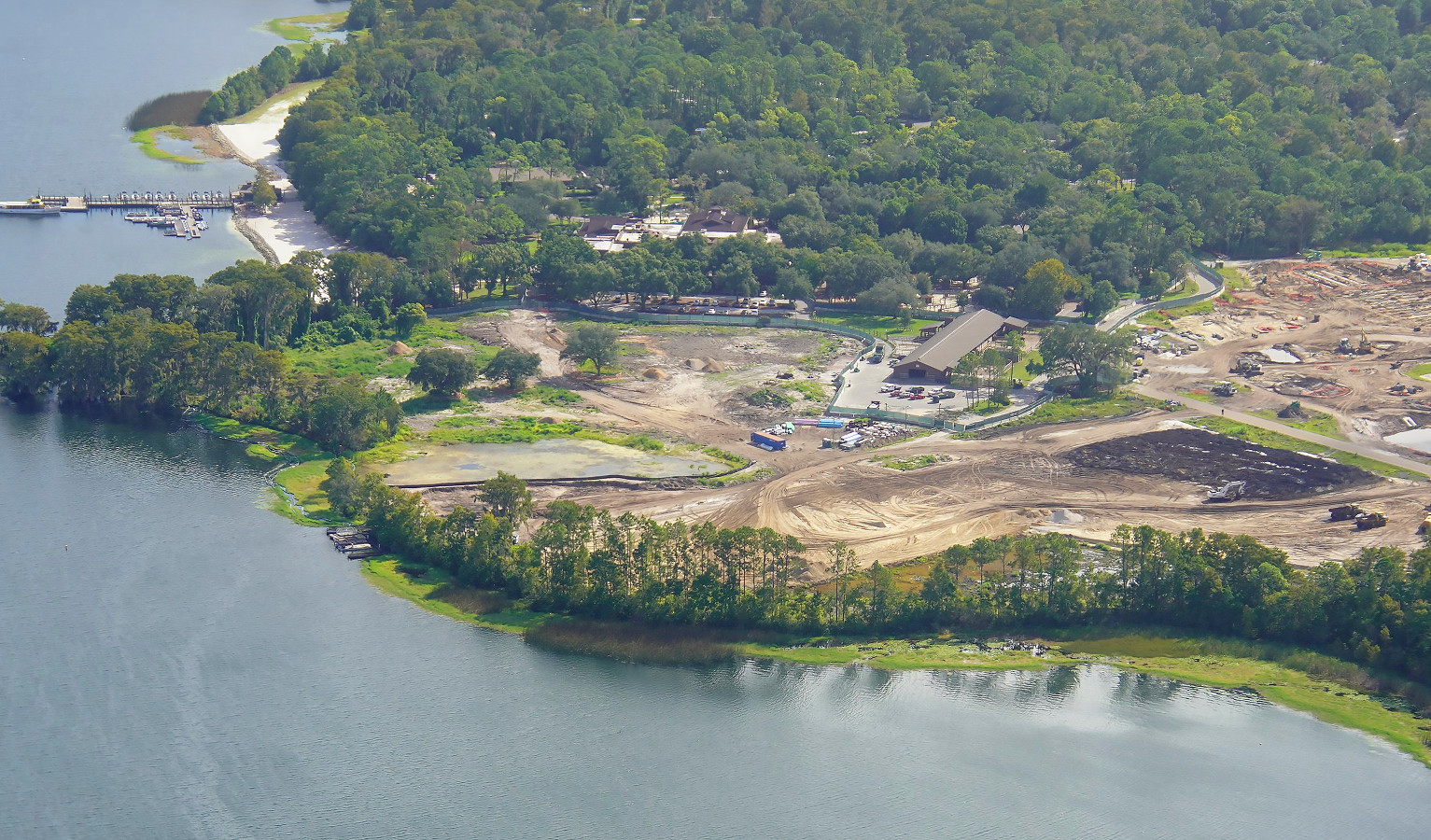
After losing much of the history and charm at the Polynesian earlier in the decade, in 2019 the final, untouched pocket of old school WDW fell. The bulldozers arrived at Fort Wilderness to clear away River Country for a new hotel. Like the Gran Destino it will probably be very nice and probably pretty incoherent - its ostensibly about nature, and Pocahontas or something but it looks like a mid-century Radisson.
@bioreconstruct
And with that, the Walt Disney World I fell in love with as a child was finally gone. That same Walt Disney World that was still almost kinda hanging on when I worked there, the one I began writing this blog about, has finally sailed its last phantom sidewheeler steamboat across Bay Lake and vanished.

It almost, nearly, made it to 50.

If you're reading these words there's a good chance that it was your version too. But the thing is,  there is out there right now somebody who never rode the Backlot Tour or Alien Encounter or Horizons who will love it, and perhaps they'll be the next ones to pick up this thing we were part of and carry it forward.

It's not our Walt Disney World anymore... but it might just be somebody's.

Friday, December 15, 2017

Conflict in Theme Parks

“Over the years Disney repeated to his animators: “Make it read!” Meaning, make the action distinct and recognizable. No contradictions, no ambiguities.” - Bob Thomas, Walt Disney: An American Original
You, the audience, make your way through the Temple of the Crystal Skull. You know Dr. Jones has been here - he's set up his base camp, disarmed booby traps, and his name is on the attraction marquee. But now he's vanished inside the temple, and his faithful assistant Paco, who can't operate a tripod, decides to send you directly into certain death!

....Hold on, back up here. Let's take this from the top.

We're all taught in Western storytelling that nothing can happen without conflict. There just can't be a story of renewal or growth without somebody running into some kind of obstacle, or antagonist. Many people think the antagonists are more interesting than the heroes who fight them. Even a cursory glance at a single scene from most major Hollywood movies and you'll see it's mainly a checklist of characters developing or resolving conflicts. Sometimes, when the conflict building isn't adequately disguised inside the narrative spine - as in the recent Hobbit movies - audiences rebel.

In contrast, theme parks seem to operate in an entirely different register, despite otherwise seeming to be a direct outgrowth of traditional Western art forms like theater and filmmaking. And while we conflate the effects of multiple art forms - think of those who consider an especially visually appealing area to be "painterly" - the fact is, theme parks construct their meanings quite differently than other narrative modes like cinema.

Although they've been the dominant narrative mode for most of the last 110 years, films have limitations. Film scholar Tom Gunning notes that "Whereas literature is never directly iconic, film, as a series of photographic representational signs, is. [...] In film, the excess of [surface detail] over meaning appears automatically with the photographic image." Films can depict dreams, but they can't really convey thoughts; they are full of surface details, but audiences must know which details in-frame are relevant. We begin to realize the unique difficulties of storytelling in the themed space when we realize that  filmic limitations apply to spaces such as Disneyland, but the difficulties are multiplied!

Unlike in a film, a themed space can be experienced in any order, and at any speed desired. Unlike a film, images may be examined from multiple perspectives, and linged over or rushed past as the viewer desires. And unlike film, the gaze cannot entirely be fully directed, although a truly exceptional themed space can "drag" the eye through it in controllable ways. Themed space shares the visual limitations of films, but without the benefits of editing!

This means that if you want to tell a story in a theme park with an identifiable bad guy, there can be no cut "back at the ranch" while the villains hatch their scheme, no leisurely unfolding of information through a first act. Themed spaces tell stories that hardly ever break down in acts; it's all action, as if you had to tell an entire film's narrative in the context of one huge action scene. Given these limitations, it's amazing that any theme park stories work at all!

So what's the solution? Theme parks tell stories that boil down to morsel size "storylets" with lots, and lots, of conflict.

On one end of the spectrum, we can look at an attraction like Alien Encounter, which had so many various conflicts going on at once it was confusing. There was the conflict of the X-S Tech Corporation wanting to demonstrate its very poorly tested teleporter technology, the conflict of Chairman Clench wanting to teleport into the theater but being unable to, the conflict of an alien bug wanting to eat the audience, and an extra layer of conflict of the XS Tech technicians trying to figure out how to get the bug out of the theater. If Western narrative wisdom about conflict were applied here, this would seem like a winner, and perhaps it would have been - in a feature length film! In the practice of an 8 minute theater show, with an excess of telling instead of showing, it all came across as a lot of shouting.

Another attraction where there's simply too much going on to be digestible at the fast pace required of a park attraction is Dinosaur - in this one two characters even get into an argument in the safety film! We think we're entering an ordinary museum, but surprise! We're going to be sent into the past in a time machine they built in their weird basement secret lab. Once on the ride we're required to keep track of multiple story threads simultaneously: we're supposed to be looking for and capturing a highly specific dinosaur, while also being pursued by another highly specific dinosaur, while also somehow getting out alive before a meteor hits - three jobs nobody associates with bounding around in the dark with dinosaurs. While Dinosaur checks the boxes of being a thrill ride, most guests forget one or two of these plot points while actually going through the darn thing, and the payoffs never register as well as they should.

If we want to look at a more successful example, we could look at the Indiana Jones Adventure, where we are asked to keep track of a missing person narrative about Indiana Jones, a not very fully thought out danger situation involving an angry Indian god, and finally our own desire to survive the ride. I think where Indiana Jones Adventure succeeds whereas Dinosaur fails, is because the first two conflict threads or storylets pretty much resolve immediately; they're only really there to keep us engaged while we're waiting in line, and manage to sneak in a safety film sideways without seeming abstruse. Pretty much right away Mara decides to kill us and Indiana Jones is recovered; with those resolved, the only remaining pressing concern is to survive the temple.

Indiana Jones Adventure and especially Dinosaur spend an inordinate amount of time checking the boxes of classical story structure, to really no discernible good end - ask anybody coming off either ride to identify what the main conflict in the ride is, and they won't. Or, more accurately, they'll fall back on descriptions of things that happened to them - we dodged the Carnotaurus, we avoided the rolling boulder, with no consideration whatever for the elaborate conflicts and storylets laid out inside the narrative for them. With such complicated considerations, the harried theme park designer starts to long for the simple life.

--

I consider these three attractions to be just about the most convoluted experiential narratives ever devised in the industry, and really only one of them works to any degree it was intended to, so let's back away from the double (or triple, or quadruple) conflict narratives and look at some middle-ground examples.

Let's consider Big Thunder Mountain Railroad as an example. Yes, there have been various layers of narrative complication added to the attraction over the years, mostly in the form of queue area entertainments, but when you get right down to it, the basic conflict of Big Thunder Mountain - the one you actually experience between getting on and off the ride - is that you decided to ride a runaway mine train, and now you are on a runaway mine train. Various things, little "storylets", happen to you while you're on the train, and each is more exciting than the last, until you arrive safely back at the station.

Or, to take another famous example, there are many opinions and rumors as to what the "story" of the Haunted Mansion is, but in reality the story is simplicity in and of itself - you, played by you, decide to enter a haunted house and you live to tell the tale. That's it. The ride implies universes of characters, connections, and backstories, but in the end it's really just the story of you spending a night in a haunted house. Does it really need to be anything more?

Perhaps the pioneering narrative conflict told in themed spaces is what we may call "Dodge The Witch", in which you avoid various dangers and make it out okay. Under the guise of "man vs. nature", The Jungle Cruise is basically a Dodge the Witch ride. Grizzly River Rapids is an very good Dodge the Witch - it may not have a grizzly bear, but it does have plenty of dangers and surprises. Even Disneyland's Matterhorn is an exceptionally carefully modulated Dodge the Witch, in which there's nearly nothing doing the storytelling except some steel track and an abominable snowman.

Yet aren't Indiana Jones Adventure and Dinosaur also Dodge the Witch rides, to some degree? Is there perhaps something to the fact that most riders blithely ignore all of the carefully modulated narrative information and conflict setup in these attractions and gleefully report that they did indeed Dodge the Witch?

Laff in the Dark, Early 1930s
--

Here, then, is one crucial distinction in the way theme parks tell stories and the way everyone else tells stories. A novel, or a film, or a play, must engage in a lengthy setup in which character are introduced, a situation is outlined, a conflict identified, and then pass through an inciting incident which sets the rest of the narrative in motion. Theme parks don't need to do this.

Why? The reason is because the only characters that really matter in theme parks are the spectators. That's the reason people visit, after all - we sail over London, we encounter some dinosaurs along the Disneyland Railroad, we ride the Hogwarts Express. This is what themed spaces can do that nobody else can, and it's the blend of passive and active participation that makes the places resonant. There doesn't need to be an inciting incident because it already happened when we entered the park.

There is conflict (or at least drama) baked into everything that we do at a theme park, because by their very nature theme parks are places of the exotic and strange. The unspoken contract that exists between the themed space and the public is that we will agree to be mildly inconvenienced while entering an attraction in exchange for being excited inside it - this is why it's disappointing, sometimes enough to make news headlines, when the ride breaks down and the excitement is ended prematurely. Themed spaces are orderly areas of pictorial effects which break down in irrational and chaotic images, briefly glimpsed, once we hop into that Mr. Toad car.

This is why the attractions that really matter, that really last, tie up the conflict with the theme of the attraction in a way that's seamless: we decide to enter the jungle, board our jungle steamship, and are guided through the various dangers. That situation doesn't need anything more than to be present to be understandable, it uses very clear, very understandable visual cues to work. Everybody knows that giant snakes and cannibals are bad news, and - uh oh - now it's happening to us!

This is also why a ride like Space Mountain can work across time and cultures in a way that the Delta Dreamflights of the world could not. Just as with Big Thunder Mountain, Space Mountain really offers amazingly little information about what we are doing or why - we're going into space, and space is weird. The drama is right there in the attraction name, and as far as theming goes, all that's really required is that the vehicles look like rockets and we're off. Again, riders bring more drama to the experience than the designers need to supply, because themed spaces work differently.

This also points towards one feature of themed spaces which the rules say would seem impossible in other media: the low, or no, conflict experience. There's the Enchanted Tiki Room, which 50 years on still enraptures audiences by doing nothing more than slowly coming to life. Consider also the Skyway, which requires severe interpretive methods to find any conflict in it. Or It's A Small World, where the entire darn point of it is that it's conflict free. Through the 70s, Disney repeatedly attempted to make a Small World movie, and repeatedly failed because to introduce conflict into that experience defeats the whole reason it exists in the first place.

During the construction of Disneyland, Walt Disney repeatedly instructed his designers just to "build something people will like". In theme park analysis circles we like to say that areas need a mix of A, C, and E tickets to be successful - a shorthand to refer to the "levels" of the attractions that are needed to flesh out any themed space. But it may be just as well to refer to these ticketing levels in terms of levels on conflict - this is why Tomorrowland doesn't feel complete without a Peoplemover, because the Peoplemover fulfills the role of the Mark Twain steamboat in Frontierland - a relaxed scenic experience with no plot or conflict to speak of.  The low conflict attractions round out the day with a variety of low-stakes experiences that are "safer spaces" than the Jungle Cruises or Space Mountains. Every child implicitly understands this unspoken dynamic.

--

This mass of data seems to suggest, more than anything, that there is in fact a diversity of ways to build a successful theme park attraction's story - there may be plenty of bad examples that hog the spotlight, but for every three unsuccessful, obvious examples, there's at least one where the thing works just fine.

What can be said is that conflict in theme parks can be implied in such a way to require almost no special treatment, or indeed even be a component of creating a compelling experience. The aesthetics of theme parks, and the unspoken contract between themed spaces and spectators, is such that there can be narrative inherent in simple visual designs and enveloping environments that can supplant the need for a formalized conflict. In this sense, themed spaces have a power to suggest narratives in a way nearer to the way that fine art like painting or sculpture can: through the deployment of such features as colors or shapes.

Although themed spaces are absolutely the nearest to cinema in terms of logic and effect, the theme park has a secret power that cinema does not: it can be iconic without needing to be abstract. Every so often, somebody comes along and tries to make a film that is played out entirely from one character's point of view, replacing the "I" tense in traditional novelistic storytelling with the filmed camera. This never ever works; it's easier for audiences to invest in screen characters depicted on the screen rather than as the screen.

Theme parks are films that happen to you, and they happen with no signposting or role playing. Think of the Disneyland Railroad: imagine if you made a film out of those events. You'd have an avant-garde film; mass audiences would say that it makes no sense, that it's outside their comfort zone. But millions ride the Disneyland Railroad every year and take its bizarre mix of nostalgia, sightseeing, and time travel totally at face value. That's the secret power of themed spaces, the power to compel without the need for a formalized narrative or even narrative logic.

Ready for more deep dives into the hows and whys of theme parks? Check out our Park Theory Hub Page, host to dozens of long essays just like this one!

Monday, December 28, 2015

Passport to Dreams 2015 Year-End Review

Out And About In The Parks

While 2015 can hardly be said to be a banner year for changes in the parks at least in terms of the sorts of things Disney heavily promotes - new rides, expansion areas, etc - sometimes it's the minor changes that say more than the major ones. I like to describe the theme parks as big clockwork mechanisms filled with tiny pieces that all need to be moving in precise synchronization. Yes, the clock will stop if a major piece gets broken, say when the monorail to Magic Kingdom goes down. But all of those little pieces are just as important too, and if they get all rusty and wonky then even if the clock is still running then you'll know that it isn't keeping good time, that something isn't quite right.

Most of the Walt Disney World parks are more on this side of the equation: there's enough wonky, small pieces that you can tell things aren't quite right, even if it's hard to say exactly what or why. Conversely, 2015 saw a lot of those tiny pieces get improved, and the benefits may not command extensive celebration through the official sources, but once enough small things get improved you can feel the whole park, the whole system, elevated like a boat gently lifted by the tide.

This is a year to applaud small but worthwhile victories.

Remember the Maliboomer at California Adventure? It was the huge, basically unthemed launch tower of the west side of Paradise Pier? As part of the overhaul of the park, it was removed and not replaced. It was a rare case of enhancement by omission; California Adventure was stronger with nothing in its place. Well, 2015 saw one of the biggest things go the way of the Maliboomer of all time.

This was the grossly inappropriate Sorcerer's Hat at the end of Hollywood Boulevard at Disney Hollywood Studios. And while this is a design oriented blog, I'm sure I don't need to launch into a long description of why the hat was a poor choice. It speaks for itself, absurdly perched as it was at the end of the nicest stretch of themed architecture in that park. What I'd like to point out is how unexpectedly refreshed I was to see it gone.

It had been long enough - 15 years - that I had forgotten how that particular piece of forced perspective illusion was supposed to work, and once the hat (and the stage after it) was taken down, I was frankly dazzled by the view, and it's been a long time since anything in that park actually dazzled me. I was totally unprepared for how effective that view was, how correct and symmetrical the Chinese Theater looked at the end of the street. I had forgotten how effective the tiny corridor opening up to a huge central courtyard actually was, and how near the Theater looked from the end of the street, only to seem suddenly twice as far away from you as it really was once you passed the shops. It's a really nifty optical illusion, and by simply being revealed again it elevates the entire experience of walking into that park from mildly impressive to really engaging.

But moreover it was really exciting to stop and listen to guests walking into the park and hear things I hadn't heard in 15 years: "really cool!", or, "what's in there?". The simple fact of removing the hat means that suddenly the entrance to Hollywood Studios is a place of glamour and intrigue instead of an art deco sidewalk leading to a giant blue metal cone. It gives that park back one of its signature subtleties, imparts meaning and intrigue, and is no less important than the castle at the end of Main Street for making guests feel like they paid for something special.


Hollywood Studios is in the midst of an identity crisis. Very soon, basically the entire back half of the place is going to be leveled, and turned into one of those modern day Imagineering extravaganzas modeled on the success of that wizard boy next door. Being a romantic at heart I wish the entire park could be skinned into some sort of Golden Age of Hollywood fantasy, but I know that millennium falcons outsell films noir by a hundred to one. Disney-MGM Studios was once a place of great promise that ended before it ever really got started: Dick Tracey's Crimestoppers, Red Car Cafe, The South Seas Club from The Rocketeer, a Who Framed Roger Rabbit Toontown; all of these things came very close to being. And while at this point any change is better than none, those of us who find the romance of alien world and lightsabers cold comfort compared to the fantasy of the past will have to keep looking.

Speaking of Imagineering extravaganzas, the vaguely anticipated opening of The World of Avatar at Animal Kingdom draws nearer, and from what can be seen by peeking over construction walls, the place looks bananas. Comparable to the astonishing desert landscape created for Cars Land at California Adventure, nothing short of seeing it with your eyes can properly describe just how large this thing is.

But even better than the future home of blue cat individuals has been the change evident at Animal Kingdom over the past year. Disney's clearly cashing in the whole donut for Avatar, and in the meantime Joe Rohde has been using the extra money swimming around to improve almost everything that was already in place in the park. As a result, Animal Kingdom has quietly elevated itself from an ambitious effort to the best themed attraction in the United States.

Some areas required nothing but a doubling down and removal of tacky elements, like the brightly painted safari animals covering the buildings in the center of the park. Others, like the already excellent Harambe, have been tripled in size in a manner consistent with the excellent standards already in place. The new Harambe, with its repurposed British colonial fort, new port, railway line, and expanded neighborhood out back, now can fit comfortably alongside Disneyland's New Orleans Square and Universal's Diagon Alley as one of the best things of its type that can be experienced anywhere. Once you factor in the remarkable accomplishment represented by the Kilimanjaro Safaris back in 1998 as part of the "land", it becomes even more impressive.

Out at the front of the park, the central area in front of the Tree of Life has been smartly rebuilt. Animal Kingdom canceled its' parade, which at first may strike one as a loss, but the gain was that WDI took the initiative to replant the open area in front of the tree into a tree-shaded courtyard with whimsical touches and in the bargain exposed a waterfall off to the right of the tree that had been there since 1998 but had been impossible to see from its intended angle. Again, these are tiny fixes, but they make Animal Kingdom a delight to visit, which isn't something I ever thought I'd say.

Speaking of making places inhabitable, as Downtown Disney became Disney Springs this year, what I previously thought was impossible finally happened and that area actually became a pleasant, even pretty walk. The changes here are too numerous to encapsulate and aren't even complete, but the walk from West Side into the Marketplace (finally after many years renamed the Village Marketplace; hooray for history) is now full of rich textures, unique architecture, and most importantly a sensation of relaxation. While the West Side will likely never be perfect, new tenants and a new look has returned to this property a sense of relaxation and charm that went away in the 90s.

One of the best things to do is free, and it's to walk through the new Boathouse restaurant to the dock bar out back, then walk down to the water where two dozen or so beautifully maintained vintage boats are there just for you to look at. It feels like old Disney, when Magic Kingdom and EPCOT had things out to see just because they were cool and weird.

 The Boathouse Restaurant is owned by the same CEO who made his fortune through Rainforest Cafe and the similar T-Rex next door, but the Boathouse is as personal and charming as Rainforest Cafe is unfortunate and tacky. He built the place and put the boats out on display because he thought it would be cool, and the difference is like night and day. Frankly it reminds me of the fact that 90% of Disneyland, and by extension the Magic Kingdom, is the way it is just by virtue of the fact that one guy with the financial clout to back his ideas wanted to build stuff he thought would be cool. We need more of that these days.


Trader Sam's Grog Grotto

I will never get over the removal of the Polynesian waterfall. Never. And while I'm in agreement that the Polynesian needed a refurbishment and that most of the hotel now has a fresh feeling it hasn't had in years, none of those factors stack up nearly as much as the fact that the lobby is now a charmless, dead place. So while gaining an excellent bar does not exactly "make up" for gutting the most distinctive thing about the Polynesian, it is a darn good bar, and deserves a bit of celebration outside the scope of my indefinitely extended waterfall mopery. Walk clear past the charmless tiki state and indifferent pile of rocks; head directly for some liquor, because Trader Sam's Grog Grotto is pretty darn good.

An excellent addition in 2015, at least for those of us who enjoy strong drinks in dark places, was the opening of the east coast outpost of Trader Sam's, the popular tiki bar which began life at the Disneyland Hotel in 2011. I quite liked the original incarnation in California, and I like the version at the Polynesian as well. On nights when business isn't too strong and the wait staff aren't constantly shouting, it's even near the Tiki Bar ideal of dark, strange, and contemplative.


Most of us who enjoy the trappings of faux-exotica got the itch from the Enchanted Tiki Room, so it's interesting that the imitation has swung back around to be a legitimate source for an imitation of an imitation. Of course, the original tiki kitsch was itself an imitation of the real thing, spiced up with foods that imitated oriental dishes and drinks the imitated caribbean punches, so what previously was a direct line between inspiration and imitation has turned into a mobius strip. That's part of what's awesome about Tiki: it's simultaneously absurdly convoluted and unreasonably dedicated to casualness.

I wish the east coast drinks were poured heavier in the way they are out west, but overall I think the Grog Grotto is an all-around improvement on the original model. I love that the entrance to the place is an inconspicuous door with a small sign that opens up into another world, and I find the bar bites to be far better than the fast food served in Disneyland. But the real win is the outdoor patio. At Disneyland, if you sit outside you're missing all the fun, but that's at Disneyland where you're in the middle of a hotel from the 60s in the middle of Anaheim. At Walt Disney World you're on the shores of the Seven Seas Lagoon with the Magic Kingdom glittering across the water and, later on, a personal elevated view of the Electrical Water Pageant. That mean you're in one of the finest man made environments ever constructed, never surpassed. Best of all, tables are almost always open outside. When it comes to a few fortifying drinks before heading into the human jungle of the Magic Kingdom, Trader Sam's isn't just an improvement, it's a new tradition, and they don't mint those every year.

Sailing the River of Time

It's time to be honest here guys: El Rio del Tiempo wasn't very good. I loved it deeply and I miss it, but it just wasn't very good. There was a condescending attitude throughout El Rio which no amount of interpretive dance retellings of Mayan and Incan civilizations could disguise; its Mexico was a Mexico of charmingly foreign shopkeepers selling worthless trinkets and mariachi serenading white tourists in hot tubs. It all climaxed with a gloriously ghoulish finale where Mexicans became weird marionettes endlessly circling under artificial fireworks.

With the exception of the lovely, mysterious atmosphere created by the opening tunnel tableau with the mysterious Mayan priest materializing out of a tomb, Gran Fiesta Tour takes most of what was good in El Rio (the sets) and improves it with more color, more action, and more variety. It better presents views of modern Mexico and adds a sense of fun and color that the mostly mysterioso, dour El Rio never attempted. The trouble was, it really didn't have an ending. Nearly ten years later, all of that was fixed with the return of the Three Caballeros figures from Mickey Mouse Revue.

In some ways it's actually strange to have something in the center of that room that you really, really want to look at. There never was anything wrong with the Marionettes in El Rio, but they always were upstaged by the fiberoptic fireworks and Mexico City mural. The initial climax of Gran Fiesta Tour was just another screen in the back of a stage, and I always found the animation on that final screen to be less inspired than the rest of the animation in the attraction, and especially weak compared to Ward Kimball's masterpiece song sequence from the 1946 film.

There's now something that neither El Rio nor Gran Fiesta Tour had in that space: a real sense of payoff, that you rode the boat and reached a goal for a darn good reason. I always felt that El Rio climaxed with the appearance of the Mayan priest and basically coasted, evenly but unremarkably, until it ended. Had the team behind Gran Fiesta Tour found a way to retain the sense of shrouded mystery in that opening tunnel and then transitioned into the steady build of the rest of the ride, with this addition I'd be comfortable saying that Fiesta is a better ride than El Rio. As it stands, the new finale puts them on about equal footing in my mind.


Mind you, my heightened esteem for the ride is a reflection of my admiration for the Three Caballeros figures. These fellows aren't just historically relevant, they're awesome. Mickey Mouse Revue was long gone by the time I first stepped foot in Magic Kingdom, so my exposure to Mickey Mouse Revue was limited to pictures and video. It was not only hard to guess the size of the actual figures, but how they would look in motion. These guys have that elusive X factor that seemingly everything that WED and MAPO would turn out at the height of their powers had. They're cute and they look incredibly alive. And they move so well that many people have been led to believe that they  have entirely new interior functions, which isn't true. MAPO was just darn good at building these things and Tokyo Disneyland was darn good at maintaining them.

Kudos are also due to WDI East for the figure finish on the existing animatronics, of course, which have never looked better, and a snappy new animated performance. But really, this is the sort of enhancement that we shouldn't have to wait ten years for at Walt Disney World.

There's hundreds of areas around the resort that could use improvements that aren't demanded, but still needed, still meaningful. It takes all of the thousands of tiny excellences moving in harmony to build the sense of remarkable show and quality product that Disney once excelled at. Small, meaningful passion projects with dedicated teams striving for excellence needs to be the rule, not the exception.

Captain EO Returns To His Home Planet

Let's take a moment here to appreciate that for a little over five years, Disney has been inflicting Captain EO on otherwise unassuming tourists. Bigger, tackier, and yet somehow more heartfelt than anything our modern age would be likely to try to pawn off as a normal piece of entertainment, Captain EO has been consistently pulling good attendance numbers but also has been consistently scored low on polls. That's not surprising, because the very nature of such a film is that it must resonate strongly with a statistically small portion of the audience. Bringing back Captain EO in the first place may have been a strange choice for 2010, but since then it has grown into a cult film, fiercely loved by a small subsection of its audience.

It's funny that Disney has a cult film to begin with, Disney being as wholly dedicated to the most palatable, most widely popular manifestations of popular culture as any entertainment company on earth. it's doubly funny that it's Captain EO, which in 1986 was something of a distillation of the most middle of the road taste possible: a music video produced by the creator of the most successful motion picture series of all time, starring the biggest pop star on the planet. A 2015 equivalent would be a YouTube reaction video directed by Peter Jackson starring Lady Gaga and lots of explosions. Yet the world turned, and this gigantic expensive glazed ham somehow aged into the finest cheese possible. It was ludicrous, bereft of taste or tact, and I loved every deranged minute of it.

So rather than mourn the passage of Captain EO or opine on its replacement, I'd like to celebrate that it was here at all again to begin with. and that it resonated with the few it did. Indeed, it's impossible to claim that it's anything less than supremely irresponsible to be presenting such a strange film to 2015 audiences at all. Sometimes, popular taste moves on and things which once seemed like a normal, logical part of everyday life are revealed later to be batshit insane. That was Captain EO. It was too weird to die. In a world where artisanal kale salads are the norm, Captain EO was a tuna lime gelatin loaf, an antique of a time long since passed. Now that the Second Age of EO has passed, I salute it passing here while recognizing that it was a bizarre aberration to begin with. I was delighted to enjoy it for the five years that I did.

Farewell, Hooter, Commander Mog, the Supreme Leader, Idy and Odie, and Fuzzball. May you repose peacefully beneath a fried egg, a chain of sausage links, and a marshmallow until the end of days.

Magic Kingdom's Minor Changes

It's been a long time since I've really had to fuss too much over the condition of the main park of my interest. Yes, it wasn't that way even ten years ago, but I think it's safe to say that the era when we have to be constantly concerned that WDW is going to shutter our favorite attractions at any moment has passed. The ones that survived the 90s survived and the rest seem sufficiently popular enough to be bulletproof. Meanwhile the Studios and Epcot share less and less of the pie of visitors every year, and Disney seems more and more reluctant to present visitors with anything out of place in their keystone park.

In other words: this park is slammed, and every year it seems to get worse. Don't expect anything to change, at least in the next five to seven years, as Animal Kingdom, Studios, and eventually Epcot's re-expansion efforts go online. As pleasant as New Fantasyland is aesthetically, it's increasingly clear that only the Dwarfs Mine Train is actually pulling its weight in the numbers department. What Magic Kingdom needs is a couple of brand new huge attractions, probably one on each side of the park, to start sopping up demand. The park was designed back in the 70s to accommodate around 35,000 people daily. Fastpass and the declining popularity of former attendance drawers, combined with the fact that twice that number regularly descend on the park, means that Disney's window to be proactive with this park passed about six years ago.

The good news is that it's now easier to count the attractions that have not received some kind of major cosmetic upgrade than it is to count those that have. In the realm of those that opened when the park was young, it's pretty much down to Big Thunder Mountain Railroad, Tom Sawyer Island, Peter Pan's Flight, and Carousel of Progress. Big Thunder has needed a gigantic facelift for going on ten years now, on the scale of the work done at the attraction in Disneyland recently. It's been on and off the schedule for next year, but the park may be trying to delay it until after Avatar opens at Animal Kingdom in a year and change.

But frankly overall, the place has been looking really sharp for a very long time. While I don't care for the current shortened version of the show, on the technical level Country Bear Jamboree looks terrific, and even the neglected old Carousel of Progress - which I was on a boycott of for about five years due to Disney's refusal to do anything with it - as recently as three weeks ago was looking surprisingly bright and smooth. Even the long-forgotten show scenes along the back stretch of the Rivers of America have gotten upgrades and refurbishments recently, for probably the first time in over twenty years.

In early 2015, the Sunshine Tree Terrace and Aloha Isle swapped locations and menus, meaning that Dole Whips are now dispensed by the exit of the Tiki Room and Citrus Swirls may be purchased near the front of Adventureland. As a historically minded type I'm supposed to be angry about this, but I'm not really - it makes good sense. Sunshine Tree Terrace has always had an unusually huge counter and a short line. The Dole Whip, meanwhile, despite having been scientifically proved to be vastly inferior to the Citrus Swirl, has always had more of a following. It can be chalked up to a bigger social media presence or perhaps just the American sweet tooth at work, but it is what it is. And while  it seems unfortunate to cut off the Sunshine Tree Terrace from the Sunshine Pavilion, there's some compensatory developments.

To begin with, I like the new sign for Sunshine Tree Terrace better than either the Aloha Isle sign or the 2012 version of the Terrace sign. Aloha Isle's new sign also retains the 1960's lettering reintroduced for the Orange Bird roll out in 2012, so I've got no problem with that.

But besides relocating the historic Orange Bird figure to the new Terrace location and giving him an awesome sign, the move did accomplish one thing which has long been on my wish list for Magic Kingdom: put up some decor in the juice bar. It's long been little but a bare room with some bamboo wallpaper, and once the bird was relocated on a new shelf he was joined by shelves of vintage citrus juicers, plastic fruit, and even a new chalkboard showing which fruits have recently arrived in stock. Many of these props seem to have been leftovers from Disney Springs' expanded margarita bar, but I don't mind. Some theming is better than no theming, and that's just one more original Magic Kingdom interior that's been tastefully embellished to be more in line with our modern conception of a "theme park".


In the department of "things only I care about", earlier this year there was general online consternation about the closure of the "Island Supply" shop in Adventureland in favor of a third party vaguely themed Sunglass Hut outfit. It's as lightly themed as the previous shop in its space was, and as lightly themed as the shop before that was, and so the changeover resulted in little more than a disinterested shrug in Passport HQ.

And then they went and changed something which had long been a bone of contention with me, which was that every store in this spot since at least 1972 has used a banner for a shop sign. I've never liked the look of it and like it even less with the covered patio that was added to the front of the store in the 90s:


And just as annoying to me was the missing light fixture on the side of the adjacent facade which has been missing for literally as long as I could remember. I used to call it in back when I worked at Magic Kingdom (in the previous decade!) only to be told that there was no such missing lamp!


So, here's the happy ending: the renovation of the facade included not only a permanent sign not on a tarp (!) but a replacement, appropriate lamp on both sides of the facade! You can call that a hollow victory that appeals to people who do things like take pictures of every light fixture in the park, but it's something that no longer needs to annoy me when I enter the park and walk through Adventureland.


Pirates of the Sunken Boats

Pirates at Magic Kingdom has really lost its way. In 2006, the nonsensical movie overlay imposed a narrative on the ride that makes no sense, and did worse aesthetic damage to the ride by removing various details that made the Florida Pirates the Florida Pirates.  Then, in 2012, even more random stuff was added to tie into the release of the On Stranger Tides movie, including mermaid projections in the water and a mermaid skeleton on Marc Davis' otherwise perfect "Dead Man's Cove" scene. Meanwhile, 2006-era Jack Sparrow figures sat unnaturally cheek to jowl with Pirates constructed in 1973 and still chugging along by the grace of quality, if fifty year old, engineering.


Pirates finally got its shot in the arm this year. Long outdated technology was finally upgraded, from digital sound with new speakers, to LED lights, and fully upgraded animatronics. It's actually startling to remember that at one point this ride's illusions were considered to be wildly impressive and lifelike. As part of the refurbishment, all of the pirates figures were removed and rebuilt and many of the sets refurbished. Everyone came back with new costumes, new hair, new skin, many with new insides, standing in completely refreshed sets. Some of the pirates and townspeople now have dark complexions more appropriate for what one could expect to see in the Caribbean.

All of the faces and hands of the pirates are painted with techniques that were first introduced at the Hall of Presidents in 2009 to give their faces the impression of actual skin instead of painted rubber. The Auctioneer was replaced with a new(ish) figure entirely, and has a new look closer to Marc Davis' concept art and the most impressive animation I've seen in a version of this ride yet. Even minor touches like the lighthouses in Bombardment Bay and the torches in the queue have new, improved fire effects. The result is startling: the ride looks and feels like it was built yesterday. It's all great, great news.

Old-Timey People Warn: YOU WILL GET WET!

Now for the bad news: a few years ago Magic Kingdom decided to buy a new fleet of boats for the attraction, made of a lighter weight plastic instead of the old fiberglass and metal. The reason for this, besides the age of the fleet introduced in the 90s, was to try to combat the increasing weight the boats are required to carry. As you may know, Pirates of the Caribbean's ride system is designed to accommodate boats of five rows a piece. Back in the 90s, the load area was redesigned and new six row boats were introduced to improve capacity at the attraction. Operations still wants to fit as many people in the boats as possible, but with people being much bigger than they were in 1973 when the attraction was designed, it's a delicate task to balance the new boats with the old ride infrastructure and still end up a ride that works as intended.

To be blunt: they did not succeed. The new boats drag too low in the water to begin with, and if balanced just right make a terrific splash when they go down the ramp into the lower floor of the ride. And to make things worse, they take on water.

The result, combined with the inappropriate introduction of Fastpass to the ride as part of the troubled MyMagic+ rollout, means that Pirates almost always has a slow moving line and breaks constantly. I've read elsewhere that Magic Kingdom is currently trying a "back-up" plan to help the boats, and I've been in one of the new boats which was bone dry and went down the drop as smooth as glass. Being a former Pirates ride operator, that impressed the hell out of me. But I've also been in a boat that dragged far too low in the water, barely made it over the drop, got stuck twice in the ride, and was flooded with almost eight inches of water when the boat behind mine, empty and floating at normal draft, pushed a wave of ice cold chemically Pirates water into the row by bumping us from behind.

Furthermore, the damage done in 2006 still has not been undone. The cannons on the fort facade no longer fire, which is integral to setting up the story inside. The "soldiers in the fort" dialogue in the queue still plays too low, and is drowned out by the inappropriate use of the "Pirates Overture" music instead of the music selected by the designers of the ride in 1973. The music which was selected in 1973 is known as "Pirate's Arcade" and is only meant to play in the queue's entrance tunnel. The parrot on the facade has been M.O.A. since 2006 and really needs to be brought back. The talking skull before the down ramp was removed for no good reason, and his wiring and speaker is still in place behind the wall. The skull is a key character in every other version of the ride, and his absence at Magic Kingdom makes an already somewhat weak ride even weaker.

The mermaid projection effect seems to have gone away with the new refurbishment, which is perhaps for the better, but there's still a mermaid skeleton and wrecked boat cluttering up Dead Man's Cove. The mermaid skeleton was re-staged in the refurbishment and looks better, but still weirdly out of place. The middle pirate skeleton in the same scene, with the sword in his back, was replaced in 2005 with a new figure whose head is weirdly raised. This is fallout from a plan to have this pirate skeleton talk, which was abandoned. It looks silly and really ought to be changed.

"I'm not dead yet!"

The same year, Disneyland restaged their Cove scene to more closely resemble Marc's concept art, which is just more evidence how disorganized and rushed the Jack Sparrow project was. Also introduced in 2006 was a new piece of music for the Cove scene, obviously written for Disneyland's grotto sequence in mind, where the atmosphere always has been melancholy and mysterious. The trouble is, Marc redesigned the caves in Florida and intended it to be dark, and scary - that's why there's a low ceiling and used to be very dim lighting. The "Grotto" music from 2006 never quite fit right in Florida, and I think WDI knew this. They replaced it with the sound of singing mermaids in 2012, which is closer to spooky, but still needlessly distracting.

Here's the bottom line: Pirates in Florida is not Pirates in California. There's no time travel in the Florida ride, and never has been. You see a fort being attacked. You enter the fort and hear the soldiers discussing the fact that the pirates are attacking. You load into a boat to evacuate through the secret back entrance to the fort, which happens to be through a cave where we learn pirates buried treasure long ago and are perhaps returning to claim it. As we load into the boats we can see the boat filled with pirates out there on the ocean, coming to attack the fort! We slip through the caves and when we emerge outside there's that ship we saw when we got on the ride, and it's right there attacking the town. There's no way to turn this sequence of events into the Disneyland ride, not even by closing our eyes and stomping our feet. Pirates in Florida needs to be its own thing, and it was, from 1973 to 2006, when it was made into an even paler reflection of what's out in California.

Enough. Let's do right by this ride. Bring all of the weird unique stuff back, and we can even keep Jack Sparrow in the bargain. The ride currently looks better than it ever has, but it makes no sense and I think audiences respond to that fact on some deep, unspoken level.


Lounging on the Veranda

The Twenty-tens may prove to be some sort of renaissance for unanticipated Disney World resuscitations, with the Orange Bird of course at the top of that list. Arguably a physically bigger deal is the return of the Adventureland Veranda, a marvelously atmospheric counter service location at Magic Kingdom which was shuttered in... July 1994. It's back, now called Skipper Canteen, weirdly enough themed to the Jungle Cruise, and I think it looks terrific. The sign outside is a bit excessive, but once you get inside, it's all beautifully textured work, with a great deal of Dorothea Redmond's interior designs still intact.

The only lost opportunity here seems to be losing use of the actual verandas for which the restaurant is named, on the east side of the facility facing the hub. The furthest-flung veranda was actually demolished for the project, and turned into a new set of indoor bathrooms to service the Canteen. They were wrapped in a new facade which appropriately mirrors the 1971 architecture, and so this strikes me as an acceptable loss. But the other two verandas, one directly off the main pedestrian pathway, remain. It strikes me that they could be filled with tables and returned to use as expanded seating for the relocated Sunshine Tree Terrace. If this is indeed the plan then I would be comfortable saying that there truly was nothing lost in the changeover.


The Hub On The Park Goes Round And Round

The Hub is the heart of Magic Kingdom, in the sense that it's the geographic center. It was, once upon a time, incredibly photogenic.

The way the Hub used to work is that there was a curtain of trees screening off the castle from Main Street. This makes good sense because the castle was part of Fantasyland, and such was "elsewhere". The effect was dreamily evocative: a tall castle floating out from behind a curtain of trees, nearby yet emotionally far away, real but somehow inaccessible.


The trees served a real purpose besides looking nice. What I think happened is that the designers of Magic Kingdom noticed that from a distance, the bottom of Cinderella Castle looks flat as a board:


But the minute you shift off to the left or right, the forced perspective of the towers kicks in, and you end up with an incredibly dynamic looking structure:


Basically by planting the trees where they did, WED was forcing you to approach the castle to get the closer view from the best possible angle. When you're climbing the ramps to walk through the castle, the way the towers shift and seem to grow and loom over you almost induces vertigo. It's a really remarkable effect that too few are allowed to see today.

As I've covered extensively on this site before, the trees came down, and while I'm not willing to call the sight lines necessarily better or worse, they are different, and they changed the way the Hub felt. The Hub had previously been open lawn with a forest in the center, and it was now open lawn and a lot of concrete. It was unbearably hot nearly all the time, and almost never pleasant. And worse, it became a gridlock constantly, especially at night during fireworks. Experienced Magic Kingdom goers knew very well to just sit down in Liberty Square or something and wait.

Starting early last year and lasting for what felt like forever, the Hub was rebuilt into a double-Hub arrangement. What was once open lawn and a meandering moat was re-graded into extra wide walkways. Fountains, new railings and street lights, directional signs, and fireworks viewing areas were added. A new, somewhat themed bypass by added on the East side of Main Street, open almost every night and allowing an accelerated escape from the park during gridlock conditions. Extra wide walkways and paths are clearly and carefully divided up into "standing" and "walking" zones, allowing traffic to flow around fireworks or parade spectators.

What can be said about the new hub? To begin with: it works. In my experience traffic has flowed so smoothly through this operational machine that I no longer need to worry about when I'm set to arrive at Magic Kingdom or when it will be possible to leave: you can escape, or even cross the park during the worst of conditions, which I'm sure will be relief this holiday season.


As for the aesthetics, this is another place where I expected the worst and got a good compromise instead. The new Hub is really not like the old Hub in any way, and this is a case where I think that's okay. During the day, the fireworks viewing corral appears to be a carefully manicured Versailles-like garden; at night, the gates swing closed and traffic is kept tightly controlled. Brand new, surprisingly impressive fountains bubble alongside new walkways, giving the whole area a somewhat Tivoli-esque atmosphere.

Imagineering has seemingly combated the fact that the middle of the Hub seems doomed to remain an open concrete circle by placing huge trees everywhere else. It's actually kind of startling: you can look across the hub now and not see any of the buildings in the individual lands now because there are simply so many trees in the way. Many of these are outfitted once again with the traditional twinkle lights, giving the new area just the right level of nostalgia. Lawns have been retained, but now studded with trees and rambling flower beds, giving certain areas a pastoral feel. The illusion of the castle rising from behind a forest has returned - now viewed from the outside of the Hub looking in. Even the original directional signs on the West side of the Hub have been retained, and given new graphics and paint.

Not everything is perfect. There's half a dozen absurd utility poles poking up around the hub outfitted with bright lights to illuminate the sidewalks before parades begin; these were there before but look less appropriate than ever. Areas which once were expansive lawns are now tiny slivers of grass.

But really this is the sort of thing which had to be done, and you can only hope will be done tastefully. I think it looks very good, and unique. And whatever the aesthetic qualities, it's a huge improvement operationally. What was previously a rather pale imitation of Disneyland's Hub now feels like its own animal, with its own sense of grandeur and odd little details. To my eyes, having grown up with the Magic Kingdom, it sometimes slips into absurd overkill. Someone else seeing it for the first time could see it and think it's an incredibly bold, inviting open space. I'm willing to bet that both interpretations are correct in their own way.

In Summary

2014 was a bad year for Disney theme parks folks, and frankly out at Disneyland the bad news continued with the revelation that the back half of their Frontierland was going the way of the Rocket Rod for Star Wars. In Florida, it felt like things that have finally been rolling down the pike for a long time started to happen, and it's all, in my mind, for the sum better. Epcot still needs a reason to exist, but Animal Kingdom has quietly gone from my least favorite of the Florida parks to my second favorite since about 2007. Disney seems committed to keeping the only parts of the Studios worth saving - the atmospheric front - and gutting the rest for new stuff, which really should have happened twenty years ago. And Magic Kingdom has finally started to retain, or even bring back, its unique charm.

I give the bulk of all this year's work a hearty approval. You earned a solid A, everyone. And Santa, if it isn't too much to ask, could we please begin work on next year's wish list?

Passport to Dreams Magic Kingdom Hit List:
 - Remove Magic Carpets of Aladdin and restore Adventureland
 - Demolish Keel Boat Landing & Mansion Fastpass Structure...
      - ...to rebuild that section of riverfront, remove clutter, add trees
 - Gut Main Street Confectionery and restore vintage theme
 - Refurbish and Replace attraction posters at Entrance
 - New Decor and Layout for Pecos Bill Cafe
 - Plant more trees in Town Square
 - Reopen the Diamond Horseshoe with Live Entertainment
 - Restore and create a new show for Carousel of Progress

And finally, three personal requests:

 - Bring back the hands on the final door in the Haunted Mansion Corridor of Doors
 - Return of the 1980 Liberty Square music year-round
 - Please, please, the return of this:


Passport to Dreams Old & New Year End Essays
Report Cards: 2009 | 2010 | 2011 | 2015