Now Available! My newest book!
Showing posts with label Obsessive Behavior. Show all posts

Friday, April 12, 2019

Five Batshit Crazy Rides

Okay everybody, put on your silly hats, because today we're all about really weird rides.

As a Disney World-obsessed child growing up on the other side of the country, although Disney was a major influence on my interests, the fact is that it was not an everyday, every week, or even every-year thing. Just as big of an influence on me, in those multi-year stretches between the family vacations, were less-ambitious examples of theming: malls, miniature golf courses, oddball restaurants, and regional amusement parks. So while the obsession really took hold between the ages of eight and ten or so, the fact is that I have more, and stronger childhood memories of something like Lake Compounce or Riverside Park or Lake George than I do Walt Disney World.

On this blog, we spend a lot of time talking about the prime cuts: the Disneys and Universals of the world, which offer beautifully, fully realized environments. But just as compelling to me are the lesser steaks, the parks that operate on smaller budgets and milder ambitions, that make do with less. They may not be as rich and juicy, but there's a lot of flavor to chew on in places like Knobels, or The Enchanted Forest, or Silver Dollar City.

Which is maybe a longwinded way of saying: I love Pirates of the Caribbean, but I love the weird shit too, and there is simply not enough of it on this blog. And while these five examples may not per se be on the same level as a handmade mini golf course in Michigan, they aren't exactly on the Disney or Universal or Efteling level either. What they are is truly, truly bizarre, sometimes ambitious, fascinating, and, yes... batshit crazy.

Mammut Tree, Conny Land, Switzerland

We'll start with something fairly mild. As the park says, "to conquer this tree, you need nerves of steel"!

A landmark in Conny Land, the Mammut Tree looks like a gigantic redwood with its top blown off. On the ground level, pedestrians can walk around and through the root system of the tree. In the air, a cable car takes riders through a hole in its top. Looks harmless, right?

Except! when the car passes through the terrifying Mammut Tree, doors close around the car and it's trapped and, then... well maybe you should just watch the video, but there's wind, sparks, fireballs, and... yodeling.


Conny Land has other oddities, like a shuttle coaster that stops you upside down and a Universe of Energy-inflected dinosaur dark ride, but it's the weird, inexplicable "mammoth tree" that captures my heart. It's like a non-sequitir given physical form.

Gremlins Invasion, Warner Brothers Movie World, Germany

When I was about ten years old, Gremlins was one of my favorite things in the world. It's the perfect "starter" scary movie - crazy, a little gory if you're ten, suspenseful, and sweet. It's gone on to be recognized as something of a classic in years since, but in the depths of the 90s with the world having moved on all I could do is rent the thing and keep spreading the word and wondering if I was the only one who loved this movie as much as I did.

Suffice to say, had I had access to this attraction as a ten year old, Gremlins Invasion / The Great Gremlins Adventure would maybe be my favorite ride ever.

The premise begins with absolute lunacy and only gets weirder from there. Passing through a receptionist office and into a screening room at "Warner Brothers Studio", visitors are treated to a collection of bloopers from films past and present hosted by... Sandra Bullock? Okay...

After several minutes of this, we suddenly cut to the set of ALF, where ALF is chasing the household cat under a sink. He's then attacked by the Gremlins, who electrocute the cameraman shooting the television program. As ALF encourages viewers to flee, the projector breaks and the famous "film break" segment of Gremlins 2 plays. An employee rushes into the theater to hurry the audience to a load area where the ride operator has been killed by the Gremlins, but no worry - ALF and Gizmo are at the ride controls!

Some context here. There were two versions of this attraction, one in Australia and one in Germany. The Australia version featured Beetlejuice, which I suppose makes some sense as that character was then at the height of his popularity and was also a fourth-wall breaking, horror comedy kind of character. If you squint a little, you can see why somebody would make the connection.

Meanwhile, over in Germany, ALF had been something of a cultural phenomenon, and he took a much larger role in the German edition of the attraction, piloting the vehicles through the Warner Brothers Film Archive and appearing in the pre show. While touring a film archive under attack by Gremlins while Beetlejuice appears and cracks wise is plenty bizarre in itself, the inclusion of ALF as a major character elevates the simply weird into the truly sublime.


You wanna know what? This ride is pretty good. It uses entirely dimensional sets, it has decent gags, and it's perfect for the Gremlins - attacking a movie studio and re-enacting scenes from Singing in the Rain and The Adventures of Robin Hood. There's a decent Pepper's Ghost gag where ALF and Gizmo electrocute a number of Gremlins, and another moment where the ride vehicles pass each other and trailing behind the second vehicle is a ride car filled with Gremlins. The finale where ALF arrives in a fire truck has never made much sense, but if you've gotten this far into the ride, what do you honestly expect? The Gremlins pack themselves into boxes, the film archive burns, and the perfect late 80s pop culture dream state ends.

In the past ten years, Gremlins Invasion has graduated from obscurity to minor infamy due to the ever-vigilant novelty consuming nature of social media, but right there at the intersection of crazy and possibly good sits a ride starring Sandra Bullock and ALF that was torn down for a Van Helsing coaster. It is, in its' own small way, perfect.

Donkey's Sherry, Shima Spain Village, Japan

This one only exists thanks to the diligence of park designer Dave Cobb, who knew weird when he saw it back in the 90s. Donkey's Sherry is vastly bizarre and makes one wonder what other strange rides once existed across the globe that were never documented and since have been lost.

A fever dream starring anthropomorphic donkeys, rather than the cute Disney-style characters you may expect, this is entirely "musician of Bremen" style donkeys, upright animals wearing clothes. As the ride begins, the donkeys are manufacturing the sherry, crushing grapes in huge wooden vats, drinking the sherry, dancing in the town square, getting drunk.... and then things get weird.


The absolute masterstroke of Donkey's Sherry, if it can be said to have one, is after all of the escalating insanity with executioners, conquistadors, and a burning city, is the puzzling final scene, where we are left to wonder if the whole thing was the drunken hallucination of an animal. Honestly, we're left to wonder if it wasn't a drunken hallucination of *ourselves*, but no matter. there may be plenty of questionable in Donkey's Sherry, but find me another ride that wordlessly suggests a twist ending with nary a bit of narration.

Looney Tunes Adventure, Warner Brothers Movie World, Germany

Here I go picking on poor Movie World Germany again. For what it's worth, this park has a really interesting history which predates its Warner Brothers branding in the 90s, and Warner did a lot of interesting things with it when they bought it. It was the only place in the world with a rapids ride themed after The Never-ending Story, a stunt show based on Police Academy, and a Batman Returns motion simulator. It was.... very odd.

Much like Gremlins Invasion, Looney Tunes Adventure was a copy of a similar ride originally built at Movie World Gold Coast in Australia. In both attractions, we enter the Looney Tunes Studio where a pre-show room has an actor interacting with animated figures of the Looney Tunes characters. It seems we're just in time to participate in the filming of their newest picture, to be set in, depending on one's location, either the outback or the Black Forest of Bavaria. So off we go into the ride and board a boat...


Where even to begin? The animatronics were designed by Sally Corporation, and honestly with the exception of Bugs, who's very difficult to translate into three dimensions, I think they're pretty good. But mein gott, this ride is just strange. The juxtaposition of the Looney Tunes, faithfully realized in three dimensions, with realistically created trees, rocks, and Bavarian architecture is just strange. But what pushes the whole thing from peculiar to haunting is the fact that there is absolutely no musical soundtrack during the ride! The Looney Tunes act out their comedy at the sluggish pace provided by mid-range animatronics circa 1996, viewed from a slow moving boat, and scored to a backdrop of birdsong and croaking frogs. The result is queerly suspenseful, but strangely compelling, in a mirror-world kind of way.

Oh, and another thing. I gave a simplified version of the actual story in the description above, because it was already confusing enough that their was a somewhat similar but also very different Looney Tunes Adventure in Australia. In the pre-show, you see, we're welcomed to "Hollywood" (the sign is on the mural in the background) and told that Bugs Bunny has gone to Germany to scout new film locations! In order to make the film, we must, and I kid you not, dig a hole through the earth to Germany. Speedy Gonzales asks if he can get good tacos in Germany, and no, I didn't just make that up. So we're led to the set of an old Science Fiction film, where Marvin the Martian is at the controls, and we ride his gigantic drill, Flight to the Moon style with televisions and a shaking floor, to the Black Forest. This is why Bugs says "Welcome to Germany!" when we see him in the first scene.

So at the Looney Tunes Adventure at Movie World Germany, we're transported to Hollywood for a pre-show, then through back immediately to Germany in the most bizarre way possible. Here's a video with both of the pre-show rooms, and a better view of the baby dragon encountered at the finale:


What can I say? It's strange, very strange, and I wish like hell I could have seen it. I'm sure the same kid who would ride El Rio del Tiempo six times and who grew up to write this blog would have loved every strange moment of it.

(Thanks very much to this blog post and this wiki article for helping make sense of blurry videos in other languages!)

Hollywood Tour, Phantasialand, Germany

I don't know what it is about Germany that just breeds crazy rides, but I'm well aware that 4 of the 5 on this list are located in Germany or Switzerland - and I didn't even get into Europa Park! This is also the only true knockoff on this list, but boy howdy, it's a dilly.

Phantasialand is honestly a very well realized park, with compelling rides and far, far above average textures and theming. One simply has to look at the facade and queue of their enclosed drop tower, Mystery Castle, to see that they're working at a much higher level than their competitors. Their version of Main Street is a lushly realized vision of Berlin at the height of its pre-WWI spendor. They have a very interesting Chinese variation of the Haunted Mansion, one of the most inspired such "reinterpretations" in the world. Oh, and there's Hollywood Tour, which is honestly insane.

To get on this ride you climb up! up! up! many staircases until you reach a barely decorated loading room where an animatronic of a director holding a martini - who may or may not be Alfred Hitchcock - addresses you. Then you board a boat, drop into a cavern, and...


The type of internet commentator who likes to shriek that any less than perfectly realistic animatronic is "creepy" will have a field day here, but really, those are the cheap shots. This ride is almost perversely strange, and the low budget figures are just part of it. It's the whole thing, the strange music, the slow pace of the boats, the reckless and entirely bizarre idea to replicate a mashup of the Great Movie Ride and the Universal Studios Tram Tour as an animatronic boat ride...

I love, for instance, that it recreates the Jaws scene at the Tram Tour in bizarrely specific detail - including the now-removed fishing guy in a boat who's pulled underwater. The entrance from The Great Movie Ride is there, as is Wizard of Oz, but in other cases they're riffing and coming up with their own weird versions of iconic scenes, like Frankenstein or an unspecified giant spider movie. The whole thing builds up to an experience that's appropriately named... it's oneiric, half remembered, hallucinated.

It's a mutt, but I love mutt rides - after all, the Disney and Universal park franchises now have options all over the world, but there's only one Hollywood Dream.

What's your favorite batshit crazy ride from outside the world of the billion-dollar attractions? Leave the details in the comments, and if you enjoy reading about Theme Park design, check out our archives here. Thanks for reading!

Friday, October 07, 2016

Nine Essential Disney Theme Park Books

You know what everyone loves? Disney books. There's entire websites dedicated to them. It's not an uncommon activity on social media to post photos of your growing library. Every year, new and desirable Disney books are released - independently, and also through official channels.

But - you know what a lot of people are getting rid of? Books. Whether you want to blame the e-reader revolution or larger cultural changes, many people are divesting themselves of large collections of things.

On top of that, changes in online commerce have led to the creation of huge, vertically integrated book resellers on sites like Amazon who take in massive collections of used books and make their money back on shipping and volume. Today, you can buy practically any older book you can think of online for less than the price of a good lunch.

So it's a great time for collectors like me, because it means that books are available online from huge companies for basically nothing. No more waiting for something to list on eBay, no more hoping you land the winning bid, no more waiting for the seller to ship it - the way I got most of my Disney library ten years ago.

But I've been buying Disney books online for long enough now that it's easy for me to forget that not everyone knows what these things are. And, judging by social media, it seems as if somebody discovers one of these great old Disney books every few months that they never knew existed. Perhaps this humble blog can fill in a gap, raising awareness of these great books as well as providing some background on what they are and what to expect - and how not to be ripped off!

So I put together a list of what I consider to be (roughly) nine essential, affordable vintage theme park books. These aren't books that were published with informational purposes in mind - they were sold as keepsakes, and their pleasures are largely aesthetic ones. Please keep in mind that I'm limiting my discussion here to widely available books - Disneyland: The Nickel Tour is amazing, and badly in need of a reprint, but also costs $400. The books I feature here won't break the bank.

But, you know, you should get these while they're affordable. They're also books that have been out of print for decades, so there is a finite number of them floating around. I've got a lot of Disney books, and I've looked through many more - these are ten that always bring me pleasure, no matter how often I pop them open.

The Story of Walt Disney World

Also known as the "Big D" book - because the front cover looks like a big black "D" with the center a cut-out window showing the castle. The interior of the book is a class act - a behind the scenes look at the construction of the Vacation Kingdom, presented with the most charming late-60s promotional writing and typefaces possible. Some of the photos in this book are commonly seen, but just as many are still likely to be new to you was they were in 1971.

So here's the thing to know about the D Book. This book was in print through the entirety of the 1970s - it was sold alongside the "Pictorial Souvenirs" as the main keepsake book available in the Vacation Kingdom through at least 1980. As a result, the book is very common. It's far easier to come across than the original Pictorial Souvenir, and far easier to obtain than any of the GAF guides or ticket books. It's the most easily accessible piece of early Walt Disney World to purchase, because it was in print for so long.

The interior of the book hardly changed that whole time - at some point in the mid-70s, a few of the photos inside were changed, and the resort map on page 14 was changed from the Paul Hartley original map (the one that hung in hotel rooms) to an updated, and less interesting, "fun map" showing the Golf Resort and various tourists cavorting around the property. The text of the book is the same, but the photos chosen for the early 70s edition are a bit more idiosyncratic - fewer shots of sailboats on the Seven Seas Lagoon.

One thing that never changed was the banner reading "Commemorative Edition" on the front, which has led hundreds of eBay sellers who think they've got a real find on their hands and to ask absurd prices for this thing. Every single one of these things says "Commemorative Edition". Very few of them are from 1971. Every one of them has a printing run listed on the inside front cover. I've seen dates ranging from 1972 to 1979.

Even if I feel that the print quality and the photo selection make the pre-1976 version slightly more desirable, this is a terrific book, and well worth something in the neighborhood of $15. Beware of scalpers, but well worth the effort.

Walt Disney World: The First Decade

Printed in 1980 ostensibly as a counterpart to Disneyland: The First Quarter Century, if I had to choose a single object to put into somebody's hands which explains what the company was hoping to do in Florida and how sophisticated the place was for its first few decades, it would be this handsome book. Nearly forty years on, I'm still not sure there's been a better Walt Disney World book.

Printed on thick, glossy paper, with durable binding and filled with uniformly beautiful, evocative photographs, Disney intended this book to last, and it has. Much of the spine of the book later became the basis for the hardback souvenir guides in the back half of the 80s, but the text is denser and more serious in The First Decade.

It stops not only to discuss the attractions, but their design and how they fit into the park itself. It devotes four pages to a smart discussion and beautiful photos of the Magic Kingdom's hub. Following the park tour, the book touts the backstage operations, communications and waste disposal systems, and other innovations. It bothers to print photos of the Utilidors, and makes a better case for their importance than most enthusiastic fans can. It's probably the best Walt Disney world book ever printed, and perfectly preserves the spirit of that distant, early decade in amber.

This book is widely available, and hasn't seen the jumps in price that others on this list have in the past ten years. It's so well printed that any copy you buy will probably have held up very well. Although it's not tough to find copies below $20, I can't see anybody who loves theme parks, public spaces, urban planning or just plain beautiful books being unhappy with this book after paying as much as $30. It's an essential volume.

Steve Birnbaum Brings You The Best Of Disneyland

Steve Birnbaum Brings You The Best Of Walt Disney World

Oh, Birnbaum. I grew up as an Unofficial Guide loyalist, partially because by the 90s the Birnbaum guides had become generic and corporate in their text and message. But if you can get your hands on one of the early Birnbaum guides - red for Walt Disney World or blue for Disneyland - you will find one of the best books ever written about these places. These books are so good that Steven Fjellman interrupts himself in Vinyl Leaves to gush about them.

You know you're in for something special when you open up these early guides and the first page reprints a memo from Dick Nunis approving of Steve's efforts. Things get stranger when, in his introduction, Steve describes his wife jumping up and down and screaming at the prospect of "riding all the rides". Throughout, these early guides have real character as Birnbaum guides you through the parks with wit, a little bit of sarcasm, and an obvious love for a stiff drink.

The amount and variety of information Birnbaum has gathered up from all corners of the company and presented in this guide is staggering. While later day Birnbaum guides present some tidbits of information ensconced in some fairly bland discussion of each ride, Birnbaum's admiration for Disney fairly leaps off these pages. He doesn't just give you an overview of each area of the park, he goes into the architecture, landscape, and atmosphere of each in detail. He doesn't just summarize what's available at each restaurant, he tries to create a sense of its design and offers some smart remarks about how stand-out dishes actually taste.

Some caveats. Birnbaum's 1983 guide, which advertises EPCOT Center on its cover (above), was completed in a rush to get the book to print and so the information on EPCOT is brief and incomplete. EPCOT Center fans will want to pick up his 1984 guide for a much better overview of that park. Also, around the time The Disney-MGM Studios was getting ready to open, the text was already starting to become compressed to fit in the new offerings. While the late-80s guides are still enjoyable, it's those red and blue covered guides that are truly remarkable.

You can see why Dick Nunis approved. These things were written to be ephemeral little books, used for one trip and then discarded, but they're so well done they've survived as both souvenirs and historical records. Not bad for a travel book.

It's always been kind of tough to find old editions of these books exactly for the reasons I described, but if you see a red or blue cover Birnbaum, grab it!

Walt Disney's EPCOT Center: Creating the New World of Tomorrow

Here it is, probably in the running with The Nickel Tour for the greatest theme park book ever published. This was written by Richard Beard, who worked directly for Disney and to be sure, this is definitely a promotional publication. Disney did their best to disguise this - publishing the book through Harry Abrams in New York - but that is what it is.

But what a book, and what a park.

Even die-hard EPCOT experts will be staggered by what's inside this book. Huge, colorful photographs accompanied by an intelligent text, this book makes the best possible case for what Disney hoped EPCOT Center could be. The print quality is excellent, and there's even fold-out pages for large format art and photos. The book traces the design and construction of the park - there's no real attempt to make excuses for the failure of Walt's future city to materialize. But this is an unusually compelling text, has excellent and abundant photos, and is a quality publication - Disney was making the case for why and how they built EPCOT through this book.

It speaks for a park that no longer exists. For kids to whom EPCOT was love at first sight, looking through this book can be emotional. It's much more like going to EPCOT than going to Epcot is. And there it can sit on your shelf forever.

This is the book that is seemingly re-discovered on social media every few months, and combined with a perhaps bland title, word has clearly not gotten out that this book is essential. Prices were high for a few years around the 25th Anniversary of Epcot, but have seemingly come down. So here's what you need to know when you go shopping:

First, there are three editions of the book, and they are all distinct. The first edition is simply called "Walt Disney's EPCOT", and pre-dates the opening of the park. The second is called "Walt Disney's EPCOT Center", and was published after the park opened. Both of these editions are large-format hardbound books - measuring 9.5 inches wide and 12 inches tall. They're both 240 pages long and have basically the same text and layout. The 1981 version consists entirely of models and artwork, while the 1982 version has replaced some of these with photos of the finished park.

The third edition is designated below its ISBN on the interior front page as "Special Edition", but it's easy to distinguish from the first two on sight. It's a smaller, thinner book, with a simple board hardcover front instead of the full dust jacket the 1981 and 1982 editions have. It's just 8.75 inches across and 11 inches tall, and has about 125 pages. The front cover includes the EPCOT Center "flower" emblem, and uses the actual park logo (right). This is a slimmed down version of the 1982 edition, and was published to be sold inside the park as a souvenir.

Some people, of course, will want to have all three. I suggest picking up the slim "Special Edition" first, which is the most common and a darn great book on its own, no excuses needed. From there, I think the 1982 version of the big book has a slight advantage for its mix of photos and art. It's not too tough to find the larger versions as library cast-offs.

However you find them, these books are wonderful and there's simply no good reason for ownership of them to be as confined to EPCOT super fans as it is. Seek them out, and the rewards will be well worth the effort.

Disneyland: The First Thirty Years

Yeah, I know. So far this list has been very East Coast-centric, but what can be done when you've got heavyweight hitters like Walt Disney World: The First Decade all lined up? The early 80s were just a darn good time for theme park books.

One of these excellent books was Disneyland: The First Quarter Century. That book is something of an outgrowth of a souvenir publication available at Disneyland through the late 60s and early 70s, usually simply called Walt Disney's Disneyland. Written by Marty Sklar and published in a hardbound edition, it was an early attempt to give a historical overview of the park. Disneyland: The First Quarter Century revised that book, re-organized the text, added better photographs and a few bells and whistles, like card stock section dividers. I think The First Quarter Century is a terrific book, but I'm going to direct you to its updated version from five years later as being slightly better.

To begin with, it includes New Fantasyland, which is for this author a crucial component of Disneyland's appeal. The card stock section dividers have become plain decorative pages, which is not a deal breaker. And the rest of the text is absolutely intact and unchanged.

Disneyland: The First Thirty Years is really more of a photo book of memories, especially when compared to its superb counterpart Walt Disney World: The First Decade. It includes historical photos of Disneyland laid out chronologically, with special attention given to celebrity and world leader visits. The last section is devoted simply to beautiful photos of the park from another time. In many ways, these books set the template for the kind of Disneyland book that still gets published today.

Disney did update the book one last time in 1990, now called Disneyland: The First Thirty-Five Years. I find this version to be by far the least compelling of the three, with few changes besides an even more compressed text and a few new photos. Additionally, the 1990 edition is often significantly more expensive than the 1980 or 1985 versions. So much of all 3 of these books are identical that you really only need one, and to me The First Thirty Years is the best compromise.


A Pictorial Souvenir of Walt Disney's Disneyland

I knew I had to include at least one of these books, which were a staple of the theme parks until around 1990. But which one? The late-70s Walt Disney World version, with the globe cover, came close to iconic, but I knew this list would lean too heavily towards Walt Disney World publications. Of the rest, I liked this mid-80s Disneyland book the best, in futuristic silver!

There isn't much that these books need to do besides contain lots of photos and be beautiful, but this particular edition has a dense, elaborate interior which is especially pleasing, with classy calligraphy lettering and some truly unusual photos.

On top of that, this book represents Disneyland at a specific moment in time worth remembering. Back when Bear Country was still Bear Country, before Captain EO and Star Wars invaded Tomorrowland and America Sings was still spinning, and Cascade Peak was still standing. It was a park on the razor edge between eras - with promotional pages in the back trumpeting EPCOT Center and Tokyo Disneyland - before the real changes began.

Disneyland: Inside Story

You know those websites that cover the history of Disneyland? They all originate with this book.

Now, if the Richard Beard EPCOT book is somewhat under-rated, then this book is somewhat over-rated. This is a book which is so influential that practically its entire spine has been disseminated online in the form of trivia posts, "do you know?" articles, tweets and other digital noise. This is not a book you're going to want to because it contains amazing information; there are more compelling books about the creation of Disneyland which have been built on the back of this one. This is a book that's worth owning because it's a beautifully created object.

Just like with EPCOT Center: Creating the New World of Tomorrow, Disney produced Inside Story as a prestige product, intended to glorify their park. Once again published by Abrams in an oversize glossy edition, this is a park book which just plain looks beautiful. It's easy to imagine an entire generation of Disneyland kids pouring over it repeatedly (the way I was doing with my edition of the Imagineering book ten years later) before logging onto Usenet to talk Disneyland history. It's arguable that Disneyland: Inside Story, with its embrace of the parenthetical and adulation of Walt Disney, is the foundation of the online community.

Taking a step back, it's easy to see how Randy Bright combined aspects of Marty Sklar's Walt Disney's Disneyland book with aspects of Disneyland: The First Quarter Century to build a better mousetrap. Many of the stories from Sklar's book crop up again here, the same ones you've heard over and over again about cars parked in Frontierland and color blind tractor drivers. What Bright did was he added interviews with the designers who built the place and an extra layer of journalistic integrity. Most Disneyland books report briefly on the doubt and challenges related to creating the park in the 50s, but Bright takes the time to bring them to life in a way which makes them into genuine concerns instead of the quickly disproven complaints of negative nellies.

But it's also worth remembering that Bright was writing this book at an opportune moment in history. In 1987, Walt Disney had been dead a mere twenty years. Indeed, the sections of his book break down into Design, Construction, Very Early Disneyland, Pre-1966 Disneyland, and Post-Disney Disneyland. He even stops to describe the corporate takeover attempts of the early 80s with surprising candor.

The importance of this book means it's often sold for vastly inflated prices by those who primarily sell to Disney fans, but thankfully thrift stores, second hand book retailers, and used library copies are becoming more common. Unless price is no object, there's no reason to pay $60 for this book. It may take some hunting around, but I can't imagine than any theme park fan wouldn't find the effort worthwhile.

Walt Disney World (Souvenir Hardcover)

Here we go. This is the book that began my fascination with Walt Disney World. It's also still the most handsome souvenir book I've ever seen. These are truly obsession-worthy books.

I'm speaking, of course, of the hardcover souvenir books produced at Walt Disney World between 1987 and 1992. They don't really have a title, but their covers are instantly recognizable: embossed art around a central photograph of Cinderella Castle; pages and pages of remarkably classy photographs of the park; big Walt Disney painting in the front pages.

There's a couple of them. The forest green version was the original, published in 1987. The second edition has a cream cover and has been updated to include the Disney-MGM Studios, Typhoon Lagoon, Pleasure Island and the Grand Floridian. After that came the "20 Magical Years" edition, with a cover in blue and silver embossed art.

Here's the good news: all of these books are practically identical in layout and content. The book was expanded over time without sacrificing content. The deep basis for the book is Walt Disney World: The First Decade, of which this is something of an updated, slimmed down version. It's definitely more of a mass market souvenir than The First Decade, with less text and more pictures. But what pictures!

As an extension of the exemplary First Decade, these books really generate a feeling of what Walt Disney World was like before the booming 90s added too many things that were too poorly thought out. Visitors must have thought so too, because there's a lot if these out there, for relatively little money. As far as pictorial souvenirs go, this is amongst the most evocative to lose yourself in, and well worth the minor investment.

Since the World Began

If three of the previous books help to tell the story of Disneyland in all of its variance, then Jeff Kurtti's Since the World Began tries to do the same for Walt Disney World, and more or less it's still the best attempt at delivering the full package.

Walt Disney World is so contradictory and complex that in reality each of the parks could fill its own massive book, and such a collection of books would likely still gloss on the resort infrastructure, the dozens of hotels, Lake Buena Vista, Bonnet Creek, the golf courses, the water parks, and all of the rest of it. As a one-stop shop, Kurtti's book is limited in terms of what it can include, but in terms of giving a complete overview, it's still.... still the best effort available.

There are parts of the book where simply the same old facts and trivia about the parks are repeated, which is where the links between this book and, say, the souvenir hardcover are most apparent - I'm sure Disney provided the same packets and lists of information I looked through as a Cast Member. Since the World Began is not a research project, it's a very well done souvenir book.

Although published in 1996, the book is basically still pretty up to date. It includes sections on Animal Kingdom, the sports complex, and Coronado Springs, and since then (setting aside the expansion of DVC) the changes have not been as extensive as they were in the first 25 years of the resort. Since the World Began could be easily updated for, say, the resort's 50th and be fairly similar.

Somebody still needs to write the Walt Disney World history book extravaganza. I've done my best to fill in gaps in the early years, and much of the rest is a matter of public record. Since the World Began is not the telephone directory-size history book that Walt Disney World probably demands, but it's a really superb overview.

This book is also unique amongst souvenir books in that it's more text than images, by a huge margin.  Not even Disneyland: Inside Story seems so committedly... verbal. The book could probably benefit from a slightly more expansive layout and larger photos, and a slightly more in depth text, but this is the one and only place to start for anyone who wants to start learning about Walt Disney World, for two decades and counting.

--

Love the Disney World of old? Drop by our Walt Disney World History portal to see all of this site's history articles gathered in one easy to access place.

Sunday, March 22, 2015

The Theme Park Trope List

(Updated April 8, 2015 with three new tropes)

Theme Parks have been at it for a long time now. Technically for about 60 years, but theme park-style experiences go back even further, to the Chicago World's Fair of 1893, and Coney Island, and on. There was even an early chain of amusement park attractions - Hale's Tours - that were pretty similar, in concept, to rides like Back to the Future and the Hogwarts Express. And, once you take into consideration the unique style that Universal Creative has cultivated since the 1980s, and the way the WED house style, and WDI house style, and the Universal house style have cross-pollinated and informed each other, there's a pretty rich history of traditions to draw on.

Or, to put it another way, there's a whole history of rhetorical devices, narrative conceits, motifs, and cliches that theme park attractions draw on to communicate with us strongly and basically visually. We can call these tropes. And no, I'm not going to pull a TV Tropes here and catalog every single device or theme that's been used in the history of human endeavor. I'm after most or all of the big ones, however. So no, you wont see "Exit Thru the Gift Shop" here because they're as much formal expectations at this point as they are narrative cliches, which to me would be like calling editing in films a "Trope". For this same reason you won't see things like a Themed Queue or Ride Vehicle. I want to dig into the deeper predictable patterns of the experience.

So myself and my friend Brandon (@DCAlover on Twitter) put our heads together and came up with a pretty extensive list of the various reasons and ways rides have been dropping us down waterfalls, spinning us in circles, and running us over with trains (or garbage trucks piloted by Stan Lee) for generations.

--

Invisibility Cloak On - A classic of WED design. In Pirates of the Caribbean, we're expected to be concerned about getting exploded or shot in the face, but the pirates don't seem to see us - are we really there or not? Often results in a weirdly voyeur-like experience.
Examples: Pirates of the Caribbean, Horizons, World of Motion, Primeval World, Swiss Family Treehouse

Harold Isn't Going To Like This - a.k.a. The Fourth Wall Won't Save You, and the opposite of Invisibility Cloak On. Often used in scary or intense attractions to "imperil" riders, especially Universal shows, although Disney pioneered the form by killing guests with a train! It's any time a dangerous or villainous character notices and/or pursues the riders.
Namer: Matterhorn Bobsleds
Examples: Mr. Toad's Wild Ride, Revenge of the Mummy, The Haunted Mansion, Jaws, Indiana Jones Adventure, The Amazing Adventures of Spider-Man

Captain Rex Day - Every day is Captain Rex Day, because every day is your guide's first day of doing something highly dangerous! You're nearly guaranteed to hear this if your theme park experience includes a live actor.
Namer: Star Tours
Examples: Jungle Cruise, Poseidon's Fury, Cranium Command

The Nickel Tour - Arguably the foundation conceit of most theme park attractions, this trope claims that the attraction is actually a tour of an imaginary, specific indoor facility or location. It's the next logical evolution away from the "themed scenery" mode of attractions like Mine Train Thru Nature's Wonderland or Jungle Cruise, which often include multiple, abstract locations.
Examples: The Haunted Mansion, The Living Seas, Back to the Future, The Disney-MGM Backlot Studio Tour

Not a Tape - There's many reasons why that recorded narration you're hearing isn't meant to be that recorded narration you're hearing. It could be... spooky ghosts! Or the invisible crew of your tiny submarine! Or the thoughts of Paul Frees suspended in inner space! How about a radio transmission?? Please don't think about this too thoroughly.
Examples: Pirates of the Caribbean, The Haunted Mansion, 20,000 Leagues Under the Sea, Kilimanjaro Safaris, Indiana Jones Adventure, Adventure Thru Inner Space, Space Mountain

Three Hour Tour - Happens every time a narrated ride, often a leisurely one, claims that those ten minutes you just spent looking at fiberglass critters in relative comfort constituted days or weeks of your life. There is never any apology or rationale given for this timeslip. You are now old.
Examples: Disneyland Railroad, Jungle Cruise, Mike Fink Keelboats, Sailing Ship Columbia, Kilimanjaro Safaris

Easy On The Curves - Wouldn't you know it, it's the darn finicky cutting edge / patched together / shopworn technology going and breaking down and/or messing everything up! I never could have anticipated this happening in a theme park. Your Uncle who only buys products from The Vermont Country Store and writes with a typewriter was right all along.
Namer: Indiana Jones Adventure
Examples: Alien Encounter, Honey I Shrunk the Audience, Stitch's Great Escape, Dinosaur, Timekeeper, Despicable Me: Minion Mayhem!

Eisner Institute - You know what's boring? Going somewhere and having something amazing and impossible happen. Wouldn't you much rather go to an institute or research center where there's drywall and doors with names on them and then have something whimsically unexpected go horribly wrong once you're there? Wouldn't that be so much better?
Namer: Michael Eisner, the patron saint of institutions
Examples: Test Track, Journey Into Your Imagination, Body Wars, Back to the Future, Mission: Space, Dinosaur, Alien Encounter, Honey I Shrunk the Audience...

We Have To Save Elroy - A normal theme park demonstration is interrupted when - oh no! - a plot device occurs! Being the red-blooded Americans that we are, the entire audience is enlisted to help. "Elroy" can also be a macguffin (the gift in Despicable Me) or a red herring.
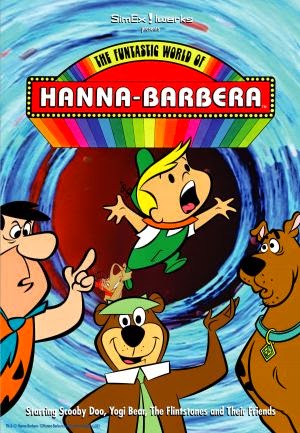
Namer: The Funtastic World of Hannah-Barbera
Examples: Despicable Me Minion Mayhem, Transformers the Ride 4D, Ghostbusters Spooktacular, ET Adventure, Kilimanjaro Safaris

Little Red is OK - Corollary to We Have To Save Elroy, where of course "Elroy" is always OK at the end. Sometimes other trams/boats full of people will be shown to have perished, but the nearest any theme park ever got to actually doing off a supporting character was the unlucky submarine 13, crushed by a giant squid in 20,000 Leagues Under the Sea.
Namer: Kilimanjaro Safaris

Torturing the Recruits - At Imagineering in the 90s and early naughts, if you weren't going to an institute you were always some kind of recruit. You apparently got drafted by walking in the door. What could be more lighthearted??
Namer: Stitch's Great Escape
Examples: Alien Encounter, Men in Black: Alien Attack, Buzz Lightyear Space Ranger Spin, Mission: Space, Body Wars, Ghostbusters Spooktacular

Background Action - Mostly-Universal-Specific Corollary to Torturing the Recruits, where you're supposed to be playing extras in a film shoot of some sort. Unlike real movie extras, you don't get a free lunch out of it.
Examples: Earthquake: The Big One, Revenge of the Mummy, Backdraft, Disaster!, Twister: Ride It Out!, Catastrophe Canyon

Sherrie Wants To Kill You - Sherrie may look pleasant sitting at that desk near Bill McKim, but she actually wants to murder you by driving you into a wall. Sometimes an innocent-looking secondary character, sometimes the main antagonist.
Namer: Test Track
Examples: Snow White's Scary Adventures, Revenge of the Mummy, Alien Encounter, Tower of Terror (TDL), Indiana Jones Adventure

You Die At The End - Especially if you go to hell.
Examples: Mr. Toad's Wild Ride, Snow White's Adventures, Fata Morgana (maybe), Men in Black: Alien Attack (maybe)

I Got Some In My Mouth - Nothing could possibly make any ride more cutting edge and intense than spritzing the audience with water, right? Nobody's ever done that before! Bonus points if the water is supposed to be dripping blood, as in Revenge of the Mummy (Hollywood).
Namer: Alien Encounter
Examples: Mickey's Philharmagic, Jurassic Park, Stitch's Great Escape, Despicable Me: Minion Mayhem, Toy Story Midway Mania, Revenge of the Mummy, Muppet-Vision 3D, Harry Potter and the Forbidden Journey, Ellen's Energy Adventure, Harry Potter and the Escape From Gringotts, Captain EO

Beware of Glass - Inexplicable Universal-only subset of I Got Some In My Mouth, where being spritzed with water can also represent glass shattering nearby.
Examples: Terminator 2 3D, Revenge of the Mummy, Amazing Adventures of Spider-Man

EllenBot - It's a bad idea to cast a recognizable person in your attraction because their audio-animatronic incarnation will probably look nothing like them. Is that Tim Allen or a Country Bear??
Namer: Ellen's Energy Adventure
Examples: The Hall of Presidents, Superstar Limo

The Book Report Ride - An attraction which shows exactly the same events which occurred in the source film in the same order. You know these well.
Examples: Peter Pan's Flight, The Many Adventures of Winnie-the-Pooh, The Seven Dwarfs Mine Train, The Seas With Nemo and Friends

Ride the Movies - This is what happened after that movie you saw probably recently! Sometimes, the theme park attraction is the proper direct sequel to a film, but represents an alternate universe if the source movie got another sequel, as in the case of Terminator 2. Or, the story can be dropped into a specific point in a movie chronology rather than being set "after" the main events of the story.
Namer: Universal Studios Florida
Examples: Back to the Future, E.T. Adventure, Indiana Jones Adventure, Men in Black: Alien Attack, Star Tours, Jaws, Stitch's Great Escape, Revenge of the Mummy, Star Tours: The Adventures Continue, Jurassic Park The Ride

It's Not About Finding Hot Tubs - Subset of Ride the Movies, and differentiated from the Book Report, where an attraction specifically tells you that the events depicted therein take place after the movie -- but everything that happens is just something that happened in the movie.
Namer: Finding Nemo Submarine Voyage
Examples: Radiator Springs Racers, Ratatouille: L’Aventure Totalement Toquée de Rémy

The Enchanted Tales Razor - The rule that states that no explanation is sometimes better. Named for Enchanted Tales with Belle, where a straightforward character meet and greet is burdened with an absurd time travel conceit which not only makes no sense, but conveniently vanishes after it's no longer needed.
Examples: Enchanted Tales with Belle, Mission: Space

Why Did It Have to be Tourists - "You're sending a bunch of wet behind the ears tourists out in the SCOOP?" Or: any time a beleaguered hero has to save your miserable ass because you were a bunch of dumb tourists. You are lower than dirt.
Namer: Indiana Jones Adventure
Examples: The Amazing Adventures of Spider-Man, Star Tours, Transformers the Ride 4D, Dinosaur

Where Have You Been?! - A Harry Potter-specific subset of Why Did It Have to be Tourists. Harry Potter is constantly saving your ass. There's no moment when he isn't. Dementors? Voldemort? Whomping Willow? Harry Potter saved your ass. Theme Park Harry Potter is more competent than movie Harry Potter, book Harry Potter, and fanfic Harry Potter rolled into one. That time you nearly fell trying to buy a carton of milk in Target? He saved your ass that time too. Harry Potter is the hardest working guy in theme parks. He hates you so much.
Namer: Harry Potter and the Forbidden Journey
Examples: Hogwarts Express, Harry Potter and the Escape From Gringotts, Harry Potter and You In Line For Butterbeer, Harry Potter and the........

I'm Bill Paxton - Most commonly used in Universal attractions where an actor appears on a screen to address you before the main experience; also snuck into Disney rides in the 90s.
Namer: Bill Paxton in Twister: Ride It Out!
Examples: Steven Spielberg in E.T. Adventure, Angela Lansbury in Murder: She Wrote Mystery Production Theater, Ron Howard in Backdraft, John Michael Higgins in Test Track, Wallace Langham in Countdown to Extinction / Dinosaur, Gary Sinise in Mission: SPACE, Jeffrey Jones in Alien Encounter, Patrick Warburton in Soarin Over California

The Hunky Tuna Tostada - Corollary to I'm Bill Paxton. Any time a highly recognizable celebrity or entertainer pops up unexpectedly in the middle of an attraction experience for a cameo, it's always going to take the audience out of the experience, even if it's intended strictly as a joke.
Namer: Enchanted Tiki Room: Under New Management
Examples: The Timekeeper, Disaster, Ellen's Energy Adventure, Revenge of the Mummy, Superstar Limo

Mission: Tortilla - OK, listen, maybe you didn't like all those institutes or research centers,  but Eisner sure loves industrial tours, because that's where people who actually have to work for a living are! Fascinating! Bonus if you get a free food sample for showing up.
Name: Mission Tortilla Factory
Examples: Universal Studios Tram Tour, Boudin Bread Factory, Disney-MGM Studios Backlot Tour

Expiration Date - In an effort to show how not-lame and with-it a theme park institution is, a new attraction opens featuring the latest music, or cool visual style, or hottest sitcom stars. Inevitably, it's absurdly dated within five years. The defining example was probably the "fountain of fashion" at the exit of Adventure Thru Inner Space, but this was also less of a problem before the 90s, when sponsors and Disney replaced attactions pretty regularly. Interestingly, supposedly Universal designs their studio park attractions to have a shelf life of ten years.
Examples: America Sings, Innoventions, Wonders of Life, DisneyQuest, Food Rocks
(Suggested by 'Judah Ben-Hur')

After These Messages - is practically an extinct park trope, but it was once the norm. Enough sponsorship money being thrown around can result in, for a price, your very own ride-through corporate advertisement, complete with a catchy theme song. Probably the best example is the rotating furniture showroom known as the Carousel of Progress, but plenty of other attractions toed the corporate line, dispensing approved nuggets about microwaves, textiles, and agriculture. Interestingly, one of the last of these - Horizons - subverted the trope by being lavishly funded by General Electric but presenting no overt product placement.
Examples: Kaiser Hall of Aluminum Fame, Monsanto Home of Future Living, Adventures Thru Inner Space, Listen to the Land, Universe of Energy

Parkception - Universal has been up to a lot of this lately, but it's actually Disney that started the whole current boom. More than an attraction that's aware it's an attraction, it's a miniature amusement park, often depicted of being below theme park quality, inside a theme park. The first one, of course, was Jurassic Park, but it's Disney that set the template with their kitsch tributes Chester and Hester's Dino-rama and Paradise Pier. Lately, miniature amusement parks have sprung up around The Simpsons Ride and Despicable Me: Minion Mayhem.
Examples: Dino-rama, Paradise Pier, Krustyland, Super Silly Fun Land
(Suggested by Hastin)

Feel free to propose any we may have missed in the comments! If I like one, I may add it to the article!

Tuesday, October 28, 2014

The Year of the Frog

I've been actively seeking out Walt Disney World history for around ten years now. In relative terms of the community, that makes me a little-bitty baby researcher. It's okay. Ten years sounds like a lot otherwise, but it really isn't, because it's not every day (or even every month) that something cool shows up. Probably the most significant aspect of Disney research isn't so much skill and perseverance as it is sharp observation and luck.

In 2008, Mike Lee turned me onto a Jungle Cruise mystery he'd been contemplating for a long time. I was able to put more information out there, but then out of nowhere this year the mystery was finally unraveled - twice, in rapid succession.

This is more a natural function of the internet age than anything appropriately mystical - even the most obscure facets of Walt Disney World history probably are preserved, somewhere, on some moldering obscure slide in an attic in the Midwest. The place was not obscure. Millions of people saw it in only its first two years, and they were armed with cameras, and home movie film. As more and more people have this film and these slides digitally scanned, more and more (and longer) videos are cropping up. Sometimes you get lucky. A few years ago, a snippet of film of Disneyland's infamous Hatbox Ghost materialized. That was 2011. As far as I'm concerned, 2014 is the Year of the Frog.

I've told this story before elsewhere on the site, but here we go again. At least it'll all be in the same place this time. A true Walt Disney World mystery: The Tale of the Vanishing Frogs!

In a weird way, the frogs never entirely "vanished". Always intended to accompany their significantly less impressive brethren who have managed to survive these 43 years - the giant butterflies - Marc Davis' giant frogs can still be heard  just past Inspiration Falls, although their bodies departed the place sometime around October 1973.

In the beginning, there was a concept drawing.


I've also seen versions of this where Marc wrote on the bottom "Replaces Man-Eating Plants", which at least is a tantalizing option. Now, what's interesting about the Florida Jungle Cruise is how completely faithfully WED replicated Marc's designs in the finished show:

Bottom photo: Joe Shelby

...And when it came to the giant frogs, MAPO was no slouch. The final sculpted frogs, as unearthed by Mike Lee and Dave Ensign, looked even cuter than the concept art.


So basically for about five years, we ("we" meaning the WDW internet community who cares about rubber frogs) have known that a) the frogs did indeed exist, and b) that tourists saw them, but what we didn't really have was any photos of them in situ in the park. We didn't have to wait long.

In May of this year, a mid-1972 silent reel of super 8 film appeared online, painstakingly restored by the webmaster of RetroDisneyWorld.Com. It's a beautiful watch. The colors are vivid, the shadows pop with that "Florida Summer" bright white intensity, the grain is clear and it's the next best thing to being there. Oh yeah, and the frogs are there.


It's just about three frames of footage between Inspiration Falls and the beached canoes, but there's five handsome looking frogs - two adults and three babies. Based on Mike Lee's maintenance schematic diagram, these appear to be the first cluster of frogs which appeared on the right side of the boat in the area that's currently home to a tarp and a skull on a stick.


(That squiggly thing across from the figure location is Inspiration Falls, the arrows indicate the direction the boats travel...)

It also just happens to be the spot I singled out back in 2011 as a possible frog location when I posted this 1973 Jungle Cruise refurbishment slide due to this cluster of men working on... something:


All of this was great news, but of course three frames isn't long enough to see the frogs move, just long enough to know they're there. But the Year of the Frog would not be stopped so easily. Just a few months later, thanks to a lucky eBay find by Brian Miles, a reel of 8mm footage from December 1971, showing what I can only describe as an astonishingly young Magic Kingdom, summonded the Jungle Cruise frogs yet again, for their best appearance yet:


Showing three adults and two baby frogs on a fallen log and tree stump attractively flecked with mushrooms, this frog grouping likely is the one across the river to the right:


(To anyone paying close attention at home, in this case the designation "F22" or "Figure 22" likely refers to the whole piece, ie the sculptural base plus five frogs, with each frog being designated A thru E).

Best of all, there was enough footage this time to get a taste of what these guys looked like in motion. Watch the adult frog's throat pouch inflate and the baby frog's mouth open:


As for the fate of the frogs, Park Operations VP Dick Nunis ordered them removed on the grounds of being "hokey". How these particular figures were singled out to be removed in a ride which, let's be fair, is not exactly known for realism, is unknown. I personally think they set an appropriately whimsical tone at the start of the ride which is more fantasy than reality, but what do I know. Anyway, a scene Marc Davis had designed for the end of the MK Jungle Cruise was repurposed to sit alongside the Walt Disney World Railroad, and one of the baby frogs was reutilized for this purpose:


The crocodiles are still there, but the fiberglass ambphibian has been missing for the past few years as of this writing. Let's hope it one day returns as an unlikely but still interesting remnant of early Magic Kingdom history.

Oh, and if you yourself have home movie footage of Walt Disney World, please consider getting it restored through Todd at RetroWDW's ImageWorks service. The results are beautiful and, best of all, the resulting footage will appear online and add to the growing treasure trove of material. The Jungle Cruise frogs are cool, but they're just one of hordes of early WDW mysteries which can be resolved. Thanks to international renown, a colorful local fanbase and a cadre of researchers who got started in the 1980s, Disneyland in California is very well documented and the reference material is only growing by the day. When the production team behind the recent Disney film Saving Mr. Banks wanted to re-create the look of Disneyland in the 60s, they went to fan sites like Daveland and Stuff From the Park to draw material. Walt Disney World's past is still clouded in time. So if you have the material, do your part. We can build a visual and textual history to rival any other. There may be another Year of the Frog waiting, collecting dust in your own house.

Saturday, November 24, 2012

The Awkward Transitions of Disneyland!

"Even the most perfect reproduction of a work of art is lacking in one element: its presence in time and space, its unique existence at the place where it happens to be. This unique existence of the work of art determined the history to which it was subject throughout the time of its existence." - Walter Benjamin, Art in the Age of Mechanical Reproduction
It is the everlasting parlour game of the entire Disney community: Disneyland or Walt Disney World? The whole business of comparing the two parks - or, let's be more specific, Disneyland and The Magic Kingdom - probably began late one October 1, 1971, over drinks at the Polynesian Village. I can hear the cries now, rising over the incessant tom tom of the luau and the reflected lights of the Southern Seas plying the Lagoon: "But Disneyland is the original!"

It's still played today on message boards and at fan meetups. Over the years the rules on the ground have changed as Disneyland the Magic Kingdom have added hotels, attractions, and additional theme parks. Walt Disney World suffers from a surfeit of variety. Disneyland is Walt's park. We've all heard them before. In 1995 in Mouse Tales, David Koenig gave us the immortal zinger about Walt Disney World being nothing more than Disneyland with the expand button jammed, which is exactly the sort of thoughtless simplification that's just catchy enough to be endlessly repeatable: check the comments on this blog, you'll find it there.

Let's stop and unpack that Koenig quote for a moment. The operating metaphor is a copy machine, a later 20th century modern convenience, which hits the point that Disneyland predates the existence of copy machines (Koenig is mum on the subject of mimeographs). It hits the point that Magic Kingdom is larger, yet it implies a process of thoughtless, mechanical reproduction, which of course does a great disservice to Walt Disney's confederates who built Disneyland and Walt Disney World.

But it's stuck with us because in some ways it's at least ten percent true, and it's through phrases like Koenig's that we can find a key to unlock some of the deeper resonances and complexities of both parks. The real problem is that the entire question presupposes that there can ever be a satisfactory resolution, which there cannot, because despite their similarities, Disneyland and The Magic Kingdom operate in entirely dissimilar aesthetic registers. It only makes sense in a reductionist world where there can only be one Disney theme park and only one right way to build it. In reality the parks are more complimentary than competitive, and most people who visit one will never visit the other - that is why there are two of them, of course.

Okay, I've said all of that and covered all of the bases, plucked all of the low lying fruit, so that we can go beyond the catchphrases and into some serious discussion. This is our point of entry today: to take old chestnuts and try to crack them to see what pops out. Our subject is Disneyland. Our topic: charm.

The thing you hear all the time about Disneyland ultimately comes down to two words: magic and charm. Now, "magic" is a reappropriated marketing word, so it's really not helpful, but it points towards our second term, charm. Disneyland is intimate and human sized. Magic Kingdom is spectacular and epic sized. Everyone who's been to Disneyland knows it's got something special about it - but what it is, nobody seems to be able to say. Some say it's because it's the park Walt Disney built, which I think rather discredits all of the excellent work that's been done there since he passed away nearly a half century ago. Some think it's the way it was built - Disneyland uses more real plaster, brick and wood, Walt Disney World is largely made up of fiberglass and sometimes looks it.

I was contemplating all of these things last week while in Disneyland doing nothing in particular, searching for the word that describes that special something. As Benjamin states, what is the ineffable, vaporous stuff that Disneyland has and the Magic Kingdom lacks - the "unique existence at the place where it happens to be"? The word I hit on was naive. I don't mean it in a negative way - I mean it in a way more closely resembling the original term for what we call folk art - naive art. It doesn't mean ignorant, it means something as it existed in it's pure, natural, untutored state.

Is Disneyland naive? As the first of its kind, the first multimedia art experience which lifted the amusement center to a new height that a word had to be invented for it - a theme park - it must be. It may not be Benjamin's "perfect work", but it is certainly qualifies as one of his "major works" - in short, a cultural watershed.

Yet Disneyland grew up as the men and women who made it were still making up the rules as they went, and so it grew in fits, starts, and stops. A fairly holistic theme park with lands that were siloed off from each other expanded, tacked new things onto areas where they were not meant to be, the areas bled together, additional demands for capacity forced development of unlikely spots, and urbanization of the surrounding area blotted out hopes of blowing the park out very far beyond its railroad tracks.

Disneyland built things where it could, and so very often buildings are dropped down perfunctorily, only very rarely placed to achieve any specific pictorial effect. Depending on where you are, there can be three levels of themed design occurring around you on different registers. This makes Disneyland visually dense while retaining a somewhat prosaic thematic effect. This is what people mean when they say Disneyland is charming: it's a massive pile of ideas slammed down, one atop the other, with very little room to spare. This means that it's very common to find areas where one kind of texture or surface treatment just ends because it collides with another. This is what I mean when I say Disneyland is naive.

Let's take a quick look at a pertinent area: the Hub. At the top is version one: the Disneyland hub. At the bottom is version two, the Walt Disney World hub. Both of these photographs are presented at the same scale.


We can see that the actual central ring of pavement is roughly the same size, even if Magic Kingdom uses vastly larger sidewalks. I've cropped the image to right about where the Magic Kingdom hub and moat terminates, so that we can clearly see here how, in the space Magic Kingdom uses to slowly introduce the various lands and include spacious lawns and trees, Disneyland has included The Plaza Inn, Plaza Pavilion, Enchanted Tiki Room, Tahitian Terrace / Aladdin Oasis, the entire queue of the Jungle Cruise, half of Adventureland (all of it in 1955), most of Frontierland, The Shooting Gallery, Casa de Fritos / Rancho de Zocalo, part of Big Thunder Mountain, Carnation Gardens, three sets of bathrooms, Snow White Grotto, the "House of the Future" site, the Astro Orbitor, and a substantial chunk of the Peoplemover track. Just in the 1971 Hub.

I want you to think about what the massive increase in ambition and scale that single area of the Magic Kingdom constituted for WED Enterprises in 1971. Keep in mind that these guys had the ability and expertise - the experience - to replicate any darn part of Disneyland they wanted. What they did with this experience was to create a totally new theme park specifically designed to minimize very specific parts of the Disneyland master plan. Magic Kingdom has no berm - they didn't need to block out a city, so why bother? Magic Kingdom largely slowly draws you into the various sub-areas of the park, gradually transitioning plantings, music, textures, and colors in ways which pass by you essentially subliminally. This is what I mean when I say that Disneyland and Magic Kingdom are aesthetically dissimilar - your basic assumptions about the way the place was put together have to be different. Magic Kingdom generally handles its transitory spaces with slow, subliminal, incremental changes, some sort of real life version of a cinematic fade. The part WED Enterprises chose to exclude, of all the things they could have excluded, are the moments in Disneyland where one set of themed design choices meets another in a very small space.

I'm fascinated by those moments, partially because it was exactly that which was excluded with almost surgical precision from every Disney theme park that came after - every subsequent version builds on the 1971 park, not the 1955 one. Therefore, it must by definition be one of the things that makes Disneyland so charming - that thing they removed, that special condition. And if we are interested in drilling down past the years of built up rhetoric and regional squabbling and get nearer that thing that makes Disneyland special, we must engage this facet of the park. We must carefully observe and expose its workings.

So, fasten your seatbelts, it's going to be a bumpy night.

Vortex: The Hub
Does the Central Plaza have a theme?

At Magic Kingdom, it does. It's themed to Main Street. The areas which do not carry the Main Street theme are presented across a body of water - the moat. Adventureland is over there, you must cross this bridge to get there. The Magic Kingdom conditions us to expect this by first presenting itself at the far end of a huge body of water - the Seven Seas Lagoon, a mile across - which we must traverse to get to it. We are conditioned to expect strange and fantastic things which await us across the water. This taps into more cultural traditions that can be counted. "Away, I'm bound away / Across the wide Missouri!"

Disneyland laid the foundations for this, and of course it too has a moat - albeit one which does not wrap all the way around the plaza. The moat here serves a slightly different function, and the central plaza itself includes elements from each of the sub-lands standing easily one next to the other. Disneyland generally achieves its' fantastical distortions by contrasting non-complimentary items - an African trading hut contrasted directly with an American frontier stockade, Bavarian castle, and Swiss mountain. It would only make sense in Disneyland.

Therefore, I look at Disneyland's central plaza not as an extension of Main Street, but as a sort of vortex which has drawn elements of all of the various lands towards the center of the park - the vacuum at the heart of the tornado. This central position is now occupied by a statue of Walt Disney, which is perhaps poetically appropriate. It is a sort of thematic no-man's-land where any theme is appropriate, setting up the sense of fantasy through contrasting, dramatic juxtaposition.


Above, we see the point where the Hub's neutral "city park" railings first intersect an architectural  piece of Fantasyland, near the hub and visually linked to Sleeping Beauty Castle. Interestingly, this piece of Fantasyland then immediately ends, returning to the "city park" railings just a yard or so later. Fantasyland proper doesn't seem to begin until this point, which is celebrated with an elaborate light fixture:


At which point this castle stonework continues into the Alice in Wonderland area. Meanwhile, across the way, the city park metal rails continue past and through the current "Pixie Hollow" area, once the former residence of the Monsanto House of the Future:


Here we can see how neutral "Hub" railings can be contrasted directly with Little Mermaid rock work left over from the 1990s, Tomorrowland visual features, and Victorian Main Street. One final example of the Hub area's extremely vague, noncommittal theming:


This is the point where Main Street hits Tomorrowland head-on, around the side of the Plaza Inn. Now: not a single Disney theme park is without awkwardness at the Main Street - Tomorrowland junction, so I'm not picking here, but what we have here is seriously a blank wall with some trees in front of it. But what kind of jerk looks at blank walls anyway?

The Hub at Disneyland is a unique place to observe the most violent visual clashes of theme and idea. So what are we saying here - that Disneyland's central plaza is themed to no land? Or every land? I think it's both. The Central Plaza is actually the second land we encounter upon entering Disneyland, and as such it has a function unique to this park alone. We can think of it akin to the table of contents in a book: come here and you can expect this sort of thing.

Window: Adventureland
Across the way, Adventureland's beautiful entry arch runs direct into the Hub at this point:


The extra little bit of detail there is quite nice, the irregular bricks peeking out from behind the plasterwork brings Main Street to mind. Here, open space and lots of greenery helps the transition feel pretty natural on the right side. On the left side, over by the Tiki Room, we get a much more perfunctory transition:


The ivy-covered terrace on the right is part of the Plaza Pavilion restaurant. The bamboo on the left is actually inside the waiting area for the Enchanted Tiki Room. In between we have this head.

Now, it wasn't always like this. In fact, it isn't even supposed to work this way.
Back in the 50s, open space and foliage created a stronger sense of an entrance to Adventureland, before the Tiki Room filled the open gap between the entrance gate and the adjoining Plaza / Polynesian restaurant:

Daveland
That was in 1956. If you happened to glance to your left while entering, you would see the exact point where Main Street and Adventureland joined:

Daveland
Seeing this, one may be inclined to quip that she prefers the "Tiki-head-nailed-to-the-edge-of-the-wall" method which reigns today. What you're seeing here more closely resembles a movie set than a theme park - which makes perfect sense since this is the first theme park and it was built by Hollywood craftsmen. Harper Goff designed sets for Warner's Midsummer Night's Dream and Casablanca. Marvin Davis worked for 20th Century Fox. The key concept in film production design is the ability of the camera to exclude certain objects from view; Disneyland's early scenery resembles a movie lot more than a modern theme park. It would be several years before WED Enterprises learned how to design for the human eye instead of the camera eye.

Back to the park today. Notice in the first vintage photo above how the area directly behind the arch is clearly Adventureland themed, but the area just to the right is Frontierland themed? It's still this way today. Walk straight ahead and turn left, all you see is Adventureland. Look right at any time, and you'll see Frontierland.

Here's the spot in the park today where the two themes collide. It's the entrance to the girls' bathroom.


The green rocks on the left were added in the 90s as part of a general Adventureland refresh. You can see a hint of the brown rocks on the right which belong to Frontierland. The stockade fence to the right also hints at Frontierland.


The top of the stockade fence. The lanterns can belong to either locality, but the brown clapboard siding to the right is absolutely part of Frontierland. Notice how the eaves under the roofs change from carved and ornate (exotic) to simple (homespun).


Here's a reverse view of the same area from just inside Adventureland. With the backdrop of the green Adventureland rocks and foliage, the Western stockade fence and lanterns now look "exotic" and the framing Frontierland architecture absorbs the transition. This is a design for the eye, not the camera.

The Main Street / Frontierland / Adventureland bleed-over points illustrate the defining feature of Disneyland's scenic transitions: the "Magic Window" effect. Gateways from one area to the next constantly appear, allowing us to leap geographic bounds. Jeff Crawford referred to this as the "airlock" effect between lands, and it was required due to the way the park grew together during its first few decades.

What's that plaque that appears at the entrance to Disneyland?


And why is it there? Ever notice how the plaque is intended to draw your attention to the function of the train station tunnel as a "magic window" into Disneyland?

Let's turn it around: ever notice how The Magic Kingdom in Florida didn't originally have the sign?

October 1971
And how when Imagineering put one there in 2003 it looks pretty awkward?


It looks awkward because it isn't supposed to be there; Imagineering didn't forget it back in the 70s. They probably left it out because they felt that they didn't need it; after all, they had bought miles and miles of property and forced everyone to drive through two-thirds of it just to park their car and cross a darn lake to get there. Disney didn't need to tell people they were entering a fantasy world; they already knew it.

"Here you leave today.." // Flickr user Tony Kelly
The entrance plaque is a keystone for understanding Disneyland's "magic window" organizing principle and how space is organized behind those points of juncture. Disneyland operates in methods similar to a cinematic cut, from one locality to another, and the effect is, at least partially, accidental. Magic Kingdom operates in a method most similar to a cinematic fade, and that was designed in from the start.

Wedge: The Matterhorn
Here's a fun intellectual game you can play at Disneyland: which land is the Matterhorn in?

One of the most famous things about the Matterhorn is that it was "moved" from Tomorrowland to Fantasyland in 1971. This, more than anything, demonstrates its inherent flexibility. The Matterhorn was initially grouped around the number of attractions of indistinct locality: The Fantasyland Autopia, Submarine Voyage, The Motor Boat Cruise, and we could even argue for It's A Small World, which has never been a wholly appropriate fit for Fantasyland. The monorail, undeniably a Tomorrowland element, wraps around it. The bobsleds themselves more closely resemble rocket ships and in 1978 the attraction received clones of sleds then in use at Walt Disney World's Space Mountain. And the Skyway buckets, which disembarked in both Fantasyland and Tomorrowland, of course passed direct through it.

Yet it's a stone's throw away from both Alice in Wonderland and the Tomorrowland Terrace, and depending on whether one walks around the north or south side of the mountain she will experience very different visual elements. And just why was the attraction added to "Tomorrowland" in 1959 in the first place?

Please choose for me, folks!
During the 1978 refurbishment, a number of elements were added to the Matterhorn which perhaps more strongly than ever claimed it for Fantasyland. Reworked rolling fields and flowerbeds, charming footbridges over gurgling mountain streams, and Alpine lights and lanterns now set the scene as we walk around the base of the mountain, setting a bucolic middle-European tone which was very much a "dress rehearsal" for the New Fantasyland of 1983. And of course, with the addition of shimmering gems and the Abominable Snowman himself, we're very much out of the realm of science-fantasy and into fairy tale territory.

Starting way out in Tomorrowland, right at the base of the Monorail exit ramp, we find this whimsical fence surrounding the Submarine Voyage lagoon, which has always included fantastical elements such as mermaids and sea serpents intruding on the orderly world of science and technology:

We've been submerged too long
The railing blithely continues directly past a number of Tomorrowland Elements, such as the Peoplemover track and Terrace, until it links up with newer theming out near the Motorboat Cruise / Small World Mall area. It seems perfectly natural over by the Matterhorn:


From the opposite side of the lagoon, rock work blends the two 1959 attractions together visually, making a tropical coral reef and a European mountain look like natural companions:


Yet continue along the south side of the Matterhorn and the similarities seem less convincing. Here's a European lamp and pole right up against Tomorrowland's streamlined planters and the very futuristic blank wall and bulkhead door:


And if that wasn't enough, here we can see Tomorrowland architecture looming over Matterhorn's Fantasyland street lights and juxtaposed with Main Street telephones:


This is another moment where Tomorrowland attempts to hide in plain sight with muted colors, blank walls and some trees, and the results can be called more charming than effective. None of these elements have any business being in the same proximity as each other.

Matterhorn is one of those many things at Disneyland that ended up where it was due to space restrictions and because Walt Thought It Was Cool. And the Matterhorn is cool, very much so. It seems to belong to both Fantasyland and Tomorrowland, and it's simply such a massive object that it's like a huge block which screens one land from the other. This is themed design by obstruction; it's like a wedge that separates the two areas. Faced with a nonsensical juxtaposition of elements, we see here attempts to aesthetically blend three visually unrelated objects. The results are... mixed.

So what does the Matterhorn fit in best with, Fantasyland or Tomorrowland? I think it's neither. I like to think of the Matterhorn as being themed to part of the Hub, and in fact it forms a sort of second hub; walking its perimeter is one of the most satisfying scenic tours in Disneyland. What could have been a liability is turned into a seemingly natural part of an imaginative visual landscape.

Hinge: The Riverbelle Terrace
In 1955, each of the various areas of Disneyland was a little self-contained pocket - the various lands would each "dead end". This makes perfect sense from a movie back lot design perspective, but this was one of the earliest lessons learned by WED Enterprises when it comes to designing for people, not film crews. Some of these areas were opened up pretty quickly - such as the east Fantasyland dead end, which spilled out towards the train station and Mickey Mouse Circus within a year. Others, such as connecting Frontierland to Fantasyland directly, didn't come about for decades and decades.

One of the quickest of these changes was to open up the small and crowded Adventureland to the west, connecting it with the most westerly portions of Frontierland. If we pull up Disneyland: People and Places, an early promotional documentary, we can see the path the wraps around the Aunt Jemima Pancake House from Adventureland there to the right and crosses then a bridge towards the train station (the Tom Sawyer Island rafts boarded below this bridge):


Just on the other side of the bridge was Magnolia Park, the original planned site for the Haunted Mansion and New Orleans Square:


Notice how the bandstand was just a few yards from the Jungle Cruise behind an earthen berm... there must have been a lot of Dixieland audible in certain parts of the Jungle in those days!

This simple connection created the original transition space in Disneyland, and it's worth looking at in some detail before we look at how it's used today. Now, New Orleans Square is always thought of as Disneyland's first new "land", but it's more rightly thought of as an expansion of an area that has always been there from day one: the New Orleans Street in Frontierland.

Daveland
Interestingly, the "New Orleans Street" was not intended to be visible from the Frontierland Train Station. The side of the Pancake House facing the train (above), clapboard and adobe architecture gave the building a "Western" look:

Daveland
Here's a photo showing how the molding and texture of this strip of buildings on the "Orleans" side simply terminated around the corner on the "Western" side:

Photobucket user darkfairycthulu
And the largest and most conspicuous "New Orleans" building in the area, the stately "Plantation House" by Swift...

Gorillas Don't Blog

 ...looked, on the opposite side facing the train station, more like a "California Hacienda":


This meant that guests walking in Frontierland in the "Orleans Street" and on the Mark Twain would have perceived the street and Plantation House at the end of it as being in the "New Orleans" style while guests arriving at Frontierland by train would have seen only "Old West" style architecture.

By the early 60s, the Aunt Jemima's had been expanded with a large show kitchen and glass walled seating area, covering up the former "Old West" architecture. At the same time, the Plantation House was pulled down. As early as 1962, this transitional space was being smoothed out in preparation for New Orleans Square. The new facade is now familiar to us as the Riverbelle Terrace:

Daveland
Riverbelle Terrace is the most interesting transitional architectural feature of Disneyland, and as such it deserves some extended consideration here, although to start I'd like to begin by playing games with... fences.

Don't Fence Me In
As you may have noticed by now, rails, fences, planters, and flowerboxes do an unusual amount of heavy lifting of the transition-spots of Disneyland. This may because these crowd control barriers generally are felt more than carefully studied: we interact with them and they set a tone without really being noticed in specific detail. Disneyland has a huge and astonishing variety of simply beautiful railings. Entering Frontierland, on the main "T" street, the rails and surface pavers look something like this:


That's an obviously "Western" visual vocabulary. Plants poke out alongside a crude "path" that seems laid over them. Jumbles of rocks define the edges of the walkway, as if they were simply pushed there by foot and stage traffic. If we proceed around the side of the Golden Horseshoe near the Stage Door Cafe the visuals remain similar but now the rough wooden rails have become more formalized stone walls and planters. Large bushes help disguise the changing architecture. This is feet away from the start of the "New Orleans Street":


This half-wall is topped with this intriguingly stylized wooden rail, perhaps a premonition of the increased visual variety of New Orleans Square:


Just a few feet away, the large, irregular blocks of stone seen near Stage Door become formal, mass produced red bricks, heralding the start of the original 1955 "New Orleans Street". Increasingly complex rails and decorative details are evident:


Here's a flowerbed from the middle of the New Orleans Street, this one with an added touch of gentility due to a trim white metal rail around the perimeter. This in particular very much looks forward to the sort of work WED Enterprises would do with Liberty Square in Magic Kingdom:


Continuing past the Riverbelle Terrace, the progression of increasing gentrification reaches its end as the plantings around the glass-walled Arboretum-like dining hall abruptly transition back to disorder, represented by Adventureland:


Nearby, these rails, part of New Orleans Square but also part of the Riverbelle Terrace visual experience - ie, belonging to both Frontierland and New Orleans Square but being actually inside Adventureland - abruptly terminate at the base of a tree:


Let's take a few steps back now, all the way back to Frontierland, in fact. Here's the spot where the Riverboat Landing's open, wide, brightly painted wood architecture gives way to what I call the Disneyland "waterfront":


Around the Petrified Tree Stump (because, you know, Fronteirland) is this attractive wrought iron design:


The nearby Stage Door Cafe sign visually integrates with Frontierland beyond it, but it's positioned at a pivot point in the area: behind it, the Frontierland visual vernacular continues towards New Orleans Square with a rough-hewn tree planter and crude fence even while gentrified plants and a white wrought iron rail are already transitioning us towards the "big city" just inches in front of it.


These two distinct rails continue alongside each other for a bit:


....until the Frontierland rail fence terminates at a potted plant.


That potted plant can be said to be the very last point of Frontierland along the waterfront. Everything in sight from that point on is New Orleans until we get near the Haunted Mansion. The "Waterfront" area was radically revised by Imagineering in the early 90s, turning what was previously a pleasant, gentle slope down to the river into a hodgepodge of terraces, fences, lighting rig pits and other nonsense to support the installation of "Fantasmic". Here's the spot, near the Tom Sawyer Island raft landing, where the gentility of New Orleans begins to strip back down towards the "Frontierland" aesthetic:


Interestingly, since this occurs well east of the Haunted Mansion - where New Orleans Square terminates - the planters and details of New Orleans run parallel to this cruder "waterfront" look for some time:


...ending at Fowler's Inn, an appropriate accompaniment to the seaside horror mansion. And for about twenty-five years, that's how it was. The area past the Haunted Mansion always felt like a reset. Here's a 1966 photo showing what would one day become the Haunted Mansion exit:

Long-Forgotten

It was designed to feel like you're going off into a remote area, whether that be the Indian Village (which you entered through a cave) or Bear Country, which meant walking through a ravine:

Yesterland

Regardless, the thematic transitions "reset" past Mansion until the construction of Splash Mountain, which forced Bear/Critter Country's backwoods aesthetic flush up against the Haunted Mansion's plantation South:


I've been using the term "awkward transitions" rather tongue in cheek all this time because I think Disneyland does a remarkable job with a difficult situation, but this is one spot where I must admit that the Haunted Mansion / Splash Mountain transition is just plain sloppy. You can find more awkward transition spots in Disney theme parks - especially ones with names that end in "Studios" or "Adventure" - but those parks aren't nearly in the same artistic league.


So the Riverbelle Terrace is the hardest-working transitional spot in Disneyland, bringing us from the untamed wilderness of the American West to the gentility of nineteenth-century New Orleans. It also bridges space and time to transition another untamed wilderness, Adventureland, cleanly and clearly into the exotic colors and textures of the Big Easy. In fact, the transition from Adventureland to New Orleans is clearly reflected in the Terrace's south-side architecture which, along with the Pirates of the Caribbean facade across the way, is to my eye the strongest anticipation of Magic Kingdom's remarkable Adventureland Veranda:


A balcony on the Adventureland side:


And one just a few lateral feet away, but a whole world apart on the New Orleans side:


The Riverbelle Terrace directly straddling the Frontierland/Adventureland/New Orleans junction. Notice the open spaces on the left and the dark colors and heavier planting on the right. Both balconies are visible:


Architectural features above the central dining room look equally at home in New Orleans or an exotic outpost. The windows are nuetral: are they French Plantation or French Colonial? One has curtains, the other a simple shade. Colors compliment a wide variety of applications as they can be seen from inside three different "lands":


The same simple white siding serves a variety of uses. In Frontierland, it's hung horizontally; in Adventureland, vertically. Hanging lamps shared on both sides help visually unify the building:


Once past Adventureland and on the "waterfront", the tropical elements are largely obscured by foliage, and the Pirates of the Caribbean, situated inside New Orleans Square but taking us to an exotic port-o-call, is an appropriate thematic transition. Recall that Pirates itself was placed in Adventureland in Florida and in a New Orleans subsection of Adventureland in Tokyo. All of these visual tropes and conceptual ideas are very malleable and blendable.

From New Orleans Square, the Terrace harmonizes perfectly with Dixieland Jazz and gas lamps. Notice how only the side directly facing the square makes extensive use of wrought iron:


But also then notice how, just past the wrought iron, the facade transitions towards simple timbers and earth-toned colors. The "antebellum" timbers out in front of Aunt Jemima's front door aren't the Grecian columns like the Haunted Mansion has, they're in a more rustic style:


And these earth tones and timbers visually transition us to the citified Golden Horseshoe, which sticks out far enough and is positioned on a wide enough corner to mean that the smaller, more rustic Frontierland is hidden from view. It's a sort of cinematic fade that takes several hundred feet that we experience with our eyes alone.


Consider the dramatic increase in sophistication these 1966 and 1962 structures represent compared to that old Plaza Pavilion/Polynesian Terrace on Main Street:


So am I not saying that Disneyland's design is naive? No. The hand-built, human-scale, smushed-together effect is the "Disneyland Magic". It takes a sensitive eye to pick it out in later iterations of the "Disneyland-type-park" built by WED Enterprises and Imagineering, because they are more sophisticated designs. I've spent a long time here talking about the craft of cinema, of back lot sets and cameras, so I'll put it in cinematic terms. I'm sure many of us have had experiences where we watched a movie from several generations ago and scoffed at some sort of outdated camera technique or obvious special effect. This could be the use of camera irises in silent film or maybe something like the obvious model airplane in Casablanca or rear-projected driving scenes in Vertigo.

We scoff at them because as films have continued to change, the tools available to filmmakers have allowed them to smooth out or paper over technical definicies which were accepted by audiences in their day but look much more prominent to us now.

Disneyland is sort of like that. It was so cutting edge in its day that the subsequent evolution of this thing we now know to be a theme park means that its tricks, the moments where the illusions meet awkwardly, is very obvious to modern eyes. This is what creates the sense of cuteness, of charm. This is what I mean when I say that Disneyland is naieve: what it's up to is right out there in the open for all to see. It's a great place to start to learn about how theme parks work because what Disneyland does thematically tends to be very clear and easy to comprehend.

But I don't think that just that aspect alone makes one thing inherently superior to another. The increased sophistication of something like Magic Kingdom or Animal Kingdom is, just like Disneyland, reflective of the era in which those parks were built. I enjoy the artistic aspects of those parks without finding them to be a threat to Disneyland's similar but also quite different excellence, just as I don't find Peter Jackson's CGI gorilla to be much of a threat to the legacy of the 1933 King Kong.

On one hand, modern audiences tend to laugh at the effects in King Kong or Jason and the Argonauts, things that held me in rapt attention as a child as dazzling, seemingly magical expressions of technical skill. Yet Disneyland has largely not dated in the same way, and I think the secret is because even in 1955 the park was about nostalgia. You don't traipse 1955 adults down a fantastical recreation of what America was like in their childhoods for just no good reason. Disneyland never once asks us to believe that what it presents is reality, it has and will forever be intentionally retrograde, slightly hokey.

I see we've come full circle, back to where we started, that special charm of Disneyland. If such a vastly complex work as Disneyland need be broken down into a simple summation of why it often seems to be the the definitive theme park experience, I don't think landing on "charm" and redefining it as "naive art" is all that bad. I've gone through and pointed out just a half dozen especially pertinent and interesting cases to me, but in reality there are legions of possible places in Disneyland where that essential "Disneyland charm" is still in evidence - some good, some not so good, but all characteristic of the place itself, all characteristic of "that unique existence of the work of art."


Do you enjoy long, carefully written essays on the ideas behind theme parks, like this one? Hop on over to the Passport to Dreams Theme Park Theory Hub Page for even more!