Now Available! My newest book!

Monday, October 24, 2011

Start to Shriek and Harmonize

Ah, autumn!

The whole stretch of the year from September through to January in Florida has wonderful dusky light and silhoutette sunsets, perfect weather for excursions to the Magic Kingdom - which rarely ever looks better than in the waning hours of sunlight in the waning year - and which seems now especially suited to visits to the Haunted Mansion. There may not be autumn leaves blowing like they have in New England where we lay our scene, but this is a perfect time to experience this most complex of attractions. So it is perhaps natural that our thoughts turn towards the Mansion as the month rolls onward towards All Hallow's Eve.

Today I would like to direct your attention towards one of the least respected and most frequently dismissed aspects of the attraction: the lowly pop-up ghoul.

There is not much love in the world for these minor inhabitants of the spirit house. For one, they are not a special effect - the Haunted Mansion's true stock in trade, of course. Second, they are relatively close to the spookhouse apparatus which had been as of 1969 haunting local amusement parks and fairground Ghost Trains and Wacky shacks for around 40 years.

Me, I'm obsessed with them.

To begin with I, for one, see no harm in pointing out that Disney appropriated certain established aspects of a very rich American tradition of amusement parks, a rich American tradition which is all too often ignored in studies of Disneyland and her progeny. Just as Mr. Toad's Wild Ride and especially Snow White's Adventures took the form of dark rides not unlike any number of non-Disney spook houses, the familiar presentation is part of what helped frame the audience's expectations for these attractions. Both Mr. Toad and Snow White were beautifully mounted experiences in a genre they helped disband.  To cite another example, the 1971 Jungle Cruise kicked off with a leafy variation on the traditional Tunnel of Love, and of course the trip behind the waterfall introduced in 1955 at the Disneyland version had been a stock in trade for Dark Rides for generations - Coney Island's "Spook-A-Rama", predating Disneyland, pulled the same trick.

Before Disneyland, Coney Island was America's Playground

It is where these Disney attractions connect to a larger native tradition of amusement parks, World's Fair, Amusement Piers, Atlantic Cities and Coney Islands that the difference between what Disney did and the rest of the world did becomes most evident. Anyone who had actually boarded a spook house at a local carnival would immediately see and understand this world of difference. The funny thing is that Disneyland and The Magic Kingdom are places where these established traditions, expanded and elaborated, could have lived on. Coney Island is but a pale shadow of her former glory, and rare is the person today who has actually been on a real Wacky Shack or Phantasmagoria at their local amusement park. The Disney versions have driven the originals to the verge of extinction, and today the points of connection between the Disney tradition and the earlier traditions are often our only point of connection to a larger, and vanishing, world of American Entertainment History.

So, yes, the difference between what WED Enterprises did and what these small companies operating out of the East Coast and Midwest were able to accomplish is staggering, but continuing to exclude the heritage of the American Dark Ride - as American an invention as Coca-Cola - from the history of the Disney version is foolish. To begin with, Disney did not invent the ride through attraction any more than he invented the Ferris Wheel or roller coaster. But most importantly: what you gain by insisting on the independence of the two schools - the home brew paper mache one and the big Hollywood industry version - is insubstantial compared to what you lose. It's over sixty years of precedents just gone in a flash.


So yeah, in the Haunted Mansion, those pop-up ghouls are just masks on sticks. What of it? It isn't the trick itself that matters here, but its presentation in a larger context I'd like to dwell on.

Fact is, the Haunted Mansion is really the best Ghost Train ever built. You don't ride in Pretzel Amusement Company cars and you don't zip past dancing skeletons and women being sawed in half, but there are a number of eerie echoes between the Mansion on the earlier attractions which, perhaps even if subconsciously on the part of the designers, became a part of the texture of the whole experience. For example, here's this gag built by Funni-Frite of Ohio. This page comes from a 1966 catalouge:


It's a terrific gag, nearly impossible to predict, and was well known by the time the Haunted Mansion opened. I've always suspected that it inspired, perhaps indirectly, the Mansion's own Grandfather Clock:


Or how about a connection between monstrous spiders and a large, haunted staircase? This was designed by Outdoor Dimensional Display, whose chief designer Bill Tracy had an imagination uneasily combining equal parts whismy and horror, and whose style is as immediately recognizable as Marc Davis':


This is where our pop up ghosts appear. The first company to create what we essentially know as the dark ride was Pretzel Amusement Ride Company of Pennsylvania, whose signature attraction "Pretzel" was a long, winding, disorienting trip through darkness which did not yet have things jumping out at you, but instead often simple gravity-operated gags creating crashes, bumps, and thumps. When there were visuals, these were things like donkeys kicking their hind legs, befuddled cops, and mice running along a shelf, knocking over bottles. These experiences were more about disorientation and absurdity instead of suspense and horror, which is why their signature and namesake attraction, The Pretzel, became known as Laff in the Dark.

They also created this:


The fellow on the left was the "Jersey Devil" stunt, a simple paper mache head impaled on a rod, and the Pretzel Company's highest seller. When the car would roll near the Jersey Devil's box, the wheels would depress a lever set in the floor which would both send the Devil shooting up on his pole and connect an electrical circuit causing his light to turn on. When the car rolled away, the lever would reset and the light would turn off. You should recognize the fellow on the right, he's related to the Jersey Devil but indeed not far removed from our own frame of reference.

I bet you think I've wandered far afeild from the Haunted Mansion by now, haven't you? Check out this drawing in Yale Gracey's own hand:
 

This gag was realized at Disneyland pretty much exactly as Gracey illustrated. Disneyland lost two of their "Rocket Skulls" in 2006. They leapt out of hatboxes in the Attic, a holdover from the bad old Hatbox Ghost days, and it's very likely that Gracey took his inspiration directly from a Pretzel Amusement Company stunt he saw in his own life or in a catalogue.


It's unique gag, and unique to the Disneyland Mansion - I've never found any real evidence that it was replicated for the Florida version. There's one left out in California in the Graveyard scene in front of the Tea Party.

The simple fact is that you can wander Disneyland for many hours and not stray too far from what enterprising people like Leon Cassidy were cooking up back when Mickey Mouse was still making a name for himself. Disneyland is intimately woven into the fabric of this cultural history.

So what separates the pop-up ghouls in the Haunted Mansion from the Jersey Devil lurking in the dark corners of some Pretzel ride seventy years ago is context. Unlike rides with names like Pirate's Cove and Laff in the Dark, the Haunted Mansion seems to pull all these disparate elements together into a tightly woven tapestry which combines a lot of distinct ideas, styles and methods into a single unified whole, something which has structure and life. Even those pop-up ghosts have meaning and form, you know, and I'd like to demonstrate why these simple gags deserve your respect.

Let's start with the obvious, first: compared to the paper mache creations of the Pretzel company and Outdoor Dimensional Display, Blaine Gibson and the rest of the WED model shop did a bang up job sculpting the array of faces which leap up at us from behind tombstones and out of trunks. It's too bad that these sculptures must be seen only fleetingly, and it's almost like somebody was thinking the same thing, because the heads which are used on these pop-ups were also photographed and used to line the walls of the Disneyland Corridor of Doors scene in 1969. They are a rogue's gallery of ghoulies and ghosts:


These photos were excluded, I think intentionally, from the Florida version of the show, although they did belatedly appear on the East Coast in 2007. You'll notice there are really only four heads. From left to right we have Winky, Hook Nose, Droopy Eyes, and Bug Eyes. They're all sculpted to appear to be screaming. Here's what each looked like in situ in the Disneyland Mansion; I've pulled each of these from Disney promotional films so there's no cheating.


 You'll also notice the somewhat extravagent wig designs these figures were given in 1969, complete with those interesting curly-Q hair strands. I'm sure these were devised to "animate" the heads a bit as they bobbed up and down, and of course Winky on the left up there has a quite extravagant fright wig in 1969. Some of these figures have clear "shoulders" intended to give them a bit of body, and others do not:


Generally, the majority of the Disneyland popups still have "shoulders" and wigs, even if the wigs today are are white close cropped affairs. They still have white shirts for bodies, which are a reasonably good approximation of burial shrouds. The Florida versions only used shoulders and white shirts in the Attic scene prior to it's 1996 "upgrade"; the Graveyard figures all have simple black cones of material to hide their mechanics.

Also, this may be a trivial point, but the Disneyland versions tend to rise and then retreat immediately. Over the last forty years as the pneumatic pressure which runs the mechanisms has been reduced, they tend to rise much more slowly and drop out of sight quickly, giving a "peek-a-boo" effect. The Florida versions still rise quite quickly and tend to stay in their raised position for a second or two before lowering out of sight, much more of a shock effect. Again, I have no idea if this is intentional.


For whatever reason these four faces are weirdly spliced across the two Stateside Mansions, with Droopy Eyes appearing only at Walt Disney World and Bug Eyes exclusive to Disneyland. I have no idea if Droopy Eyes has never appeared in California, if the heads were worn out and eventually replaced, or if there were other factors leading to the current arrangement.

I'm not pointing all this out to be pedantic but to establish that far from being careless "scare-em" afterthoughts to the texture of the Haunted Mansion, these simple gags were carefully thought out and integrated into a fully realized environment. In fact, the pop-up ghouls are a far more important part of the attraction than they currently appear to be.

Mansion Specialist HBG2 has already written extensively on the way these pop-ups were used in the original version of the Disneyland attic to suggest a connection between a mysterious bride figure and her phantom suitor with a vanishing head; what was already an implicit connection due to the figures being linked by a phantom heartbeat was made even more on the nose by having - at two other places in the Attic sequence - skulls emerging from open hatboxes amongst the junk. Decapitated heads stuffed in hatboxes is a pure murder mystery gothic horror tropes, the same tropes the Mansion traffics in to create much of its meaning. And what about those other pop-up ghouls?


They popped out of trunks.

Even in Florida, where there never was a Hatbox Ghost for the bride to menace, the connection was perfectly clear. Dastardly deeds were afoot in this house long before the other ghosts moved in, deeds seemingly confirmed by the presence of the ghostly bride. Bodies stuffed in trunks forgotten in the Attic is as firmly established a gothic tradition as phantom lovers, and indeed in some folk stories these two strands intersect where the phantom bride is trapped in and suffocates inside a trunk.

The Attic always seemed to be the dark heart of the attraction, the room you were never supposed to see where the secrets were hid. It is the only part of the attraction where you are without the Ghost Host, who leaves you while you unwittingly uncover the scariest room in the house. This was confirmed by the sudden appearance of the apparently malicious leaping ghosts and the mournful, mysterious bride. After passing through this room, we flee from the house through a window - as clear a sign of escape as you can ask for - and stumble into the graveyard party to rejoin our host. The room is supposed to be a turning point in the attraction.

All these ideas circulating in the undergrounds of the Attic scene were what gave it its deep resonances, ideas which are to some extent still present but now explicitly spellt out for us with big signs and narration in the new Attic show. Furthermore, the new version of the Attic is just another gag sequence, it isn't dangerous or scary. The pop up ghosts and their piercing screams were our indication that things were getting serious in the old house on the hill, and ever since their removal the spark has seemingly gone out of this central sequence in the ride.

Okay, so I've established the importance of the figures, the excellence of the accomplishment of the effect, and the important role they played in the Attic sequence. But the pop-up ghouls have been silenced at Walt Disney World since 2007, and since 2006 at Disneyland. What about the ones left down in the show's big climax, the Graveyard jamboree?

Their relevance lies in a matter of structure.

In the original versions of the show at Disney and Magic Kingdom, the Attic pop-ups came up all at once, which was certainly nerve wracking and loud, creating a din that could be heard as far back as the start of the Ballroom scene. Both coasts also share a feature of timing in the Graveyard scene: each ghoul rises all at once at the conclusion of each verse of "Grim, Grinning Ghosts". It still is this way, but the reasons why this happens is our clue to unlocking the secret of the importance of these figures to the larger Graveyard scene itself.

First of all, we must establish something not much mentioned, which is that the Haunted Mansion signature song, Grim Grinning Ghosts, has a subtitle, and that is:


Now,  not to put too fine of a point of it, but have you ever noticed that the lyrics to Grim Grinning Ghosts are super literal about describing the attraction? I mean no disrespect to X Atencio, but once we notice that lyrics like:

When the crypt doors creak and the tombstones quake
Spooks come out for a swinging wake

Or:

Now don't close your eyes and don't try to hide
Or a silly spook may sit by your side

And:
Restless bones etherialize
Rise as spooks of every size!

Seem to be describing things have have happened or will happen on the attraction? Observant riders will see plenty of creaking crypt doors and quaking tombstones and rising spirits in the Graveyard scene and of course the reference to spooks sitting by your side needs no explanation. Ironically X's own lyrics help discredit his famous assertion that the Hitch-Hiking Ghosts were a last-minute addition!

Once we've noticed that Grim Grinning Ghosts is quite directly referencing things happening in the attraction, statements in the lyrics like:

Creepy creeps with eerie eyes
Start to shriek and harmonize

Start to look suspicious. There's plenty of harmonizing happening in this "Screaming Song", but shrieking?

Let's take a look at a picture:


This isn't just a nice picture of the Graveyard band; it contains an important detail. Notice that gravestone in the lower left side? How there's a speaker built into it? You've probably already put it together by this point, but yes, it's true, in the early years of the attraction - for about the first decade, in fact - each Graveyard popup would loudly scream or shout as they rose. Since Grim Grinning Ghosts is called The Screaming Song, they quite naturally scream between verses as a sort of punctuation.

That speaker and gravestone, actually, belong to this guy and, once again, here's how he looked in 1969:


In addition to "vocalizing", each pop-up once had it's unique lighting; you can see it in the picture of Winky above, faintly causing the white "body" of the ghoul to glow blue.

The Graveyard sequence really does play out as a series of loosely connected gags - each group of ghosts is doing something different and they're all singing the song but each setpiece doesn't really feel like it relates to the others. However, each scene has its own pop-up ghoul... except for the Singing Busts, and even they were supposed to have one too:

From the original WED model.
Known as "Sir Misplaced"; he's popping up right where the steps down
into the projection pit are, making it obvious why he was cut


This repetition allows there to be some formal continuity between each cluster of ghosts in the graveyard. So these ghoul pop-ups aren't just cheap scares throughout the scene, they were actually the thing that structured the Graveyard finale, a unifying thread just as much as the song.

When I worked at the Florida Haunted Mansion, I spent a good deal of time under the Graveyard with flashlights and old maintenance books trying to determine positively that there were once individual lights and sound effects for these ghosts. There was only minor evidence left. I believe that the lights are supposed to be off when the figures are at rest, turn on for the ascent and descent, then turn off again. This would mean that each figure would be "invisisble" in its lowered state.

Sometime after these effects seem to have been retired in the early 1980s, and with the apparent reason for the pop-up heads to be present at all now gone and fading from memory, Imagineers began to tinker with the Attic sequence and the pop-up heads began to suffer a number of indignities.

In 1995, to go along with a reworked Attic, Disneyland ditched their screams and added ghostly echoes of "I Do", as well as a fancy new shadow pianist plunking out the Wedding March. The timing of the leaping ghosts was adjusted: no longer rising all at once, they would jump out in sequence from the back of the scene to the front. The shouts weren't all bad, some of them were pretty creepy, but the menace of the scene was radically undercut. Additionally, the adjusted timing now made it possible to ride through the entire Attic and not see a single pop-up ghost, a feat I accomplished several times. Previously, the screams and imagery of heads in hatboxes and bodies in trunks bespoke an atmosphere of dread that rubbed off on the silent bride. Now the ghosts at the piano and hiding in the junk seemed to be mocking her.

Is the bride a hero or a villian? In the original formulation of the scene, she had decapitated the Hatbox Ghost and probably a few others too. Not only that, but her face was a freaky skull that tended to scare the bejezus out of riders. In later years, the figure became mysterious, then eventually sad and oppressed.

Reconfiguring the attic ghouls to shout "I Do!" radically altered their meaning - which ought to be enough evidence of their importance - although the actual staging of the scene was kept more or less the same as it had been in 1969. Walt Disney World took a different route to revamping their bride in 1996.

The Florida '96 variation kept the original screams and the simulatious rise, but absurdly redressed their pop-up ghouls as grooms, or something:


It sounds okay on paper, but as you can see the cartoonish costumes leave something to be desired. But the worst offense was the removal of the boxes and trunks these figures would leap out of; for all except two of these figures all that was required to spot them before they would rise would be to lean forward a few inches. Winky, on the left up above, could be clearly seen "hiding" near the floor right as the buggies ascended into the Attic. It didn't make the scene any less loud or scary, although it was now a good deal more transparently lame. Why bother at all?

The figures themselves followed their hiding places to the great beyond in 2007.

Today, the only place where something like the original Attic can be seen is at Tokyo Disneyland. Although their ghouls rise sequentially, they still scream, emerge suddenly from boxes, and foreshadow a menacing ghost bride.

I think we should care about these pop-up ghouls because they were, like everything else in the attraction, conceived with a purpose. They drew on spook house traditions to further both the atmosphere and design of both of the scenes they appeared in, creating effects and ideas that were far more advanced than the limited technology they represented.

Plus, they were scary. What was once the dark heart of the attraction's mystery now seems fairly tame compared to even the minor scenes which open the attraction. While the Black Widow Bride Attic represents a significant advancement in technology and especially set dressing than its forebears, it isn't really scary. The sense that the stakes are being raised now that your Ghost Host has left you is gone. While The Haunted Mansion is no slouch in creepy ideas and images that can get to you late at night, the pop-up ghosts represent the only really scary thing in the whole ride, the only thing that could make you jump. That they appeared only in the final leg of the attraction was significant and speaks to a structural progression which was carefully thought out and artfully realized. They may represent a sort of base fairground level shock, but I think they were about the right amount of scare for an attraction which is, after all, called The Haunted Mansion. In that name that there is a promise which - at least partially - is no longer being delivered.

I think it's time to restore this particular long-lost effect to dignity. The Florida pop-ups that remain still have their individual lights but these lights should be made to turn on and off at appropriate times. Their gravestones still have holes cut in them for speakers to facilitate their original shrieks, grunts, and groans. In fact, having been under the graveyard to investigate, I can attest that at least as of several years ago most of the wiring is still intact. And, of course, it would be nice to see these figures treated to a bit more loving care - with appropriate wigs, facial details, and bodies.

Maybe then, once the true intentions of the people who, after all, designed the attraction are made apparent, this minor but important feature of the Haunted Mansion show will finally be given the respect it deserves.

--

I raided nearly every corner of the internet to assemble this article, but the following sites were especially helpful: Daveland, Long Forgotten, Laff in the Dark, Disney Fans, and Trimper's Haunted House

Sunday, September 18, 2011

People I've Met in the Past: Part Two

In Part One we explored what I think of as the "Cast of Characters" of early Walt Disney World souvenir guides, the people and pictures and places which are almost signposts on any pictorial trip back into the past. Walt Disney World has a memorable cast, as I'm sure does Disneyland, although my limited collection has really only ever indicated one memorable recurring character in their guides: Phone Girl. There is, however, another type of character we meet in the past, although these people don't generally come to us in one sitting with any one piece of paper, book or booklet.


We become familiar with these characters through collecting. One day you notice a slight difference between two photos you thought were identical in two different publications. You go looking for more of these discrepancies. Gradually more and more are revealed. Even at some remove and allowing for different cropping and printing of the various photos, it becomes possible to reconstruct a photo shoot.

Take this dapper quartet, for example.


They're sitting in the plush environs of the Magnolia Room at the Walt Disney World Golf Clubhouse. Actually, to be specific, they're in the Palm Lounge that adjoins the Magnolia Room on two of its four sides, as the lounge offered those large windows we see overlooking what I believe in the last hole of the Magnolia golf course. The distinctions between the two venues was hazy at best.

First, let's point out the obvious: the screaming colors. Not just that guy on the right's astonishingly orange blazer: even the table setting and glassware reflect that era's curious love of vibrant earthen tones and brazen textile patterns. The artificial splendor of potted trees and bushes is a hallmark of country clubs the world over but here reminds me of the "indoor forest" of the later Village Restaurant at Lake Buena Vista.

I've always been intrigued by Orange Jacket Guy's apparent annoyance at his glass of sweet tea. It's probably just an inopportune moment to have a picture taken, but he really seems sort of annoyed by it.

Hey, see that dinner roll sitting in the middle of the table at the front?


A mildly different angle of the same scene taken possibly immediately before or after the photo above. The lens has been changed and the photographer has moved slightly to the right. This is by far the more commonly printed version of this photo, despite being an arguably inferior one. It's possible it's been badly cropped, but I've yet to turn up a larger version. It's easy to see why it was more often chosen because Orange Jacket Guy doesn't look so annoyed. Notice the golf game progressing in the background?

That dinner roll is still sitting there.


Dinner roll is still sitting there. Apparently these people were not permitted to eat anything. Maybe the food was plastic?

Now the cocktails and soft drinks are gone and a bottle of wine has appeared. Also, Orange Jacket Guy is completely gone, and the stage belongs solely to his friend, who in fact looks remarkably like young Malcolm McDowell.

There's probably even more photos of the adventures of Orange Jacket Guy and Malcolm McDowell-lookalike, but it's sort of remarkable that any variants of the initial set of photos got printed in official publications at all. Disney tended to scrupulously avoid printing obvious variants of similarly staged scenes, so we have no record at all of, say, alternate takes of that couple dining in King Stephan's Banquet Hall.

That's one kind of game that can be played with early WDW publicity. This next example is even more diffuse in that these photos were printed over a very wide variety of brochures and leaflets and feature the same models in very different situations.

I call it the "Beard Guy" series : wherein he and his lady friend could be seen lounging at the Barefoot Bar at the Polynesian Village:


Or lurking at the beach:


Her super-prominent wedding ring here has always intrigued me. Was Disney concerned that their good intentions not be misunderstood or was that just something the model brought with her? Anyway it colors your perception of an otherwise unremarkable picture.

Following hi-jinx at the Polynesian, Beard Guy and Lady Friend leap time and space to the Village, where they may be seen investigating wares in the Candle Chalet:


This is the first example of Beard Guy performing his patented "dramatic reaching for something".

This photo irritates me to no end because it's a really good look at the interior of the Candle Chalet, possibly the only one in existence, and was invariably printed over the seam of two pages of various editions of World Magazine. To even stitch it together the way I've done here I had to undo those thirty year old staples and gently disassemble the book, then put it back together after scanning.


This one is a borderline case. It could be Beard Guy and Lady Friend (the telltale beard isn't visible to help), or it could be a similar couple who were photographed in and around the Lake Buena Vista Club and Treehouses. Whichever it is, it's a very rare look inside the original Flower Garden shop at the Village, so the era is correct, and nobody would likely have noticed the discrepancy had I not just pointed it out to you.

So there.


They've moved on to the Village Restaurant now, and I'd really like to know what Lady Friend is drinking, because if that's beer it's being served in a really unusual glass. It could be a mimosa or something. Notice also the hilariously over sized pepper mill. Massive pepper mills were a real trend there for a while, almost de rigueur to indicate a general shift away from the mid century tendency to use pre-ground pepper, as if the size of a mill made the difference more important. I wonder if she was allowed to eat any of that salad, or whether it was plastic too.

I call that one "Beard Guy Looms".

One thing I like about Beard Guy is that he has two modes: "Dramatically Reaching for Something":


...or: ZANY!


Look at that. Has anybody ever been happier to examine copper cookware than Beard Guy? They're in the middle of the Pottery Chalet, by the way, which besides offering pottery was an all-around housewares store. But seriously, Beard Guy, when he turned on whimsy, the fun never stopped:

"Wicker makes me act all zany!"

Here they are clowning around in Cane, Rattan, Wicker and Suns, a shop that was technically part of Port of Entry. I believe that's the shop's signature item, the wicker rickshaw. Back then, every shop at the Village was sure to stock items intended more for novel shopping than buying, and this was one of them. Not like Walt Disney World vacationers were likely to buy things like giant bamboo birdcages, anyway.

It's easy to make fun of photos like these and in the previous post, but you know what? They're still fun to look at, and not just from a historical perspective, either. We tend to look back with ambivalence at things like marketing from other eras because styles and fashions change; there's no way any of this could be used today to effectively "sell" Walt Disney World even if any of the things shown here still existed (hint: most of them don't).

But who really looks twice at the 2010-era marketing these days? The photos of gleaming pudgy-faced moppets cavorting with costumed characters or in princess dresses show a high degree of technical polish and sophistication, but as marketing has become more sophisticated, charm has been left behind. These photos shown unrehearsed, unretouched people behaving simply in places which were not treated like photo studios. These are real places and we respond to the simple "go out and take pictures" ethic of early Disney World promotion. It shows something far closer to what the actual experience of the place was rather than the MBA statistics-driven school of marketing now in vogue.

Me? I'll take Beard Guy or Sombrero Girl any day. I suspect you would, too.

--
ADDENDUM: September 22, 2011
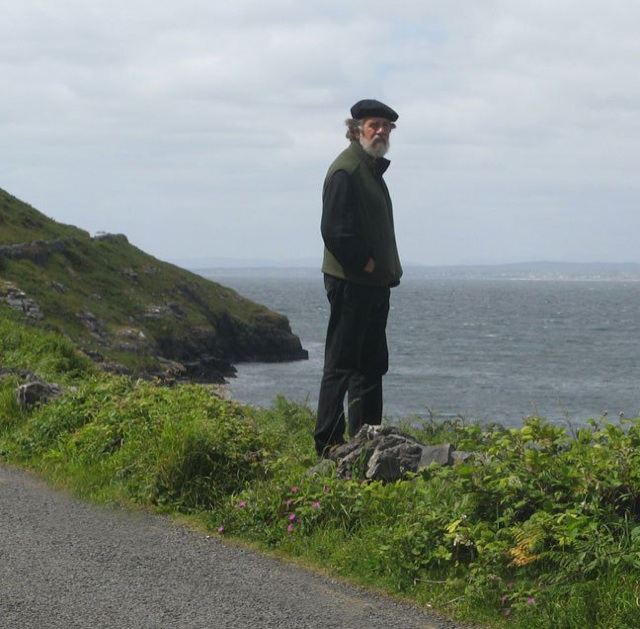
Thanks to Mssrs. Jason and Alex, we now know the identity of "Beard Guy". And he is, surprisingly.... noted artist R. Tom Gilleon! No, seriously, look at his site. Tom, a Florida native, worked for WED for a time on EPCOT Center and Tokyo Disneyland before moving out West to paint his familiar vivid canvases. I've also been sent along this recent photo:


Beard Guy, thankfully, still has a beard. This casts entirely new light on these nostalgic promotional photographs: how many of these "unrehearsed" models were actually culled from the talent pool Disney had cultivated in Florida? Tom was probably chosen for his unique expressions and beard, looking as he does not like a Cast Member, but many of the people we see in these photos are fairly well-dressed and trim, which certainly explains some of the unique qualities of many of these early souvenir guides and photographs.

Over at Walt Disney World: a History in Postcards, Brian Martsolf has already identified a number of photographs which likely show the Magic Kingdom during construction, which means that the bulk of the people in those photos were currently employed by Walt Disney World and many of those earliest photographs show the Magic Kingdom very much still in a state of becoming. Take a look again at the "Gene Hackman in a Teacup" photo:


First, obviously, this photograph is from the first eight months of the resort as the roof has not yet been added to the Mad Tea Party. But look in the background, over by 20,000 Leagues Under the Sea. See that irregularly shaped object? Doesn't it look like something with a tarp thrown quickly over it?

And maybe there aren't as many people walking around the park as you might expect? And look again at "Gene Hackman". Doesn't it look sort of like he's... wearing a name tag?

I'm willing to bet that everyone in this photo is a Cast Member or Contractor for Walt Disney World, that this was taken during a preview day in August or September 1971, and that the object in the background is covering the fact that 20,000 Leagues Under the Sea is still under construction. The ride wouldn't open until December. Sort of puts a new - if you'll pardon the pun - spin on things, doesn't it?

Me? I'm very excited by this news. Now that we know Beard Guy is Tom Gilleon, who knows who Sombrero Girl is or who that kid facing off with one of the seven dwarfs grew up to be.

Maybe it could even be you, reading this blog, right now.

Monday, September 12, 2011

People I've Met in the Past: Part One

Ah, the mighty Walt Disney World Pictorial Souvenir. How many times I've leafed through those pages, researching, scanning, staring - how many of those images have been burned indelibly into my brain. It's true, the real Walt Disney World can disappoint - there's no longer a slow-moving journey through the history of transportation in that big shiny cylinder at EPCOT, but with just a few leaves of paper, twenty or forty years old, and all that history between then and now seems to collapse - the past is always today. This is, of course, the great pleasure of paper collecting. Ephemera becomes a way to relive history, make it seem like the present. It's fun to hold that C ticket in your hand and plot to spend it on Mr. Toad's Wild Ride next time you're at Magic Kingdom. Hey, a girl can dream, can't she?

In a way, this sense of lost things being possible to reclaim is especially potent with those pictorial souvenirs of the 70s and 80s. I still have my original one, hardcover, and that book is probably why I became obsessed with Walt Disney World. It still has the texture of my youth bound into its pages. You can see the indentations in the page where I tried to trace the Haunted Mansion when I was eight. So, in a very real way, these books and booklets, which only ever served a short-term marketing purpose of reminding people of their trips and perhaps inspiring new ones, have become windows to the past. It's a trip we've all taken often.

A lot of those photos have become like old friends. And unlike the photographs of today's marketing blitz, they show people in the park how they often really are - unrehearsed, somewhat unglamorous and sort of dopey looking. So let's take a trip into the past and revisit some of the better dopey Walt Disney World denizens of her first ten years. Maybe you'll run into your favorite along the way.


I've often wondered if she's implacable or just embarrassed with her 50 gallon sombrero on. The hesitant tugging at the edges suggests she's seen the camera and is hiding her face. Or maybe there's just a wind and it's threatening to blow away.


Go ahead kid. Touch the mouse. I dare you.


No words can possibly do justice to the sort-of nerdy archer.


Yellow bell bottoms. Yellow and turquoise tile floors. You know you want to be there right now.


It's sort of hard to tell what the dynamic of this hug is. Whatever it is, the kid in the blue sailor outfit could care less about us and our darn pictorial souvenir. No matter how many times I see this, it's still good for my soul to know that Frontierland looks exactly like that today. Not even the signs have changed, nor should they.


Screaming. Whenever you meet Baloo. Screaming.

"Fiiiiiire!!!"

These people look genuinely terrified by that flambe. Is this some sort of statement about the regular quality of service at the Pueblo Room? And, oh yes. The white suited guy looks on, impassive to their plight.


The Duke shops at Kingdom Jewelers. Is that a Marquis cut or a Lozenge cut you've got there, pilgrim? Oh, come on, you always thought of it while looking at the book, admit it. By the way: I've color corrected this one and I'm shocked at how green that shop was. I always assumed it was a weird printing artifact but, no, it really is an all jade green jewelry store.


Okay, this guy cracks me up. First, he looks too cool, with his pomaded hair, jacket and shades both for that family and to be that lost. Secondly, he's using a wall map as a park map. Seriously, look at that, it's the 1972 original Magic Kingdom wall map folded in thirds, the one with the bugged-out colors. I call him "Genius Guy".


You didn't seriously think I'd let this one go, did you? Child Vs. Dwarf is still brilliant. Think of it: this face-off has been ongoing for forty years now. In another forty years it'll still be happening.


Gene Hackman in a teacup. Actually, this one is sort of disappointing, because this guy looks markedly less like Gene Hackman when scanned in huge and color-corrected, instead of while squinting at forty-year-old paper. You want to see Gene Hackman at Walt Disney World?? Here you go:


There it is. Gene Hackman versus the Salt Water Express. I think the drugs are hidden in the guitar.


It's Gondolier Day at the Haunted Mansion! If you don't believe me, look at the guy further on up the line from the guy in the red stripes; he's wearing blue stripes and a straw hat. See? Totally a Gondolier. By the way, this photograph is impossible to take today; it'd look like an explosion in a red canvas factory. It's pretty cool to see the way this looked before even the familiar green canopy was up. Can't have been fun to wait in the sun, though.


Another classic. Who doesn't remember Old Guy In The Window?


OLD GUY IN THE WINDOW POV!!! A rarely seen "backside of Traders of Timbuktu" shot. Check out that awesome bag the lady in the middle has. And of course, that freaky cow-horse creature in the front. They were all over the store:


See them up top? This store was called, depending on the era, either The Magic Carpet or the Brass Bazaar, and seemed to attract unusually high numbers of Blurry Old Folks. It was renovated into Elephant Tales in the late 80s and finally closed to make way for.... nothing. The Old Guy window still exists; it's behind a register in the "Agrabah" shop across from that awful Aladdin spinner. There are no window carpets, freaky horses, or blurry old guys there anymore. You really shouldn't go looking for it; you'll just get depressed.

I warned you!


I believe this is Papeete Bay Verandah. Wherever it is, it's very red. I seriously doubt anything this red would be allowed to be printed now.


Seating Area for the Sunshine Tree Terrace and, again, a picture you currently can't take because of the Aladdin spinner. It's hard to tell, but I think that's the Sunshine Tree / Floria Citrus Growers logo ringing the table. I really like how the yellow and green umbrellas put one in a citrus mindset without ever having to so much as show you an orange.


These come from a GAF Guide, specifically the "How To Take Pictures" section that came in all those early Magic Kingdom guidemaps. So these are obviously staged "family photos", but what's the deal with the children wearing ponchos??? Not only that, it's the same kids in each picture, but the ponchos are different! It can't have been fun to wear those in any sort of Florida heat, so it was probably a colder winter day (we get them in Florida, you know!) and the kids demanded them to stay warm. So some poor assistant had to high-tail it to Frontierland or wherever it was they got these things to borrow some ponchos. But why different ones? Did the kids fall in the sub lagoon after the second picture was taken??

The world will, likely, never know.


Hey! Guys! It's DST! I think! It stands for..... Something... something... Track! And they're at the Tomorrowland Terrace! And there's lots of backs of people's heads and stuff!


I'm 90% certain that this is The Space Port, Tomorrowland's original shop, which later became "Merchant of Venus" to funnel those happy happy kids leaving the new Alien Encounter attraction into a merchandise shop. My 1972 GAF Guide describes it as:
The Space Port - Contemporary Decorative Gifts
And I guess that describes what we see here pretty well. I love that polka dot dress! And what is that kid in the stroller reaching for, anyway? No shoplifting, kid!


Again, the inner Traders of Timbuktu courtyard. It kills me that this has been demolished. Old Guy Window is to the immediate right.


Possibly a nun? With a camera? Whatever, she's got an awesome bag and the first letter of "Frontierland" superimposed near her, so she's cooler than I am. She's in the middle of Liberty Square and the area right behind her near that tree is the current home of a speaker cleverly disguised as a birdhouse. Behind her is the future home of Thunder Mesa, I mean Splash Mountain. Before Big Thunder started construction in 1978, this area was known as "The Meadow" because...


....Yeah. All man made, however, which is pretty amazing. Show this to someone and dare them to identify it as Walt Disney World; it's fun.


Hey, watch out! You're gonna get squirted! Just kidding. This is thirty years before these guys would be made to squirt water, back when they were down in front of the Jungle Cruise and devoted to awesome drumming.

Hey! Yeah! Finally... some action!


Vrooooooooooom!


Yow! Hot stuff! These demonstrate a beloved 'Pictorial Souvenir' motif...


...in which things that don't really go fast... do.

And who could forget this handsome specimen:

"Listen, I'm awake, what else do you want from me?"


One could look at the kid grasping his face in the foreground there. Or the fact that there's a mob of people at The Lunching Pad there in the background. Or the fact that we can see the end of the Peoplemover track at the very top of the image; it wouldn't be finished until 1975 and just ended there in space. But you know what I love most? The rare on-the-ground view of the Great Construction Wall of Tomorrowland in the very back. Groovy.


I'll leave it up to you to decide what they're looking at. This is a blog about a family park, after all.

I'll end with one of my favorites. This captures everything wonderful and awkward about early Walt Disney World photographs. The staging, composition, Meadow in the background...


"Look happy! Look at it! Look at the bird!
Hey! Don't make it so obvious that you're holding him!
Look happy!"

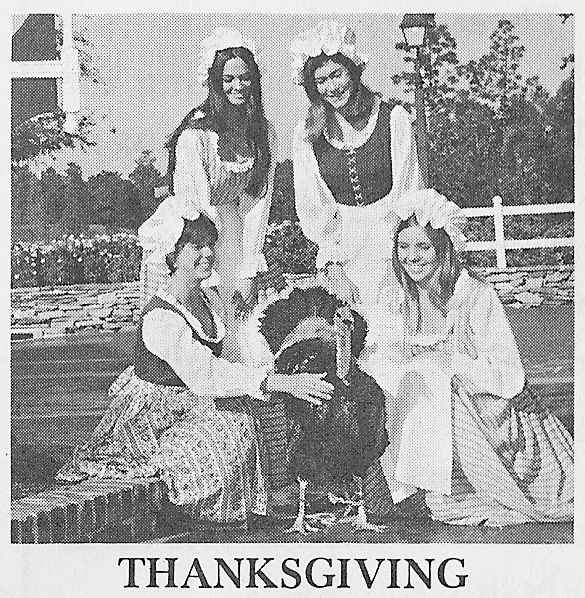
...Happy Thanksgiving, everyone!